
Renting a car in Tokyo lets you explore this vibrant city with ease, and it’s one of the most convenient ways to get around on a Tokyo trip. It’s especially handy if you want to head out to spots near Tokyo such as Hakone, Kawagoe, Atami, Kamakura or Mt. Fuji — besides the trains, driving yourself is a far more flexible option! Plus you can carry all of your daily shopping hauls with you as you hop from place to place.
In this article we’ll go over why renting a car in Tokyo is a great idea, the documents you need, a price comparison, an explanation of insurance, the pickup and return process, things to watch out for and frequently asked questions, so your Tokyo car rental experience is easy and enjoyable!
The most common questions before renting a car in Tokyo:
Q: Tokyo’s subway is so convenient — do I still need to rent a car?
A: If you’re planning to travel to the areas around Tokyo, renting a car may suit you better.
On top of that, for travelers with particular needs (traveling with the whole family, young and old, or carrying lots of large luggage), renting a car and driving yourself in Tokyo is far more convenient!
Q: I forgot to bring the translation of my driver’s license — can I still rent a car?
A: No! Taiwanese travelers who want to rent or drive a car in Japan need a Japanese translation of their driver’s license to rent legally — without it you simply can’t hit the road.
Q: What does the rental fee include? What’s the difference with extra insurance?
A: When you book a car in Tokyo online, the price usually includes the car rental fee and basic insurance (with a deductible). Fuel, highway tolls and optional equipment are either provided free or charged separately, depending on the shop.
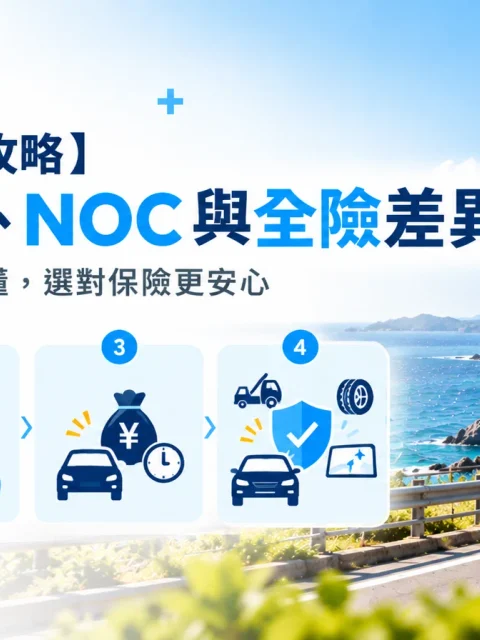
Basic insurance normally comes with a deductible, so if you want to avoid it entirely you can add NOC and CDW coverage!
Q: What’s the minimum I’ll pay to rent a car in Tokyo?
A: Book a car in the Tokyo area of Japan through gogoout and prices start from just NT$1,200 a day, with basic insurance already included in the price!
There are more hand-picked rental shops in the article below, so keep reading and get ready for your Tokyo self-drive trip!
Tokyo car rental recommendations at a glance
👇👇 Tokyo car rental from NTD 1200 a day 👇👇
Tokyo car rental | RentalCar G&W
Real customer reviews: New shop, no reviews yet
🪧 About the shop
Located in Tokyo’s Ota Ward, close to Haneda Airport, this shop is dedicated to giving travelers efficient, hassle-free car rental service.
Whether you need to pick up a car right after landing or have one delivered to you in the city, RentalCar G&W can take care of it quickly.
📢 Highlights
Free Narita/Haneda Airport shuttle:
A free shuttle service to and from Narita and Haneda airports means you can start your self-drive trip as soon as you arrive in Tokyo.
No waiting around for public transportation — it saves precious time and makes your whole trip smoother.
Car delivery and pickup along the JR Yamanote Line and in Ikebukuro:
Beyond airport shuttles, RentalCar G&W also delivers and collects cars for travelers in the city, especially those along the JR Yamanote Line and around Ikebukuro.
NOC compensation coverage available on site:
You can choose additional insurance coverage based on your own needs for extra peace of mind while driving.
Tokyo car rental | THOMAS
Real customer reviews: New shop, no reviews yet
🪧 About the shop
THOMAS is located in Asakusa, Tokyo, and focuses on making car rental as convenient as possible for travelers. Whether you’re coming from Narita Airport, central Tokyo or Haneda Airport, THOMAS offers flexible shuttle and car delivery options so you can pick up and return your car easily, wherever you are.
📢 Highlights
Free Narita Airport shuttle / paid Haneda Airport car delivery:
Flexible service options for travelers with different needs. Travelers at Narita Airport enjoy a free shuttle, while a paid car delivery service is available at Haneda Airport, so everyone can get on the road quickly after arriving.
Two pickup locations: Narita and Tokyo:
You can choose Narita or central Tokyo as your pickup point, whichever fits your itinerary best.
Additional compensation coverage available on site:
To make your drive even more worry-free, THOMAS offers optional compensation coverage on site so you can extend your protection as needed.
Tokyo car rental | 富士プレミアムレンタカー (Fuji Premium Rent-a-Car)
Real customer reviews: New shop, no reviews yet
🪧 About the shop
富士プレミアムレンタカー (Fuji Premium Rent-a-Car) is a rental company designed specifically for travelers planning to explore Mt. Fuji and the surrounding area.
The shop is extremely close to the main attractions in the Mt. Fuji region, offering handy shuttle service as well as the option to drive between regions — making it a top choice for hikers, families and film crews.
📢 What makes it special
Close to Mt. Fuji and designed for Mt. Fuji pickups:
This branch is in a great location, very close to the main Mt. Fuji attractions and Lake Kawaguchi. Whether you’re heading out for a short hiking trip or sightseeing around Mt. Fuji, you can pick up your car quickly and hit the road right away.
Pickup and drop-off shuttle service around Mt. Fuji:
A shuttle service is available at locations around Mt. Fuji.
You can choose different pickup and return points to suit your plans, saving time and avoiding complicated transport arrangements so your trip runs smoothly.
Dash cams included free of charge:
Every car comes with a dash cam as standard, which not only adds an extra layer of safety but also lets you record the beautiful scenery along the way.
Tokyo car rental price comparison
There are plenty of online car rental companies in Japan, and each one offers different locations, vehicles and insurance coverage amounts. Below is a basic comparison table of prices and services, using renting a car in Tokyo as an example, for your reference.
(Actual amounts depend on the quote you get at the time of your search.)
Comparison based on a five-seater car of the same class:
| gogoout | Times CAR RENTAL | Nippon Rent-A-Car | ORIX RENT-A-CAR | |
|---|---|---|---|---|
| Airport shuttle | Depends on the branch | ⭕️ | ⭕️ | ⭕️ |
| Chinese-language support | ⭕️ (Chinese-language online customer service) | ⭕️ (Chinese-language support at some branches) | ⭕️ (Chinese-language support at some branches) | ⭕️ (Chinese-language support at some branches) |
| Price (per day) | From NT$1,200 | From about NT$2,000 | From about NT$2,350 | From about NT$2,450 |
| GPS | Depends on the branch | ⭕️ | ⭕️ | ⭕️ |
| ETC | Depends on the branch | Depends on the branch | About ¥330 per rental | About ¥330 per rental |
| Child seat | Depends on the branch | About ¥1,100 each | About ¥1,100 each | About ¥1,100 each |
| Opening hours | (Varies by branch) 8:00~20:00 | (Varies by branch) 8:00~20:00 | (Varies by branch) 8:00~19:00 | (Varies by branch) 8:00~20:00 |
| CDW coverage | Add on at pickup | About ¥1,100/24h* | About ¥1,100/24h | About ¥1,100/24h |
| NOC coverage | Add on at pickup | About ¥1,100/24h* | About ¥1,100/24h | (called RAP on the official site) ¥660 / 24 hours |
*Note 2: Japanese yen conversions were calculated at the time of writing; actual quotes depend on the exchange rate at the time.
Tokyo car rental insurance explained
The “compensation system” talked about in Japan is simply car insurance.
Every vehicle on the road in Japan must carry basic compulsory insurance plus a certain level of coverage (for personal injury, property damage and the vehicle itself), and the basic cost is already included in the rental fee. Most of the compensation is paid out by the insurance company, but there is still an amount the customer has to cover, known as the “deductible.”
Within this deductible, there are two types of waiver systems:

1. Collision damage waiver (CDW)
(Collision Damage Waiver): On top of the basic compulsory insurance, this waives the deductible the renter would otherwise have to pay, so if an accident happens, this extra coverage gives you far greater peace of mind.
2. NOC coverage (non-operation charge)
(Non-Operation Charge): This covers the rental company’s loss of business, the same idea as the loss-of-use fee commonly seen in Taiwan. Some rental companies offer this option, which waives the loss-of-business fee the branch incurs while the car is being repaired after your accident.
Note | These two types of coverage are separate, so having a collision damage waiver does not necessarily mean the loss-of-business fee is waived too!
| Coverage | Basic compulsory insurance | + CDW collision damage waiver | + NOC compensation |
|---|---|---|---|
| Bodily injury liability (for victims) | ✔️ | ✔️ | ✔️ |
| Property damage liability | ✔️ | ✔️ | ✔️ |
| Vehicle damage coverage | ✔️ | ✔️ | ✔️ |
| Personal injury coverage (for passengers) | ✔️ | ✔️ | ✔️ |
| Deductible waived | ✔️ | ✔️ | |
| Loss-of-use fee waived | ✔️ |
We sincerely recommend adding all of the insurance above when you book or pick up your car. It’s better to be safe than sorry: a little extra cost can save you from a huge loss if something goes wrong!
Documents you need before renting a car in Tokyo
Before you set off, make sure you have the following required documents so you can rent a car in Tokyo without trouble.
These documents aren’t just a rental company requirement; they’re also the key to a smooth trip:

| Document – Passport | The ID document you need when traveling abroad. You must also present it when renting a car, and it must still be valid (before you travel, check that it is valid for at least six more months) |
| Document – Your home-country driver’s license | Besides the translation of your license, you also need to bring your original Taiwanese driver’s license. Both must be presented together for you to drive legally in Japan. (Make sure your license is still valid throughout your trip in Tokyo) |
| Document – Japanese translation of your driver’s license | Japan does not accept the International Driving Permit issued in Taiwan; it recognizes the Japanese translation of your driver’s license instead, and without it you simply can’t rent a car! (The translation must match the information on your license. If your license has been replaced or renewed, be sure the details are consistent.) |
| Credit card (preferably not a DEBIT CARD) | Some rental companies use a credit card for the deposit and rental fees. Make sure your card has enough available credit. (The cardholder’s name must be the same as the renter’s.) |
| Document – Rental booking details | After completing your booking online, print or save the booking confirmation. |
How to book a Tokyo car rental online

Step 1: Book your rental online
Go to the gogoout rental platform, choose Tokyo as your pickup location, and enter your pickup and return dates and times.
Every car comes with detailed specs, price comparisons and user reviews, so you can easily pick the model you like.
Once you’ve compared prices, book early: you’ll secure your car and enjoy a better advance-booking price.
Step 2: Pick up your car in Tokyo
When you arrive at the rental company’s branch in Tokyo, present your valid driving documents and booking confirmation for identity verification, then sign the rental agreement.
Inspect the exterior and interior of the car carefully and take photos as a record, so there are no disputes over damage.
Also make sure you understand the fuel policy, return time and return location, and ask about Japanese road rules and driving tips for a smoother trip.
Step 3: Wrap up your Tokyo self-drive trip
At the end of your trip, return the car to the designated location in Tokyo at the agreed time.
Confirm the mileage and fuel level with the rental company’s staff and settle the final charges, including any parking fees and highway tolls.
Finally, hand back the keys and your Tokyo car rental is complete.
Renting with gogoout really is that fast!
From compact cars, minivans and vans to sports cars and campervans, everything you need for a Tokyo car rental in one place.
gogoout shows real photos of the cars, detailed specs and user reviews to help you make the best choice, so renting a car in Japan is no longer difficult!
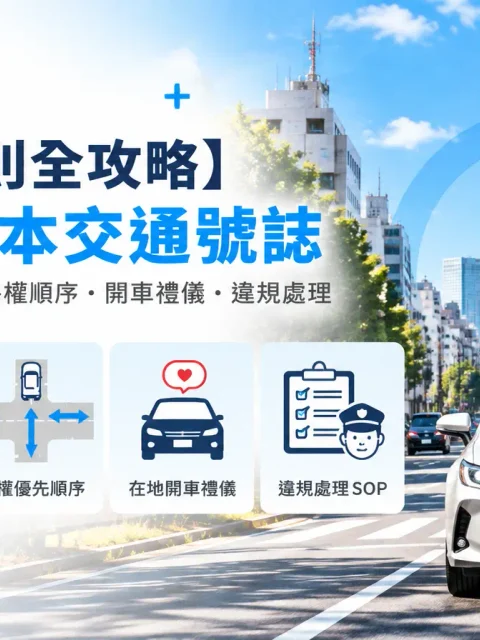
Things to know when renting a car in Tokyo
1. Traffic rules and fines

Right-hand-drive vehicles
Japan uses right-hand-drive cars, the opposite of Taiwan and most Western countries. The steering wheel controls and the road rules are reversed too, so it’s completely normal to hit the wipers instead of the turn signal when you first set off. Don’t panic: just slow down, watch the traffic and follow the rules.
Watch out when turning
Remember this simple rule: wide turns to the right, tight turns to the left. At junctions and exits, check to the right first and then the left, so you don’t pull into oncoming traffic.
Drive safely
Drive steadily and don’t speed; never drink and drive, and keep your seat belt fastened the whole time.
Needless to say, anything you can’t do on the road in Taiwan isn’t allowed in Japan either.
Speeding fines
Ordinary roads / expressways, up to 15 km/h over the limit: fine of ¥9,000
Expressways, 30 km/h or more but under 35 km/h over: fine of ¥25,000
Expressways, 35 km/h or more but under 40 km/h over: fine of ¥35,000
Expressways, 40 km/h or more over: fine of ¥100,000
(The fines above are for ordinary small vehicles; other vehicle types have different fines.)

Drunk driving fines
Breath alcohol level of 0.15 mg/l or below: fine of ¥500,000 or more / passengers are also fined ¥300,000 or more
Drivers too intoxicated to drive safely: fine of ¥1,000,000 or more / passengers are also fined ¥500,000 or more
Not wearing a seat belt doesn’t carry a fine, but if you aren’t wearing one in an accident, some insurance coverage may not apply.
Using your phone while driving:
Talking on the phone, scrolling on your phone and similar uses are all explicitly banned as dangerous behavior in Japan, with a fine of ¥6,000
Yellow lane lines:
With yellow lane lines, note that you may not cross the line to overtake unless signs clearly allow it.
You may, however, turn left, turn right or make a U-turn where there is no sign prohibiting it. Always follow the traffic signs and markings so your driving stays safe and legal.

White lane lines:
A solid line means you may not change lanes freely, though it’s fine to cross it to go around a car parked at the roadside; just return to your lane as soon as possible.
A dashed line means you may change lanes and overtake.
With a solid yellow line next to a dashed white line, cars on the white-line side may change lanes across to the yellow-line side, but cars on the yellow-line side may not change lanes.

Stop-and-go signs
Unlike in Taiwan, stopping at the stop line in Japan is the only way to clearly judge the traffic ahead. So when you see the two signs 止まれ (stop) and 踏切 (railroad crossing), you must come to a complete stop before moving on, or you’ll face one of the two fines below.
Failing to stop: fine of ¥7,000 / Failing to stop at a railroad crossing: fine of ¥9,000

Don’t stop on the street casually
Japan cracks down hard on temporary stopping and illegal parking, so don’t count on getting away with it — habits that slide in Taiwan are strictly enforced and punished in Japan! If you need to park, the safest option is to find a nearby parking lot.
If you do stop at the curb, check the markings along the sidewalk curb:
Dashed yellow line: brief stops allowed, but no standing parking
Solid yellow line: stopping and parking completely prohibited
Illegal parking carries a fine starting at ¥10,000.

Clear right of way
Right of way in Japan is very clearly defined, and traffic penalties leave no room for leniency!
Vehicles going straight always have absolute priority, followed by left-turning vehicles, and right-turning vehicles come last.

Priority on main roads:
While driving you’ll often meet vehicles on a side road about to merge onto a main road, or run into situations where neither driver is sure who should yield.
In Japan the rule is very clear: the main road has the right of way, so keep driving and don’t slam on the brakes, which could cause the car behind you to rear-end you.
If you’re the one merging from a side road, slow down to a complete stop and only pull out once you’re sure the way is clear!
Pedestrians first:
Japan puts people first on the road, which is very different from Taiwan, so always yield to pedestrians — otherwise you’re the one getting the ticket!

Reminder | If you do end up with a traffic ticket, remember to pay it at a local police box (koban). If you leave it to the rental company to handle after you return the car, the amount will go up!
2. Traffic signals

Traffic lights
Traffic lights play an important role in Japan’s traffic rules. The upper row is the familiar red-yellow-green light, while the lower row shows arrows for going straight, turning left and turning right.
For example — red light + straight arrow: you may continue straight ahead, but you may not turn.
Red light + left arrow: you may turn left, but you may not go straight or turn right.
Green light + right arrow: vehicles in all directions may safely proceed, including right turns.
These signals are very important and help keep traffic orderly and safe. Be sure to follow them to keep yourself and other road users safe.
Common road signs
Below are some of the road signs you’ll see most often. When driving in Tokyo, keep an eye on the signs so you don’t break the rules.

Image source: レンタカードットコム (Rentacar.com)

Flashing yellow / red lights
In Japan’s traffic light system, a “flashing yellow or red light” at an intersection means you need to pay extra attention, because it works a little differently from an ordinary traffic light.
Flashing yellow: slow down and proceed carefully, watching your surroundings and making sure no cars are coming.
Flashing red: this has the same force as a 止まれ (stop) sign — you must bring the car to a complete stop and may only proceed once you’ve confirmed the intersection is safe.
3. Setting up the car navigation system

Japanese car navigation systems use a unique Mapcode system. When your phone’s data connection isn’t cooperating, look up your destination’s mapcode on Mapion and simply enter the number into the navigation unit to get there easily and accurately.
Reminder | When driving in the greater Tokyo area, don’t panic if you miss a turn. Thanks to the city’s grid-style planning, you can usually turn at the next intersection and get back on the right route quickly!
👉Click here for a more detailed Mapcode guide👈
4. Driver marker stickers
These stickers go on the front or rear of the car. They’re not just information for locals — visitors should know them too. They let local drivers quickly recognize your situation and give way accordingly, and you can ask your rental shop whether they provide them for customers! You can also ask at relevant stores around Japan whether the stickers are available to buy.
Here are the ones you’ll see most often:
| 初心運転者標識 (new driver marker) | 高齢運転者標識 (elderly driver marker) |

Indicates a novice driver with less than one year of driving experience |

Indicates that the driver is an older person |
| 聴覚障害者標識 (hearing-impaired driver marker) | 身体障害者標識 (physically disabled driver marker) |

Indicates that the driver is hearing impaired |

Indicates that the driver has a physical disability |
Under Japanese law, you are required to give way to cars displaying these markers, so both visitors renting cars in Japan and local residents need to watch for them — otherwise you could be fined!
5. Rental car license plate information
Japanese license plates have a hiragana character in front of the numbers; if it’s わ or れ, the car is a rental.
Both of the above clues tell locals that the person behind the wheel is a visitor or a renter, so they’ll give you a little extra room. Feels reassuring to know, doesn’t it?

(That said, being a foreign visitor doesn’t mean you can ignore the rules — stay alert to everything you should! It also makes your Tokyo self-drive trip much safer.)
6. Things to note when picking up and returning the car
Pickup process

When renting a car in Japan, make sure you’ve booked the car in advance and brought the necessary documents (such as your passport and driver’s license, etc.) before picking it up.
The pickup process usually goes like this:
- Arrive at the pickup location: Get to the pickup point by your booked time. You can usually choose between picking up at the shop, picking up at the airport, or taking an airport shuttle to the shop, among other options — confirm the pickup details with customer service when you book.
- Inspect the car: Before you sign the rental agreement, look over the exterior and interior carefully and note any existing damage or defects. This helps you avoid unnecessary charges when you return the car.
- Sign the agreement: Once you’re happy with the car’s condition, sign the rental contract with the rental company. It covers the rental period, mileage limits, a breakdown of charges and insurance options, so check everything carefully.
- Payment and deposit: You’ll need to pay the rental fee and possibly a deposit. Whether you pay by cash or credit card depends on what the shop accepts.
- Get the keys: Once all the paperwork is done, pick up the keys — you’re ready to hit the road.
Car return process

When you rent a car in Japan, returning it smoothly at the end of your rental period is just as important. Here’s a detailed look at the return process:
- Scheduled return time: Check your rental contract so you know the exact date and time the car is due back. Plan ahead so you don’t return the car late.
- Getting to the return location: Head to the designated return location, which is usually the same as the pickup location. If you’ve chosen a different return location, or want services such as an airport drop-off, confirm this with the shop or customer service when you book the car!
- Cleaning and refueling: Before returning the car, tidy up the interior and make sure you haven’t left anything behind. Also make sure the car has enough fuel so you aren’t charged an extra refueling fee. Fuel policies vary by shop: some ask you to return the car with the same fuel level as at pickup, others require a full tank, so be sure to check when you sign the contract!
- Return inspection: When you return the car, the rental company’s staff will inspect its condition. They’ll compare it against the damage or defects you recorded at pickup and confirm that no new damage has occurred.
- Signing the return documents: Once the vehicle inspection is complete, you’ll be asked to sign the return documents confirming that the rental transaction is finished.
- Refund of your deposit: If you paid a deposit, it will be refunded according to the terms of the contract. This can take some time to process, so ask about the details when you return the car.
Understanding the pickup and return processes helps you avoid unnecessary hassle and keeps the whole rental experience running smoothly. Follow the rental company’s instructions and keep a record of all the relevant information so that any problem can be resolved quickly.

👇👇Click here for more on renting a sports car in Japan👇👇
[Okinawa Sports Car Rental] Recommended rentals, price comparison and a full guide to a sports-car road trip in Okinawa
Tokyo car rental FAQ
What’s the minimum age to rent a car in Tokyo?
A: Many rental companies won’t rent to drivers under 20, or to those who have held a license for less than a year.
So before you book, double-check that you meet that rental company’s requirements!

How are tolls calculated in Tokyo?

A: Japanese expressway toll gates come in two types: the “general” lanes where you pay cash on the spot, and the “ETC“-only lanes.
When traffic is heavy, the general lanes can back up a little, so ETC is the more convenient choice
(just remember to keep your speed below 20 km/h in the ETC lane, or the card may not be read!)
General lanes may be staffed by an attendant or use an automated machine. Either way, it’s a good idea to have coins or ¥1,000 notes ready so that paying goes faster.
Want to know how much you’ll spend on expressway tolls during your Tokyo road trip? 👉 Calculate Tokyo expressway tolls here
What should I do if I have an accident?
A: If you are unlucky enough to have an accident, you must contact the rental company right away and ask the shop to help you handle it. Also call the police, as you’ll need the accident report to file an insurance claim.

How do I pay a traffic ticket?
A: If you do end up with a traffic ticket, remember to pay it yourself at the local police station (koban). If you wait until you’re back at the rental company, or until after you’ve returned home, the amount will go up!
I booked a car with gogoout, but my flight or ferry to Japan has been delayed or canceled. What should I do?
A:
- If the pickup location is affected by force majeure (such as a natural disaster or a strike), this website will decide whether to cancel and refund your booking or let you reschedule it. (This applies only to partner shops outside Taiwan.)
- If you are a cruise passenger, Article 1 of the rental terms does not apply to you. To cancel a rental order, please apply for a refund in accordance with the partner shop’s cancellation policy.
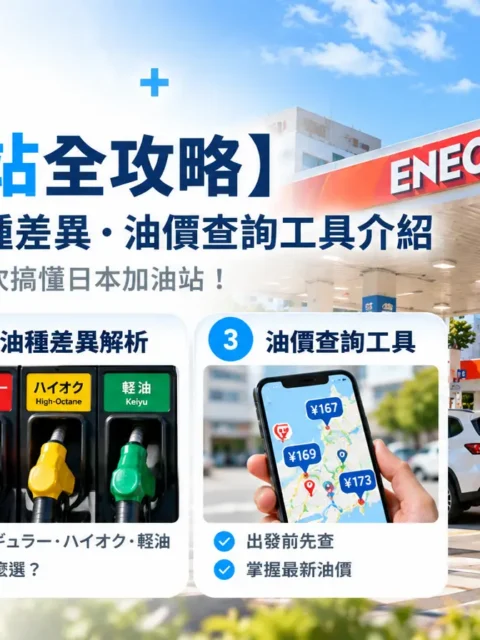
Which type of fuel should I choose?
A: Japanese gas stations have both full-service and self-service pump islands.
At a full-service island, just tell the attendant “fill it up with regular gasoline,” then hand over cash or a credit card and they’ll know how you want to pay. In Japanese: レギュラー満タンお願いします (regyura mantan onegaishimasu — “fill it up with regular, please”)
Here’s a reference table of fuel types in English and Japanese:
| Fuel type | Nozzle color | Japanese | English |
|---|---|---|---|
| Regular gasoline (95) | Red | レギコラー | Regular |
| Premium gasoline (98) | Yellow | ハイオク | Premium |
| Diesel | Green | 軽油 | Diesel |

Self-service refueling steps:
1. Choose the fuel type, amount and payment method:
After selecting the fuel type, follow the on-screen instructions to set how much to pump (by liters or by amount of money),
or simply choose “満” (full) to fill the tank. You can pay by credit card, at the self-service payment machine next to the pump, or at the staffed payment counter.
2. Refuel:
Open the fuel door, insert the nozzle and squeeze the handle to start pumping. When you’re done, return the nozzle, close the fuel cap tightly, and collect your receipt and any change.
This “Tokyo car rental recommendations” guide gives you all the details you need to prepare before renting a car in Tokyo, so your Tokyo road trip goes off without a hitch. Whether it’s your first time in Tokyo or you already know the city well, renting a car is an extremely flexible and convenient option that lets you explore Tokyo and the surrounding area more fully. Enjoy your rental trip!
More articles on car rental and travel in Japan:
👉[Japan Car Rental Guide] Required documents, cost comparison and insurance explained — explore Japan freely!
👉[Okinawa Car Rental Must-Read] Recommended rentals, cost comparison and self-drive tips all in one guide!
👉[Osaka Car Rental] Recommended rentals, self-drive know-how and insurance explained in one guide!
👉[Okinawa Sports Car Rental] Recommended rentals, price comparison and a full guide to a sports-car road trip in Okinawa
👉[Hokkaido Car Rental] The latest 2024 guide — 9 things every self-drive traveler should know!
👉[Fukuoka Car Rental] Recommended rentals, company comparison and a complete Fukuoka self-drive guide!
👉[Nagoya Car Rental] The latest rental price comparison and insurance tips — drive your way around central Japan!
Where should you rent a car in Tokyo?Go with gogoout!
Worried about spending hours trying to pick a rental company, struggling with the language, puzzling over complicated insurance options or driving in an unfamiliar place — and so putting off your booking?
This article was translated by AI from the original Chinese version.