
How do you park when you’re self-driving in Japan? The easiest approach is to look for a paid parking lot that’s open to the public, park according to the lot’s equipment, and then pay the way it tells you to. Common parking lots in Japan include flap-plate lots, gate-barrier lots, license-plate recognition lots and mechanical lots, and each type has a different entry and exit procedure.
There are also three things to watch out for when parking in Japan: don’t accidentally park in a 「月極駐車場」 (monthly-contract parking lot), make sure you understand how the maximum rate is calculated, and check the differences between weekday, weekend and overnight rates. For example, a sign that says 「最大料金 800円」 (maximum rate ¥800) doesn’t mean you’ll only ever pay ¥800 no matter how long you stay or which day it is.
This article walks you through how parking lots in Japan work, how to use the payment machine, how the maximum rate is calculated, how to spot a 「月極駐車場」 (monthly-contract parking lot), and what to do if you get a parking ticket, so first-time renters driving in Japan can get the hang of parking quickly.
內容目錄
1. Basic rules for parking on a self-drive trip in Japan: look for the P sign and avoid monthly-contract lots
Self-driving in Japan is convenient, but you can’t just pull over and park on the street the way you can in parts of Taiwan. Many stretches of road in Japan have no-parking or no-stopping restrictions, and even if you’re just hopping out to shop or take a photo, where or how you park could still count as a violation.
Street parking isn’t banned everywhere in Japan, but for visitors who aren’t familiar with the traffic signs, choosing a legal, publicly accessible paid parking lot is the easiest way to stay out of trouble.
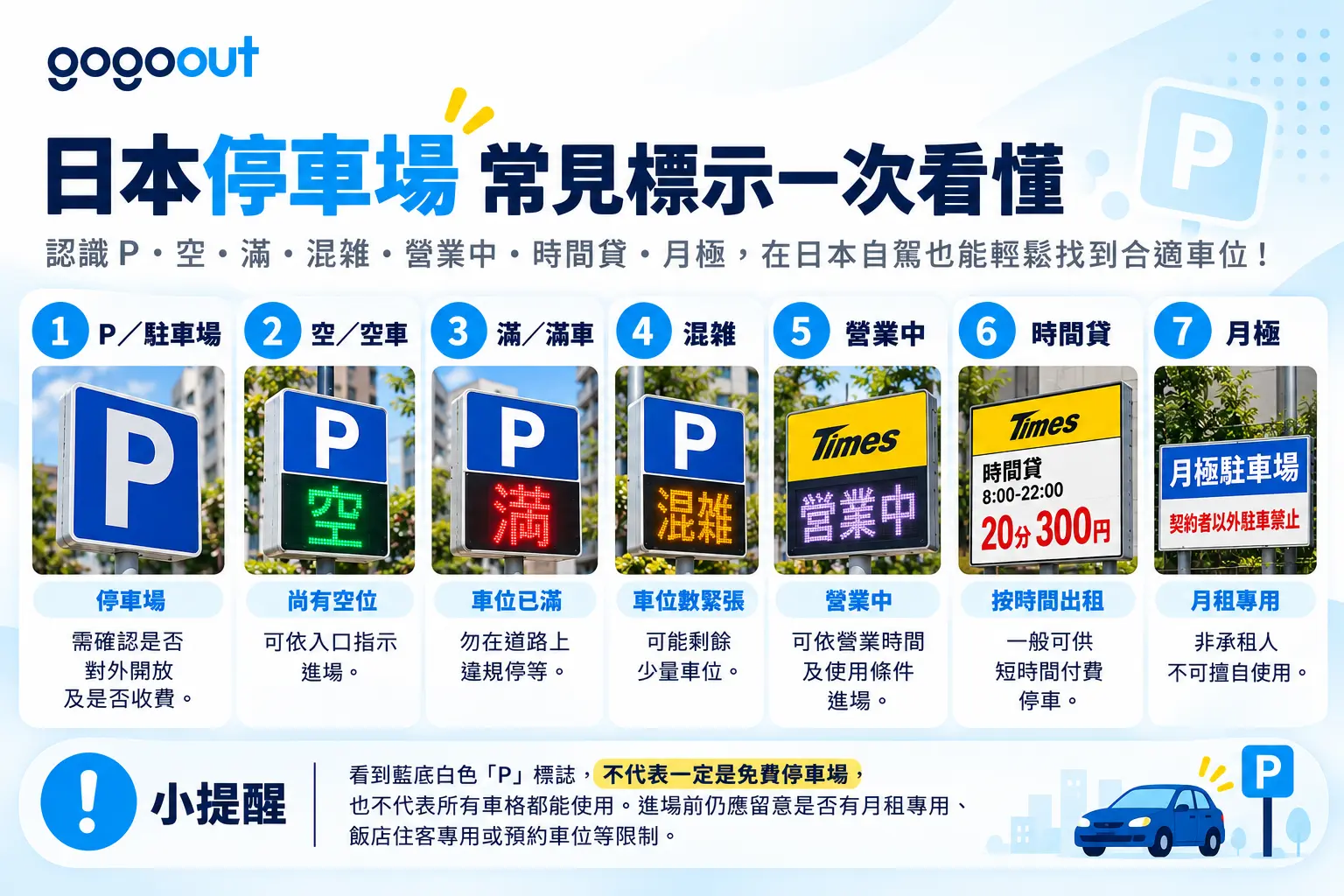
(1) Understanding Japan’s P, 空 and 満 parking signs
When you’re looking for parking in Japan, it helps to know these common Japanese signs first:
| Parking sign | Meaning | Things to note |
|---|---|---|
| P / 駐車場 (parking lot) | Parking lot | Check whether it’s open to the public and whether there’s a fee |
| 空 / 空車 (spaces available) | Spaces still available | You can enter by following the signs at the entrance |
| 満/満車 | Lot is full | Don’t wait illegally on the road |
| 混雑 (busy) | Spaces are tight | There may be only a few spaces left |
| 営業中 | Open for business | You can enter within the opening hours and terms of use |
| 時間貸 (hourly parking) | Rented by the hour | Generally available for short-term paid parking |
| 月極 (monthly contract) | Monthly contract only | Non-contract holders may not use it |
A white “P” on a blue sign doesn’t necessarily mean parking is free, or that every space is available to you. Before entering, check for restrictions such as monthly-contract spaces, hotel-guest-only spaces or reserved spaces.
(2) What is a 月極駐車場 in Japan? Don’t just park when you see 「月極」
In residential areas and next to office buildings in Japan, you’ll often see parking lots marked 「月極駐車場」(つきぎめちゅうしゃじょう)(monthly-contract parking lot).
A 月極駐車場 is a monthly-rental parking lot, usually only for people who have signed a contract. It isn’t an hourly paid lot where travelers can park on the spur of the moment.
Common signs include:
- 月極駐車場 (monthly-contract parking lot): a monthly-rental parking lot.
- 契約者専用 (contract holders only): for contract holders only.
- 無断駐車禁止 (no unauthorized parking): parking without permission is prohibited.
- 時間貸駐車場 (hourly parking lot): a parking lot charged by the hour.
- コインパーキング: a standard pay-by-the-hour parking lot.
Some lots offer both monthly-contract and hourly spaces, and only certain numbered spaces may be open for short-term parking. Even if you see an empty space, check the space number and the signs on site before pulling in.
Taking a monthly-contract space without permission counts as trespassing on private property (無断駐車, unauthorized parking), and the owner has the right to call the police or ask for compensation, so read the signs carefully before you enter.
The rule of thumb for parking in Japan: when you see 「月極」 (monthly contract), 「契約者専用」 (contract holders only) or 「無断駐車禁止」 (no unauthorized parking), move on. Don’t park just because there’s an empty space.
(3) Hotel parking in Japan isn’t always free
Hotel parking in Japan may be free, charged per night, charged by the hour or available by reservation only, and some hotels partner with a nearby paid parking lot instead.
If you plan to drive to your hotel, it’s a good idea to check in advance whether guest parking is available, how much it costs per night, whether you can come and go freely, and whether an SUV or van fits the height limit.
Even if a hotel has parking, that doesn’t guarantee a space will be free. At accommodations in popular tourist areas, parking is sometimes first come, first served, or only available if you reserve ahead, so it’s worth checking before you book.
2. The 4 main types of parking lots in Japan and how to use them
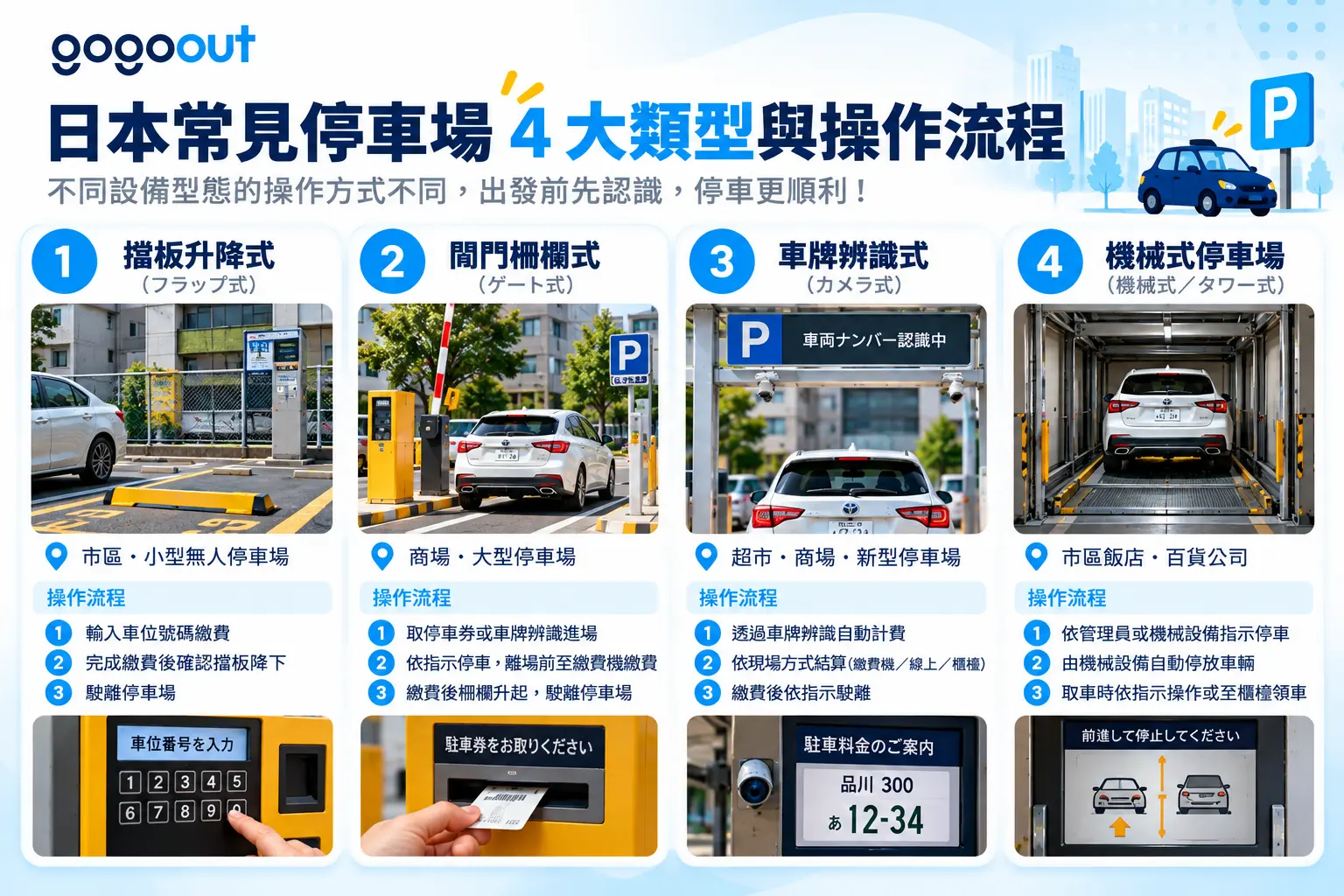
Paid parking lots in Japan mainly come in four common equipment types: flap-plate lots, gate-barrier lots, license-plate recognition lots and mechanical lots.
| Type of parking lot | Where you’ll find it | How it works |
|---|---|---|
| Flap plate (フラップ式) | City centers, small unattended lots | Enter your space number and pay, then leave once the flap plate has lowered |
| Gate barrier (ゲート式) | Shopping malls, large parking lots | Take a ticket or have your plate scanned on entry, then pass the barrier after paying |
| License-plate recognition (カメラ式) | Supermarkets, shopping malls, newer parking lots | Charges calculated by license plate recognition; pay using the method available on site |
| Mechanical parking garage (機械式/タワー式, mechanical/tower type) | City hotels and department stores | Park following the attendant’s or the machine’s instructions |
(1) Flap-type parking lots (フラップ式)
This is the most common type of small unattended parking lot in Japan. A metal flap sits in the middle of each space and rises once your car is parked, according to how the equipment is set.
How to park:
- Check that the space is free and that your car fits the size limits
- Pull into the space following the painted lines and signs
- Make sure the car is properly parked and isn’t resting on equipment it shouldn’t touch
- Remember your space number
How to leave:
- Go to the payment machine and enter your space number
- Check the amount shown on the screen
- Choose one of the accepted payment methods and pay
- Go back to your car and confirm the flap has lowered completely
- Drive out following the signs in the lot
The timing for when the flap rises and lowers, and how long you have to leave after paying, varies from lot to lot, so don’t assume you always get a fixed 3–5 minute grace period.
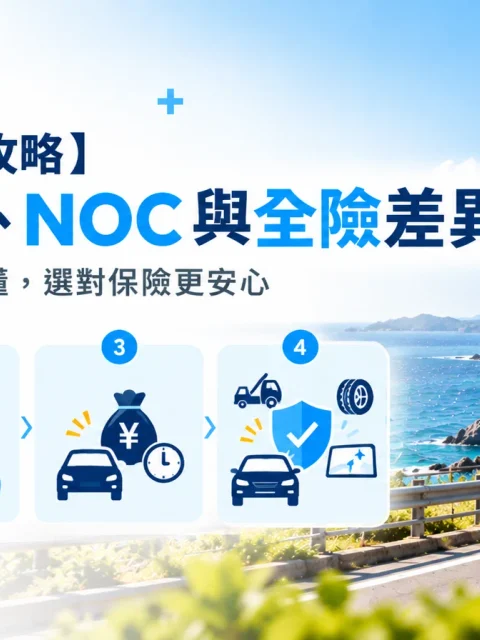
Note: It’s a good idea to have your passengers get in and your luggage sorted before you pay. Once you’ve paid, leave promptly so you don’t run past the time limit set by the equipment. If the flap is still up and you drive over it without noticing, you can easily scrape the underside of the car — and if the damage is serious, you’ll be counting on your CDW + NOC insurance to help you out!
(2) Gate-barrier parking lots (ゲート式)
Gate-type parking lots are common at large malls, train stations, tourist attractions and commercial facilities. There’s a barrier at the entrance; some lots issue a paper parking ticket, while others use license plate recognition to log your entry and exit times.
How to park
- Drive up to the ticket machine or the recognition area at the entrance
- Follow the instructions and press the 発券 button (issue ticket) to take your parking ticket (駐車券, parking ticket), or wait for the system to read your license plate
- Wait for the barrier to lift, then drive slowly into the lot
- Keep your parking ticket (駐車券, parking ticket) somewhere safe
How to leave
Some lots have a 事前精算機 (pre-payment machine) where you can pay before returning to your car; at others you pay at the exit.
If the lot offers validation for purchases at the attached department store or mall, show your parking ticket when you check out so the staff can deduct the free hours, then pay whatever is left.
(3) Barrier-free license plate recognition lots (カメラ式 / スマートパーク)
These have become very common in recent years at newer supermarkets, AEON malls and large chain hypermarkets. There are no gates, flaps or ticket machines at all. The system records when your car enters, and the fee is calculated from your license plate before you leave.
How to park
- Drive past the license plate recognition area at the entrance
- Park in a proper space following the signs in the lot
- Remember your car’s license plate number
How to leave
- Go to the designated payment machine or use the payment method the lot provides
- Follow the on-screen prompts to enter your plate number or the information requested
- Check the photo of your car or the plate shown on the screen
- Complete the payment
- Leave following the instructions posted on site
Do you still need to use the payment machine during the free parking period?
Not always! At some license plate recognition lots you can simply drive out during the free period, while others still require you to complete a 0 yen payment.
So even if you see 「最初30分無料」 (first 30 minutes free), check whether there’s a notice such as 「無料時間内も精算が必要」 (payment required even during the free period) before assuming you can just drive away.
(4) Mechanical multi-story parking garages in Japan (機械式/タワーパーキング, mechanical/tower parking)
Because space is tight downtown, business hotels and department stores often use mechanical multi-story parking garages in Japan or tower parking systems (タワーパーキング, tower parking). These lots usually have an attendant on site to guide you, and the process goes like this:
Before entering, check:
- Vehicle height (高さ, height)
- Vehicle width (幅, width)
- Vehicle length (長さ, length)
- Vehicle weight (重量, weight)
- Minimum ground clearance and any other vehicle restrictions
For example, some mechanical spaces have a height limit of about 1,550 mm, but there is also equipment built for high-roof vehicles, so you can’t tell whether your car fits just from the model name.
If you’ve rented a Toyota Alphard, Voxy, Noah or another SUV or minivan, pay extra attention to the height, width and weight limits. Take a look at our guide to recommended rental car models in Japan, comparing K-Cars and SUVs to learn the dimensions of each model and what they’re best suited for.
When parking, follow the attendant’s and the equipment’s instructions. Some tower garages ask passengers to get out first, and for you to fold in the mirrors, retract the antenna and turn off the engine — but always go by the instructions given on site. If you can’t confirm that your car fits in a mechanical space, don’t force your way in!
3. How to pay at Japanese parking lots and use the payment machine
Automatic payment machines at Japanese parking lots are called 「精算機」 (せいさんき, payment machine), and the interface and accepted payment methods vary by operator.
The general flow is: confirm your space or plate number → check the fee → pay → leave within the time allowed.
(1) What payment methods can you use at Japanese parking lots?
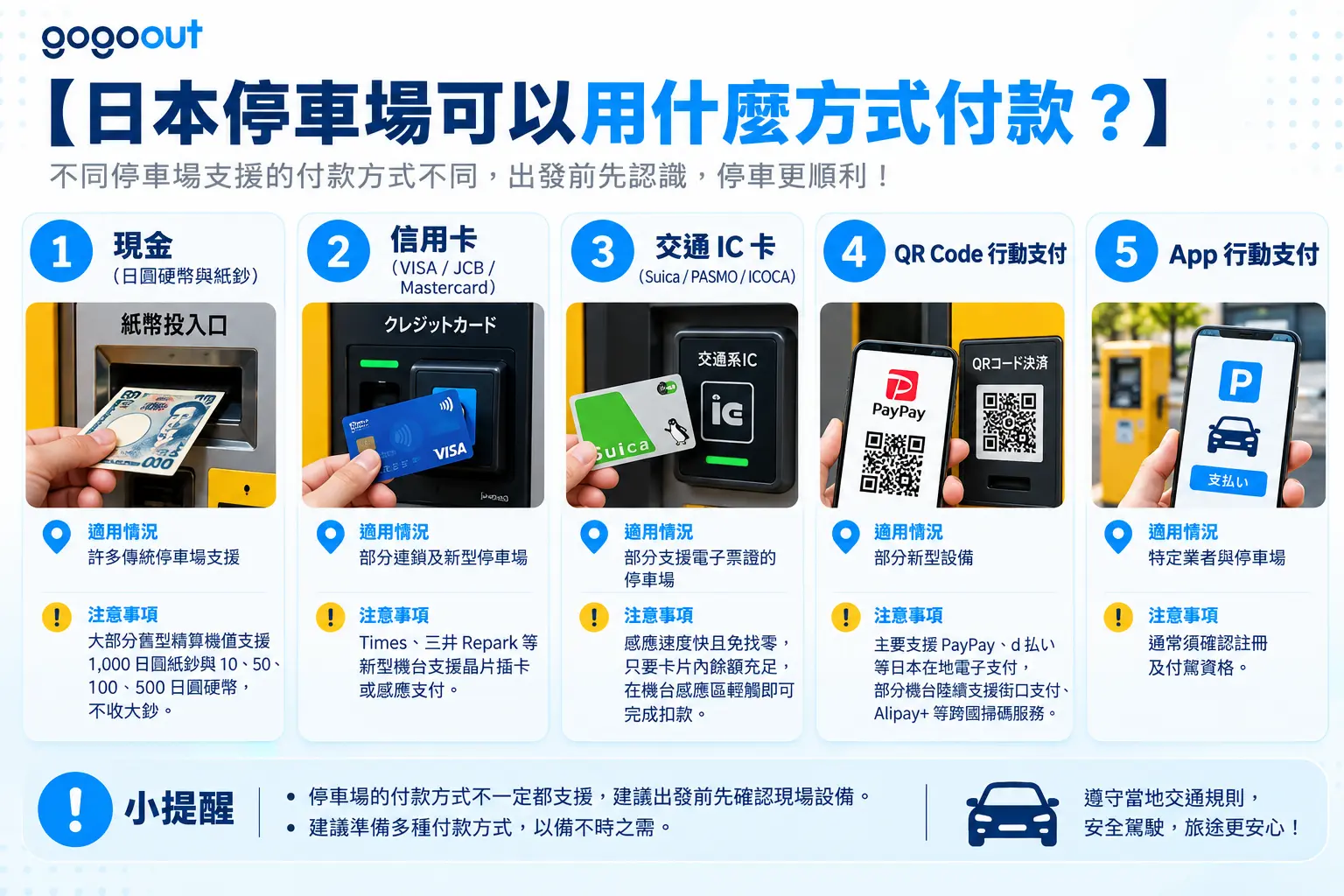
| Payment method | When it applies | Notes |
|---|---|---|
| Cash (yen coins and bills) | Accepted at many older parking lots | Most older payment machines only take ¥1,000 bills plus ¥10, ¥50, ¥100 and ¥500 coins; larger bills are not accepted. |
| Credit card (VISA / JCB / Mastercard) | Some chain and newer parking lots | Newer machines such as Times and Mitsui Repark support chip insertion or contactless payment |
| Transit IC card (Suica / PASMO / ICOCA) | Parking lots that accept electronic tickets | Fast to tap and no change needed; as long as the card has enough balance, just touch it to the reader on the machine to pay |
| QR code mobile payment | Some newer machines | Mainly supports Japanese local e-payments such as PayPay and d払い (d-barai); some machines are gradually adding cross-border scan-to-pay services like JKOPAY and Alipay+ |
| App mobile payment | Certain operators and parking lots | You usually need to check registration and payment eligibility first |
There is no guarantee that every parking lot in Japan takes cash, and you can’t assume every payment machine accepts credit cards or transit IC cards. When you’re on a self-drive trip in Japan, it’s a good idea to carry a few ¥1,000 bills and some yen coins just in case.
Before you pull in, check the payment symbols on the rate board so you don’t park first and then discover your payment method isn’t accepted.
(2) Common Japanese words on payment machines
| Japanese | Meaning in English |
|---|---|
| 精算 (seisan) | Settle the bill, calculate the fee |
| 駐車番号/車室番号 (chūsha bangō / shashitsu bangō) | Parking space number |
| 車両番号 | License plate number |
| 駐車券 (chūshaken) | Parking ticket |
| 領収書 (Ryōshūsho) | Receipt |
| 取消/とりけし (Torikeshi) | Cancel the operation |
| 呼出 (Yobidashi) | Call staff or customer service |
| おつり | Change (money returned) |
| 現金 (genkin) | Cash |
| クレジットカード | Credit card |
| 出庫 (shukko) | Exiting the parking lot |
If several similar photos appear after you enter your plate number, check carefully which one is your car so you don’t pay another vehicle’s parking fee by mistake.
(3) What to do if the payment machine breaks down or you lose your parking ticket
If the payment machine malfunctions, you’ve already paid but can’t exit, or you’ve lost your parking ticket, press the 「呼出」 (call) button on the machine first, or call the on-site operator using the phone number posted there.
Some lots have a set procedure for lost tickets, which may require verifying your license plate and entry time, or paying a fee under specific rules. Don’t force the barrier, move the flap plate or simply drive off, as this can damage equipment and lead to disputes over charges.
4. How to read Japanese parking rates: maximum rates, time slots and day-of-week pitfalls
The information most often misread at Japanese parking lots is the 「料金」 (rate) on the fee board. Some lots charge in 20-minute increments, others in 30- or 60-minute blocks, and rates can differ by daytime, nighttime, weekday and weekend.
The maximum rate is the cap that applies within a specified billing period and under specific conditions; it doesn’t mean you’ll pay one flat price no matter how long you stay.
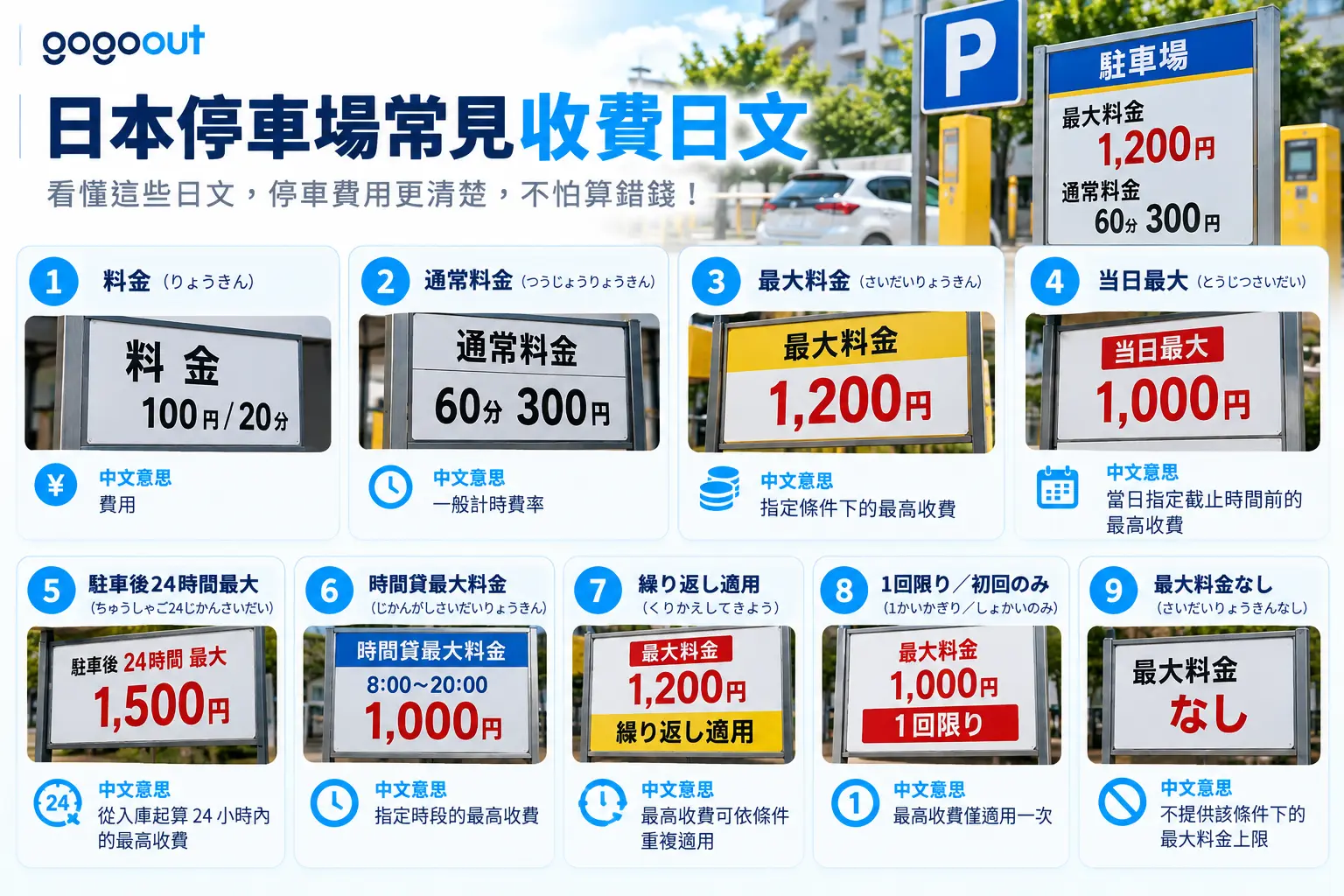
(1) Common Japanese fee terms at parking lots in Japan
| Japanese | Meaning in English |
|---|---|
| 料金 (ryōkin) | Fee |
| 通常料金 (tsūjō ryōkin) | Standard hourly rate |
| 最大料金 (saidai ryōkin) | Maximum charge under specified conditions |
| 当日最大 | Maximum charge up to the specified cutoff time on the same day |
| 駐車後24時間最大 (chūshago 24-jikan saidai) | Maximum charge within 24 hours from the time you enter |
| Time-based maximum rate | The maximum charge for a specified time period |
| 繰り返し適用 (applied repeatedly) | The maximum charge can be applied repeatedly if the conditions are met |
| 1回限り/初回のみ (once only / first time only) | The maximum charge applies only once |
| 最大料金なし (no maximum rate) | No maximum rate cap is offered under this condition |
(2) How are the three types of maximum rates calculated?
| Type of maximum rate | Japanese example | Billing characteristics |
|---|---|---|
| Same-day maximum | 当日 24 時まで最大 1,000 円 (max ¥1,000 until 24:00 on the same day) | The cap applies until midnight of the same day; after midnight a new billing day begins |
| Maximum for 24 hours after entry | 駐車後 24 時間最大 1,000 円 (max ¥1,000 for 24 hours after parking) | The specified 24-hour period is counted from the moment the car enters the lot |
| Time-slot maximum | 20:00~8:00 最大 500 円 | The cap applies only within the specified time slot; other hours are charged separately |
For example, if you enter at 22:00 and leave at 08:00 the next morning, a “max until 24:00 on the same day” rate may start a new billing cycle after midnight. With a “max for 24 hours after entry” rate, you may still be within the same 24-hour billing period.
(3) The difference between “applied repeatedly” and “once only” maximum rates
If you plan to park for two days or more in a row, be sure to check whether the maximum rate can be applied repeatedly:
- 繰り返し適用 (applied repeatedly): the stated maximum charge can be counted again in each new billing cycle, as long as the posted conditions are met.
- 1回限り/初回のみ (once only / first time only): the maximum charge applies only to the first billing cycle, and the regular rate may resume for the rest of your stay.
For example, a parking lot may post a maximum of ¥1,000 for the 24 hours after entry, repeatable every 24 hours. If all conditions are met and no other rate restrictions apply, parking for a full 48 hours could cost ¥2,000.
If the maximum rate applies only the first time, charges may accumulate at the regular rate once that first discount period ends. Some parking lots also set a maximum continuous parking time, so even a 24-hour lot does not necessarily mean you can park there for days on end!
(4) How to read weekday, weekend and public holiday rates
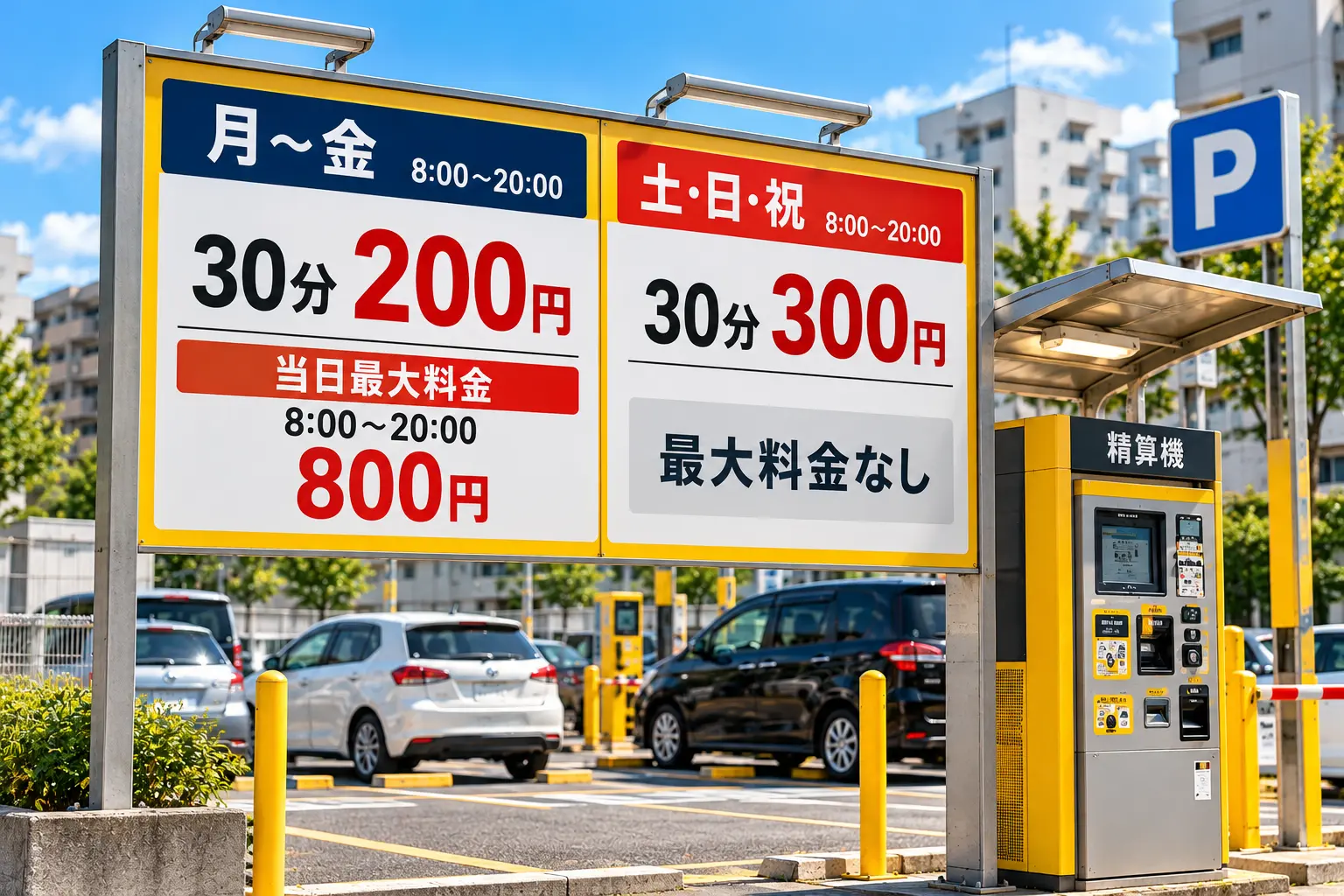
Besides daytime and nighttime rates, Japanese parking lots often set different rates depending on the day of the week.
| Japanese wording | What it means |
|---|---|
| 月~金 (Mon–Fri) | Monday through Friday |
| 土日祝 (Sat, Sun, holidays) | Saturday, Sunday and Japanese public holidays |
| 土曜日 (Saturday) | Saturday |
| 日祝 (Sun, holidays) | Sunday and public holidays |
| 全日 (all days) | Applies every day |
| 特定日 (specific days) | Specially designated dates |
| 平日 (weekdays) | Weekdays as defined by each lot; check whether Saturday is included |
For example, a sign might read:
月~金 (Mon–Fri) 08:00~20:00
- ¥200 per 30 minutes
- Maximum ¥800 during the specified period that day
土日祝 (Sat, Sun, holidays) 08:00~20:00
- ¥300 per 30 minutes
- 最大料金なし (no maximum rate)
This means a lower rate and a stated maximum charge apply Monday through Friday, but there may be no maximum rate on weekends and public holidays.
Say you park for 5 hours on a Saturday, entirely within that time slot and with no other discounts:
¥300 × 10 half-hour blocks = ¥3,000.
Even if the sign says 最大料金 800 円 (maximum rate ¥800), that does not mean five hours of weekend parking will also cost just ¥800.
(5) Time-slot rates and nighttime charges
Japanese parking lots also commonly use different rates by time of day, for example:
- 08:00–20:00: ¥200 per 30 minutes.
- 20:00–08:00: ¥100 per 60 minutes.
- Overnight maximum rate: 500 yen.
If your parking time spans both daytime and nighttime periods, the fee must be calculated separately for each period, and then you need to check whether the stated maximum rate applies. In particular, an “overnight maximum rate” usually caps only the fees incurred within the specified nighttime window, so don’t assume it also covers the next day’s daytime parking.
(6) Japan parking fee calculator
Standing in front of the parking lot but can’t make sense of the rates on the sign? Just enter what you see into the fee calculator below and get an estimate right away!
Japan parking fee calculator
Enter the details exactly as shown on the on-site rate board to estimate fees across time periods, weekdays vs. weekends/holidays, and multiple maximum rates. All calculations run locally in your browser.
① Parking date and time
Public holidays and special dates must be entered manually in YYYY-MM-DD format; the tool does not detect Japanese public holidays automatically. If a date is marked as a special date, the “special date” rate takes priority.
② Standard time-based rates
For example, add “Mon–Fri 08:00–20:00, 200 yen per 30 min” as one rule. Any time period you leave out will be flagged, so no prices are assumed for you.
③ Maximum rates (multiple allowed)
Supports “until 24:00 the same day,” “time-period maximum,” and “maximum for N hours after entry,” as well as rates that repeat or apply only once. When periods overlap, the lower valid combination is used.
④ Other discounts or fees
If the lot offers “X hours free,” validated shopping tickets or other complex discounts, check the operator’s own rules; this field only adds or subtracts fixed amounts.
Choose your parking times, enter the rate rules, then click “Calculate parking fee.”
Important: This tool estimates fees “based on the sign conditions you enter.” It is not a live parking-lot database, and it does not check availability, restrictions on specific bays, event-day rates, or whether a given operator carries billing units across time periods. If the rate board has special rules or the rules conflict, go by the on-site notices and the amount shown on the payment machine. Calculations cover up to 7 consecutive days.
(7) Pitfalls with specific bays and special dates
Some lots advertise a maximum rate on the sign, but it only applies to certain bays. For example:
- Bays 1–3 only
- 奥の車室のみ (inner bays only)
- 特定日最大料金なし (no maximum rate on special dates)
The first means only bays numbered 1 to 3 qualify, the second means only the designated bays at the back qualify, and the third means no maximum rate applies on certain dates.
At popular sights in Japan, and during fireworks festivals and large events, some lots temporarily switch to special pricing. Even if you looked up the rates in an app beforehand, double-check the on-site sign and the bay number before you pull in.
5. Street parking rules in Japan and how to pay
Some streets in Japan have legal “time-limited parking bays,” but don’t confuse these with ordinary white lines along the curb. Anywhere that isn’t an open parking area, you can still be fined for no-parking, no-stopping-or-parking, or improper parking, so stay alert when you’re behind the wheel.
(1) Understanding time-limited parking zones
Japan’s 時間制限駐車区間 (time-limited parking zones) are stretches of designated road where vehicles may park briefly under specified times, locations and conditions. They’re meant for quick errands or loading and unloading, not for long stays.
- Sign example “8-20 60分”: street parking is allowed between 8:00 a.m. and 8:00 p.m., but each stay is capped at 60 minutes.
- No parking outside the posted hours: unless the sign specifically notes that nighttime parking is free, the stretch of road usually becomes a “no parking at any point” zone between 8:00 p.m. and 8:00 a.m. the next morning. Park during those hours and you can be ticketed or towed, even if you’re inside the white box.
(2) How to use the two types of street parking equipment
Payment for street parking in Japan mainly comes in two forms: parking meters and ticket-dispensing machines.
① Parking meters (パーキング・メーター / Parking Meter)
- Park the car: pull into the white box. Once the sensor detects the vehicle, the meter display lights up and starts counting down (usually with a 5-minute grace period).
- Pay immediately: as soon as you’ve parked, insert the required amount into the meter (typically 300 yen for 60 minutes, 100-yen coins only). Once payment goes through, the meter shows 60 minutes and begins counting down.
- No feeding the meter: Japanese law does not allow you to insert more coins to extend your street parking time. Once the 60 minutes run out, being even 1 minute over counts as illegal parking, and a patrol officer can ticket you on the spot; you can’t pay after the fact. So make sure you drive out of the bay within the allotted time.
② Ticket-dispensing machines (パーキング・チケット / Parking Ticket)
- Buying a ticket: after pulling into the bay, walk to the ticket machine at the curb and insert the required amount (300 yen, for example). The machine prints a parking ticket (駐車チケット, parking ticket) showing the time your parking expires.
- Displaying the ticket: stick the printed ticket on the inside of the windshield in front of the passenger seat, or on the inside of a side window, so the expiration time is clearly visible from outside. If it isn’t displayed as required, patrol officers will treat it as non-payment and issue a fine.
(3) What’s the difference between 駐車禁止 (no parking) and 駐停車禁止 (no stopping or parking) in Japan?
| Sign | Meaning in English | Things to note |
|---|---|---|
| 駐車禁止 (chusha kinshi) | No parking | Whether brief stopping is allowed still depends on the definition in the Road Traffic Act |
| No parking or stopping | Both parking and stopping are prohibited | Apart from legally defined exceptions, you may not park or stop at will |
Parking for less than five minutes is not automatically legal! If the driver leaves the vehicle and cannot move it immediately, even a stop of just a minute or two can count as an illegal parking violation.
So when you head into a restaurant, shop at a convenience store or stop to take photos, it’s strongly recommended to use a legal parking lot rather than simply pulling over at the roadside.
6. Must-have apps for finding parking in Japan
When driving in Japanese city centers, the biggest worries are finding every parking lot along the way full, or turning into a narrow one-way street with no room to turn around. Before you set off, consider downloading these handy Japanese parking apps — they can save you a lot of time when hunting for a space!
(1) PPPark!(ピーパーク)
PPPark! helps you compare parking fees based on your expected parking time, location and each lot’s rate information. It’s great for travelers looking for cheap parking, especially when one area has many lots with different pricing structures, as a first-pass comparison tool.
Just pick your destination on the map and the time window you expect to park (for example, Saturday 14:00 to 18:00, four hours in total), and the app automatically runs the numbers using each lot’s complex time-based rates and maximum-rate formulas, marking them on the map sorted from cheapest to most expensive so you can spot the best-value space nearby at a glance.
That said, the app’s data doesn’t necessarily cover every special day, event day or restricted-space rate, so the posted price on site is always the final word.
(2) 駐車場検索 (Parking Search) – NAVITIME
NAVITIME provides parking lot locations, operating information and, for some lots, availability data in Japan. Its database covers tens of thousands of parking lots across the country, supports real-time availability updates (空車 (spaces available) / 満車 (full) / 混雑 (busy)) and lists vehicle height and width limits, payment methods and opening hours in detail, with direct links to navigation routes.
Not every parking lot has real-time availability data, though, so check when the information was last updated before you set off.
(3) akippa(あきっぱ)
akippa is a reservation-based shared parking service in Japan where you can search for parking spaces at private homes, vacant lots and commercial facilities that owners have opened up for rent, booking and paying online days or even weeks in advance. It’s ideal during the autumn foliage season, fireworks festivals or at popular historic shopping streets, saving you from queuing for a space on arrival.
Before booking, check the payment methods, cancellation policy, available time slots and vehicle size limits.
(4) Times Parking / Mitsui Repark parking lots
Times (タイムズ) and Mitsui Repark (三井のリパーク) are the two largest parking chains in Japan by number of locations. Downloading their official apps lets you check real-time availability and posted rates at their lots, and some locations even support contactless online payment through the app, so you don’t have to dig out coins at the payment machine.
(5) Google Maps local search tips
Besides the English word “Parking,” you can also search in Japanese:
- 駐車場: parking lot
- コインパーキング: metered, pay-by-the-hour parking lot
- 時間貸駐車場 (hourly rental parking): parking rented by the hour
- 駐車場 24時間 (parking lot, 24 hours): search for 24-hour parking facilities
Once you’ve found a parking lot, it’s a good idea to look at recent photos, reviews and the entrance location to confirm your vehicle type will fit.
7. What to do if you get a parking ticket: 4 steps
Japan enforces parking violations very strictly. If you return to your car and find a yellow or white violation sticker on the windshield, follow these four standard steps. For full details on demerit points and road rules, see our guide to driving in Japan and its traffic rules.
- Read the violation sticker on the window: the sticker is a 放置車両確認標章 (abandoned vehicle confirmation notice), and it states the time and place of the violation along with the name and phone number of the police station with jurisdiction.
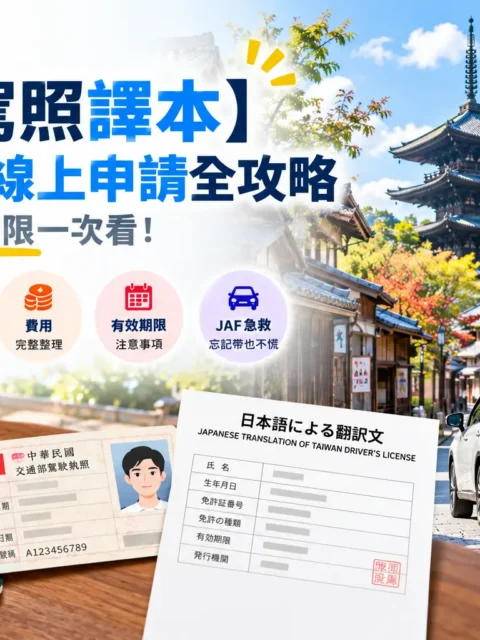
- Report to the designated police station: bring your passport, your original Taiwanese driver’s license and its Japanese translation (or an International Driving Permit (IDP) if you’re from a convention country) and your rental agreement, and go to the police station named on the sticker. If you’re unsure, ask at the nearest police station or koban. Once the police confirm the details, they will issue a violation notice (交通反則告知書, traffic violation notification) and a payment slip (納付書, payment form).
- Pay the fine at a financial institution: take the payment slip to a designated Japan Post branch (郵便局, post office) or financial institution and pay the fine. For an ordinary passenger car in Japan, parking fines usually run ¥10,000 to ¥18,000 (depending on the zone, such as a no-parking-and-no-stopping area versus an ordinary no-parking area).
- Keep the receipt and show it when you return the car: after paying, keep the payment slip or receipt stamped with the 領収日付印 (payment date stamp) and hand it to the rental company together with the violation notice. If you haven’t completed payment before returning the car, the rental company will charge a 駐車違反金 (parking violation fee) on the spot — around ¥25,000 for a standard car and about ¥30,000 for a mid-size or large vehicle.
8. Frequently asked questions about parking in Japan
No, you can’t just use one. A 月極駐車場 (monthly parking lot) is usually a private space for people with a monthly contract, and an empty spot doesn’t mean it’s open to visitors. Look instead for lots marked 時間貸 (hourly rental) or コインパーキング.
Not necessarily. A same-day maximum may only apply until midnight that day, while a 24-hours-from-entry maximum is counted from the time you drove in. Always check whether the maximum rate applies repeatedly and how long you’re allowed to stay.
Not always, but popular tourist areas may have different weekday and weekend rates. When you see 土日祝 (Saturdays, Sundays and public holidays), check whether there’s a higher unit rate, a different maximum rate, or no maximum-rate cap at all.
It depends on the lot’s rules. At some license-plate recognition lots you can simply drive out within the free period, while others still require you to use the payment machine to complete a 0 yen transaction. Check the on-site instructions.
Some lots allow overnight parking, but you need to confirm whether entry and exit are available 24 hours, how the maximum rate is calculated and the limit on continuous parking. Being open 24 hours doesn’t mean you can park without limits.
Some lots accept credit cards, transit IC cards or QR code payments, but not every machine does. Check the payment symbols before you park, and carry a little yen in cash as a backup.
It means there’s no maximum fee cap under that rate condition, so the parking fee may keep adding up by the hour. If you’re parking for a long time, estimate the cost first or look for another lot that does offer a maximum rate.
Not necessarily. Japanese hotels may charge a nightly parking fee, or limit the number of spaces and the size of vehicles they can take. Before you check in, confirm the parking fee, whether a reservation is required and whether you can come and go freely.
Check these five things before you park on a self-drive trip in Japan!
Parking on a self-drive trip in Japan really isn’t hard. As long as you understand the types of parking lots, how to use them and how fees are calculated, you’ll greatly reduce the risk of parking in the wrong spot, paying extra or getting a ticket.
Every time you pull into a Japanese parking lot, remember to check five things:
- Check whether you’re allowed to park: choose a legal, publicly accessible parking lot and avoid 月極駐車場 (monthly parking lots) and contract-holder-only spaces.
- Check the parking equipment: follow the rules for flap-plate, gate-barrier, license-plate recognition or mechanical parking lots.
- Check the maximum rate: understand same-day maximums, 24-hours-from-entry maximums and whether they apply repeatedly.
- Check day-of-week and time-based rates: watch for different charges on weekdays, 土日祝 (Saturdays, Sundays and public holidays), at night and on special dates.
- Check how to pay and exit: follow the payment machine or attendant’s instructions so you don’t run into problems from an incomplete transaction.
Before you set off, look up parking near your destination with Google Maps or a Japanese parking search app, then confirm the latest rates and restrictions when you arrive. With these basics in hand, you can plan your self-drive trip in Japan with much more peace of mind.
Ready to plan your self-drive trip in Japan? With the gogoout car rental platform, you can quickly compare car rental deals all across Japan. gogoout offers transparent pricing and online customer support, so renting a car abroad comes with more peace of mind!
This article was translated by AI from the original Chinese version.