
Renting a car in Thailand is one of the most freeing ways to travel the country. If you want to explore areas outside the city, such as Kanchanaburi, Hua Hin, Chiang Mai or Pattaya, hiring a car with a driver is an option, but you may end up tied to a schedule. That’s when renting a car becomes the most convenient and cost-effective choice!
This guide pulls together the documents you need to rent a car in Thailand, an introduction to Thai car rental companies, a breakdown of Thai car rental insurance, and the most common questions about renting a car in Thailand. Whether this is your first rental or you already have some experience, this Thailand car rental guide has useful pointers for you.
The most common questions before renting a car in Thailand:
Q: Does Thailand drive on the left or the right?
A: Like Japan and Hong Kong, Thailand is a right-hand-drive country, so the driving habits and the position of the steering wheel are the opposite of Taiwan. Take it slow at first until you get used to it. The accelerator and brake pedals, however, follow the international standard and are in the same place everywhere!
Q: What do I need to prepare to rent a car in Thailand?
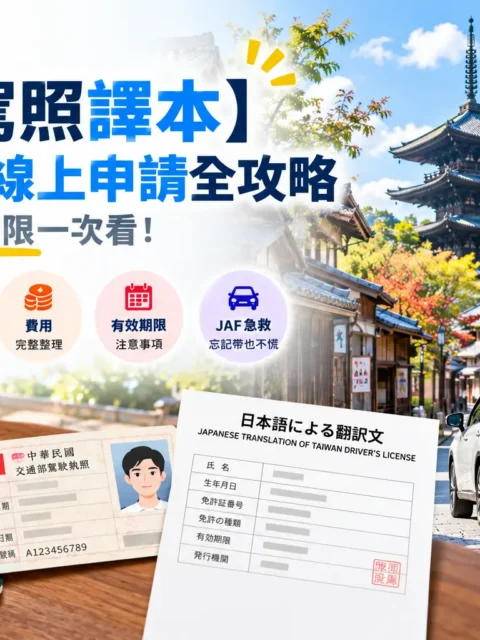
A: To rent a car in Thailand you must bring your “home-country driver’s license”, “government-issued International Driving Permit”, “valid (unexpired) passport” and “credit card”. With all of these ready, you can book your rental car in Thailand with confidence.
Q: How much does renting a car in Thailand usually cost?
A: Car rental prices in Thailand are generally cheaper than in Taiwan, Japan or Korea. Book a car in Thailand through gogoout and the best deals start from just NT$1,400 per day!
Why we recommend renting a car in Thailand

Outside Bangkok, public transportation and Grab are less convenient in most parts of Thailand, so renting a car or hiring a car with a driver is the top choice:
- Flexibility and freedom: With a rental car you can plan your itinerary however you like and explore Thailand’s attractions freely, without being tied to fixed routes or timetables.
- Varied scenery and landscapes: Thailand is full of diverse natural scenery, historical sites and royal palaces, and a rental car means distance and routes won’t keep you from seeing them.
- Unlock hidden gems: Driving yourself lets you reach remote areas and lesser-known spots, and experience real Thai life and culture.
- A personalized travel experience: A self-drive trip lets you adjust the itinerary to your own interests and preferences for a truly personalized experience.
- Great value on cars: Compared with Japan, Korea and Taiwan, rental cars in Thailand are relatively affordable, and splitting the cost among a few friends makes it even better value!
Documents you need to rent a car in Thailand
In Thailand, a small number of rental shops don’t ask for every document, which means you might get the car easily but end up driving without a license and breaking the law. Do your homework before you set off!
- Driver’s license
Make sure your passport is valid for the whole rental period and that the personal details on it match what you provided when booking. - International Driving Permit (IDP)
Thailand recognizes the IDP issued in Taiwan, and you can apply for it directly with your original driver’s license
Taiwanese applicants need to apply at a local Motor Vehicles Office with
your ID card, two 2-inch ID photos taken within the past two years, your driver’s license, a photocopy of your passport and the NT$250 fee - Passport
- Credit card
Most rental companies take online card payment or charge a deposit to the card, so remember to bring the credit card you used to book online!
Comparing the main car rental companies in Thailand
Thailand has plenty of well-known car rental companies, including Avis, Hertz and Budget, and each offers different locations, vehicles and insurance coverage amounts. Below is a basic comparison table of costs and services for your reference.
(Actual amounts depend on the quote shown at the time of your search.)
Comparison based on a Toyota Yaris:
| Car rental company | gogoout | Avis | Hertz | Budget |
|---|---|---|---|---|
| Airport pickup | ○ (available for a fee) | ❌ | ○ (bookable for a fee) | ❌ |
| Service in Chinese | ○ (online customer service in Chinese) | ❌ | ❌ | ❌ |
| Price (per day) | From NT$1,400 (insurance included) | From NT$1,550 (includes CDW and theft protection) | From about NT$850 (CDW only) | From about NT$1,250 (CDW only |
| GPS | ❌ | ❌ | ❌ | ❌ |
| ETC | ○ (depends on the shop) | ❌ | ❌ | ❌ |
| Child seat | ○ (depends on the shop) | ○ (must be added on) | ○ (must be added on) | ○ (must be added on) |
| Opening hours | 8:00~19:00 | 8:00~20:00 | 8:00~20:00 | Open 24 hours |
A breakdown of car rental insurance in Thailand

In Thailand, you’ll usually come across these types of insurance:
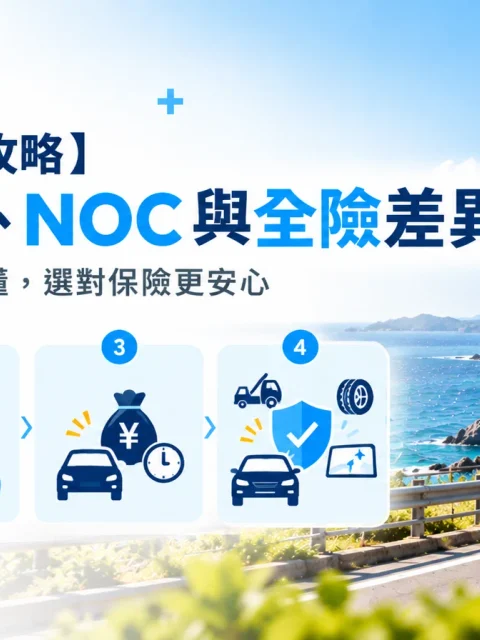
- Collision damage waiver (CDW) / loss damage waiver (LDW)
This covers damage to the rental car and protects you from being billed for expensive repairs by the rental company, though some parts of the car are still excluded.
E.g., windows, tires and the engine. The basic cost is already included in the rental price - Super collision damage waiver (SCDW)
An upgraded version of standard CDW designed to reduce your excess; think of it as excess insurance. - Compulsory third party insurance (CTP)
Thailand’s compulsory insurance covers injury to third parties and damage to their property, not the driver or passengers!
The basic cost is already included in the rental price - Personal accident and effects insurance (PAE)
Covers personal injury to the driver and passengers, as well as their belongings - Theft protection (TP)
- Zero-excess full coverage (details vary by company)
Some chains and local shops offer a full-coverage package, which basically means there is no chance of any excess being charged
Note | Some of the insurance above is purchased separately, so double-check that you fully understand the coverage before booking!
We genuinely recommend adding the insurance above when you rent a car in Thailand, so a language barrier after an accident doesn’t leave you out of pocket!
How the car rental process works in Thailand
1. Renting a car in Thailand with gogoout in three steps

2. Picking up your car

Picking up and returning a car in Thailand is fairly simple and smooth, but there are still a few key steps to watch out for:
- Show the required documents: Have your driver’s license, passport and credit card ready for verification and for the rental paperwork.
- Sign the rental agreement: You’ll sign a rental contract covering important points such as the terms of use and the insurance rules. Read it carefully and make sure you fully understand and agree to the terms.
- Check the condition of the car: Before driving off, inspect the exterior and interior of the car carefully and photograph any existing damage or problems to avoid disputes when you return it.
- Learn how the car works: Thailand drives on the left with right-hand-drive cars, so get familiar with the controls before you set off to avoid fumbling and causing an accident.
- Confirm the fuel type: Fuel types in Thailand aren’t quite the same as in Taiwan, so check which fuel the car takes when you pick it up.
- Pay the rental fee and deposit: Pay the rental fee and any deposit as set out in the rental agreement. These can usually be paid by credit card, so make sure your credit limit is high enough to cover them.
- Decide whether to add extra insurance: Cars booked online already include basic insurance, or you can add coverage when you book, but some branches will still offer extra coverage at the counter. Decide based on your situation.
3. Returning your car

- Return the car on time: Return the car to the location specified by the rental company by the time agreed in the contract. Late returns may incur extra charges, so keep an eye on the clock. If you need a one-way rental, be sure to confirm it before booking.
- Vehicle inspection: After you hand the car back, staff will check its condition, inside and out. Make sure there’s no damage and nothing is missing so you don’t get charged extra.
- Pay any extra charges: If there is any damage or anything is missing, the renter may have to pay the corresponding extra charges under the rental agreement. Have cash or a credit card ready.
- Get your deposit back: If you paid a deposit during the rental and the car has no damage or missing items, the deposit will be refunded after you return the car.
- Confirm the return is complete: Once the return procedure is finished, your transaction with the rental company is fully closed. Make sure you collect all your documents so no disputes come up later.
Knowing the pickup and return procedures helps you avoid unnecessary hassle and keeps the whole rental experience running smoothly. Follow the rental company’s instructions and keep a record of all the relevant details so any issue can be resolved quickly.
Things to know about renting a car in Thailand

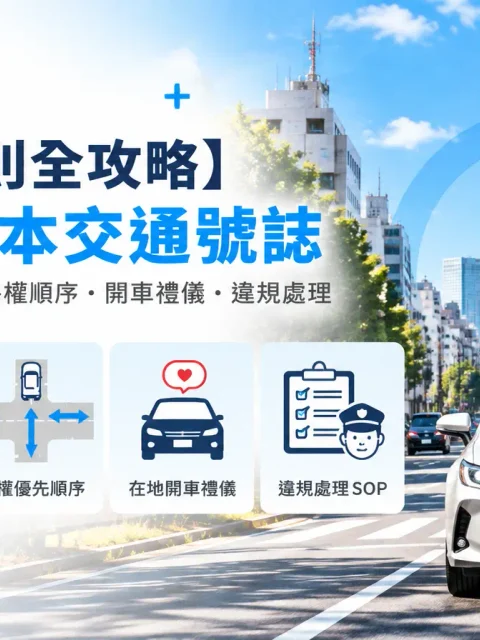
1. Thai traffic rules and fines
- Right-hand-drive vehicles:
Thailand uses right-hand-drive cars, just like Japan, which is the opposite of Taiwan and most Western countries. The steering wheel controls and the road rules are reversed too, so it’s completely normal to switch on the wipers instead of the turn signal at first. Slow down and watch the road! - Turning:
Remember this rule of thumb: wide turns to the right, tight turns to the left. At junctions and when pulling out, check to the right first and then to the left so you don’t end up facing oncoming traffic. - Drive steadily and don’t speed; never drink and drive, and make sure everyone in the car wears a seat belt the whole time.
- Thailand also enforces strict speeding fines, so take extra care to stay within the limit.
Ordinary roads are 40–80 km/h and expressways 90–120 km/h; speeding fines run ฿500–1,000- Drunk driving: fines of up to ฿20,000 plus detention
- Not wearing a seat belt: up to ฿500
- Thailand also enforces strict speeding fines, so take extra care to stay within the limit.
- Pedestrians have priority:
Thailand’s roads are busy and crowded, but pedestrians still have the right of way, and you must always yield to them. - Clear right of way rules:
Right of way in Thailand means who goes first: turning traffic yields to traffic going straight, side roads yield to main roads, and cars entering a roundabout yield to those already in it.
Always be clear about which position you’re in, as it affects who is at fault if there’s an accident. - Avoid using your horn.
Thai people really dislike horn honking and consider it very rude. Unless it’s necessary to prevent an accident,
盡可能不要按喇叭, it’s an invitation to a fight, just like in Taiwan. - Watch out for motorcycles.
Thailand has about as many motorcycles as Taiwan, and there are no dedicated motorcycle lanes, so watch for riders cutting in out of nowhere. - Overtaking rules.
Before overtaking in Thailand you must signal in advance, and you may only overtake on the right. You also may not overtake “on bridges, on narrow stretches or on curves”
.

2. Thai traffic signals

- Traffic lights.
Thailand’s traffic lights look much like elsewhere, sometimes with arrow signals:- E.g. a green arrow → you may keep driving in the direction of the arrow;
a green straight-ahead arrow plus a green left-turn arrow → you may go straight and turn left;
a red right-turn arrow → traffic turning right must stop and wait for the light - Where there’s no “no left turn” sign, you can generally turn left on a red light:
this is an unwritten rule in Thailand, as long as your turn doesn’t interfere with oncoming traffic. Make sure the intersection is completely clear before turning left.
- E.g. a green arrow → you may keep driving in the direction of the arrow;

- Common road signs

3. Parking rules in Thailand

- Street parking
- Black-and-white striped curb: parking with no time limit
- Yellow-and-white striped curb: temporary parking allowed
- Red-and-white striped curb: no parking
- Public parking lots
- Most parking lots in Thailand are free — downtown, at department stores and around hotels, you’ll usually find free parking
- At some free lots an attendant will guide you into a space, and they do expect a tip!

- Spaces where cars are pushed to move them
- To squeeze in more cars, some spaces are set up in a way that blocks other vehicles from getting in or out. In these spaces the rule is “don’t engage the parking brake and leave the car in neutral,” so the car can simply be pushed out of the way when someone needs to move it!
Tip | In unattended areas, it’s best not to leave luggage in the car so it doesn’t get stolen.
4. Setting up navigation in Thailand

In Thailand, as long as your phone has a data connection, Google Maps or Apple Maps is really all you need!
If you’re still worried about an unstable connection, you can always reserve a GPS unit from the rental company when you book.
5. Gas stations in Thailand

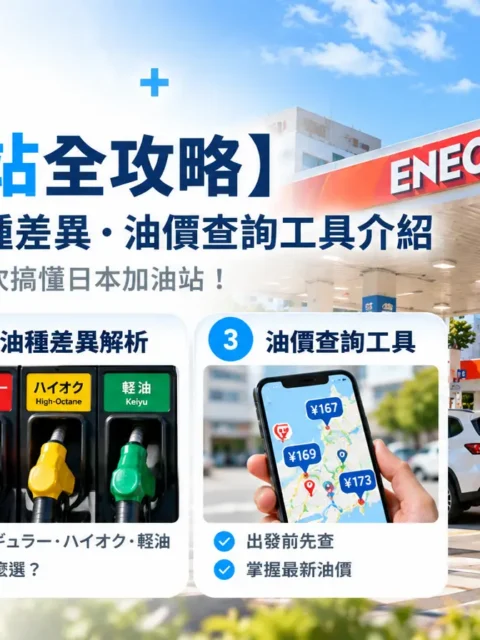
When renting a car in Thailand, double-check what fuel policy your rental company uses, e.g. a full-to-full policy.
There are four common gas station chains in Thailand:
ESSO, CALTEX, PTT and SHELL. They’re easy to find in the cities, but once you head into the outskirts or up into the mountains, the number of gas stations drops sharply.

In that case you can search “gas station” on Google Maps, and plenty of tiny fuel pumps will pop up. They work, but they only take cash. Local grocery stores also keep bottled gasoline for customers who need a quick top-up in a pinch!
So if you really can’t find a big gas station out in the countryside, don’t panic: as long as your phone still has data, you have a good chance of finding fuel!
Most stations in Thailand are full-service; self-service is mainly found in rural areas. Here’s a detailed fuel comparison:
| Fuel type | Nozzle color | Thai | English |
|---|---|---|---|
| Regular gasoline (95) | Yellow | เบนซิน 95 | gasoline |
| Gasohol (ethanol blend) | Red, green, orange | แก๊สโซฮอล91 / 95 / E20 / E85 | Gasohol |
| Diesel | Blue | ดีเซล B7 / B20 | Diesel |
Thailand car rental FAQs

A: Although the legal driving age in Thailand is 18, car rental starts at 21. Policies vary by rental company, so always confirm before booking that you meet that company’s requirements!
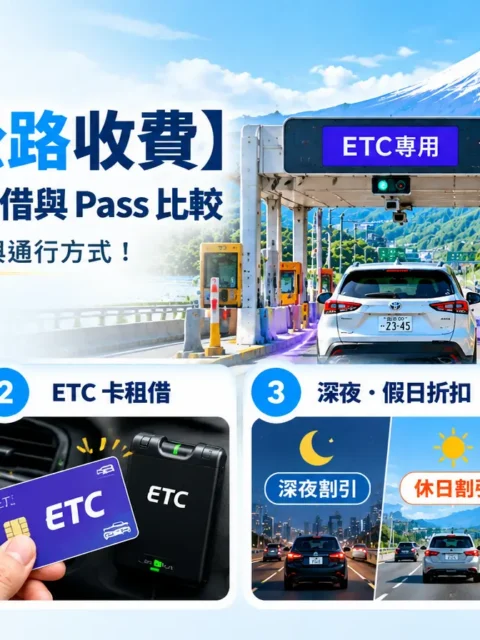
A: Thailand doesn’t have that many expressways, and they use two payment methods: traditional staffed booths and Easy Pass (ETC).
Staffed booths take cash only, so have some cash ready in advance.
Some stretches are charged by distance: an attendant gives you a card, and at the next toll plaza the mileage data is read to calculate your payment.
Thailand’s Easy Pass works like an ETC system; you need a toll transponder installed in the car and an ETC card for automatic deduction.
If your rental car doesn’t have the device, avoid the Easy Pass lanes marked with blue lines on the road, or you could be fined on top of the toll if it can’t be collected properly! (the far-left lane in the photo)
A: Don’t panic right after an accident. Make sure no one on either side is injured, then call the rental company and the police.
Police: 191
Fire: 199
Ambulance: 1669
Foreign-language emergency assistance hotline for foreigners: 1155
English-language general inquiry and complaint hotline for foreigners: 1111
Even for a single-vehicle scrape, you still need to call the police on the spot so they can file an accident report, and contact the rental company at the same time; only then can insurance cover the claim!
A: If you get a ticket in Thailand, you need to pay the fine in person at a police station, or you can ask the rental company to pay it for you. Just be sure to pay it, or the penalty will increase!
Read more articles about renting a car overseas:
👉[Bangkok Car Rental] Airport pickup from NT$1,400 a day, a complete Bangkok car rental guide!
👉[Japan Car Rental] 2024 guide and cost comparison for exploring Japan freely!
👉[Korea Car Rental Guide] The best way to unlock 100% freedom on the road
👉[Okinawa Self-Drive Guide] Documents, traffic rules and insurance tips all in one place!
👉[Jeju Island Car Rental] Price comparison, insurance differences and things to watch out for!
👉[USA Car Rental Roundup] The latest 2023 guide and nine things you need to know!
How do you rent a car in Thailand?Head over to gogoout
Worried about spending hours deciding which rental company to book with, struggling with confusing information and insurance options that are just too complicated?
This article was translated by AI from the original Chinese version.