
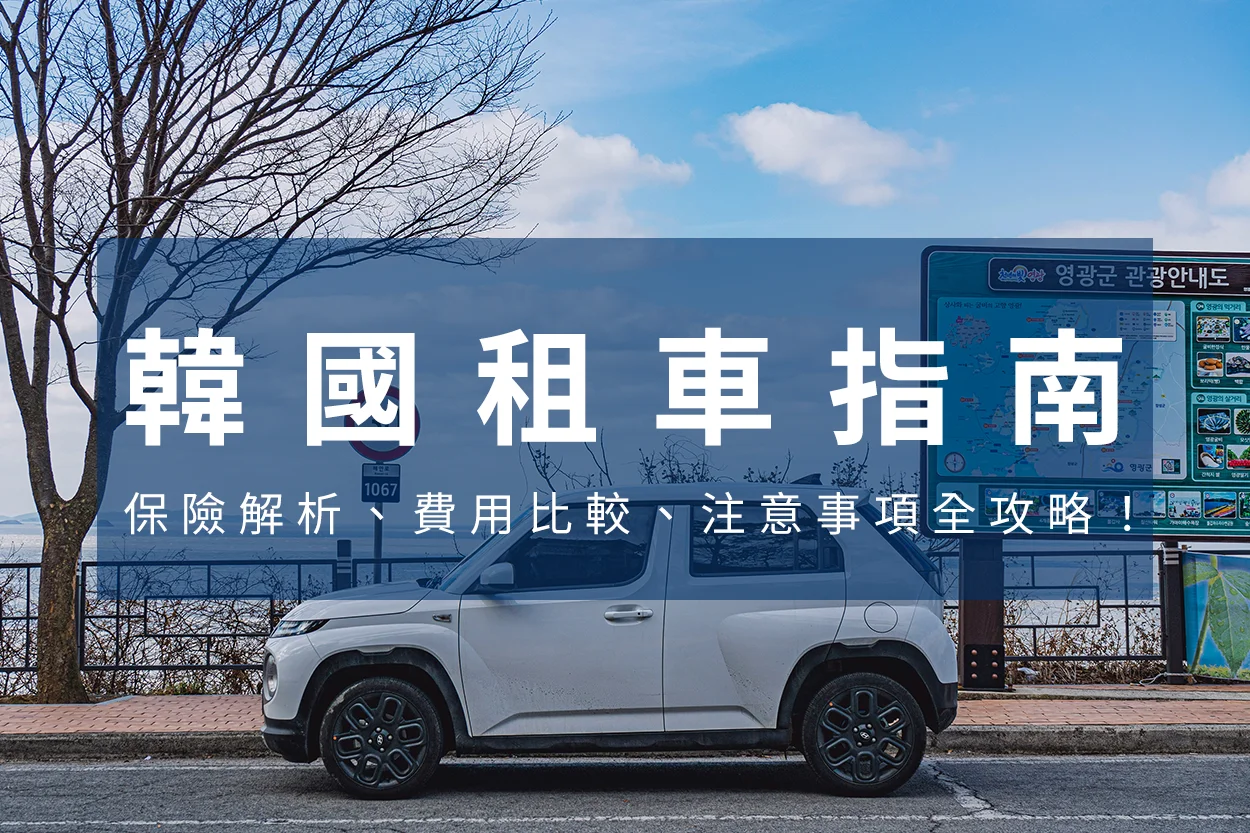
The flexibility and freedom that a car rental in Korea brings to your trip is something even a convenient public transportation system can’t offer. A self-drive trip lets you explore the scenery between cities, experience local life, and sightsee at your own pace.
Whether you’re heading to attractions far from the city center or simply want to plan your itinerary freely, renting a car in Korea makes your travel experience much richer. Next, let’s take a closer look at every aspect of car rental in Korea to help you prepare properly.
The most common questions before renting a car in Korea:
Q: Does Korea drive on the left or the right?
A: In Korea you drive on the right-hand side of the road, so the steering wheel position and the direction of traffic are the same as in Taiwan and the United States.
Q: What age do you have to be to rent a car in Korea?
A: Most rental companies require drivers to be 21 or older. Some require you to be 25 or older. Drivers under 25 have to pay an extra “young driver” fee.
Q: Do I need an International Driving Permit to rent a car in Korea?
A: To rent a car in Korea you usually need an International Driving Permit (IDP), your home-country driver’s license, your passport, a credit card, and your rental booking details
Q: Which insurance is recommended when renting a car in Korea?
A: Car rental insurance in Korea is divided into basic insurance and full coverage, and the difference between the two is the coverage amount. Also, the full coverage offered on Jeju Island differs from the insurance on the Korean mainland.
Q: How much does renting a car in Korea usually cost?
A: Prices vary by car model, rental period and season. Book a car in Korea through gogoout and the best deals start at just NT$2000 a day!
Documents you need to rent a car in Korea
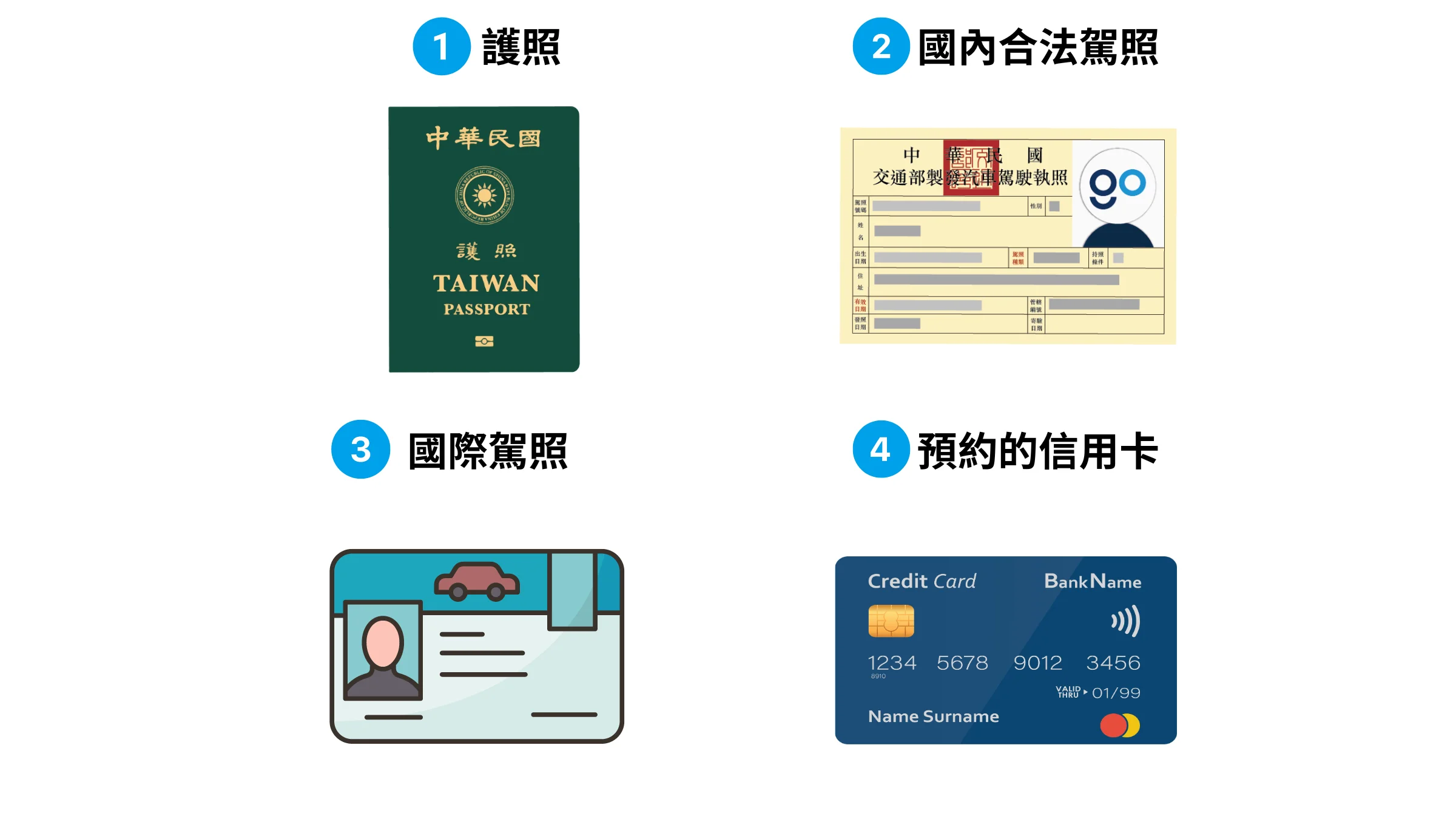
| International Driving Permit (IDP) | The document you must have to drive legally in Korea. Drivers in Taiwan can apply at a Motor Vehicles Office, and it is valid for one year. |
| Home-country driver’s license | Besides the International Driving Permit (IDP), you also need to bring the original of your Taiwan driver’s license. Both must be presented together to drive legally in Korea. (Make sure your license will still be valid throughout your trip in Korea.) |
| Passport | The ID document required when picking up your rental car. Make sure your passport is valid for your entire trip in Korea (before leaving, check that it is valid for at least six more months) |
| Credit card (preferably not a DEBIT CARD) | Most car rental companies in Korea require a credit card for the deposit and the rental fee. Make sure your credit limit is high enough. (Some shops don’t insist on the renter’s own credit card — any card with a name on it may do — but confirm the company’s rules when you book.) |
| Rental booking confirmation | After completing your rental booking online in advance, please print or save the booking confirmation. |
(If anything goes wrong along the way, you can always use gogoout’s online customer service in Chinese to sort out your booking!)
(In February 2022, Korea and Taiwan officially signed a memorandum of understanding on the mutual recognition of international driving permits, so travelers on short trips can finally bring an International Driving Permit issued by Taiwan and rent a car on Jeju Island!)
Travelers from Taiwan apply for an International Driving Permit at a local Motor Vehicles Office. We suggest applying at least two weeks before departure, and bringing:
- The original of your valid Taiwan driver’s license
- Your passport, original or a copy
- Two 2-inch color photos taken within the last six months
- An application fee of NT$250
Comparing car rental costs in Korea
The common rental chains in Korea are Lotte Rent-a-Car, SK Rent-a-Car and AVIS, and AVIS has merged with SK Rent-a-Car to share the same fleet.
Here is a cost comparison based on renting the same compact car on Jeju Island:
| Car rental company in Korea | gogoout | SK Rent-a-Car | Lotte Rent-a-Car |
|---|---|---|---|
| Rental price / day | NT$2120 | NT$2640 (before discount) | NT$4300 (before discount) |
| Airport shuttle service | ✅ | ✅ | ✅ |
| Chinese-language service | ✅ (online customer service in Chinese) | ❌ | ❌ |
| GPS (per day) | ✅ | ✅ | ✅ |
| Child seat (per day) | Optional, pay at the counter | Optional, pay at the counter | NT$200 per time |
| Basic insurance included | CDW | CDW | Basic compulsory insurance |
| Full coverage price | Upgrade option at the shop | Price varies by car model | Upgrade to full CDW |
2. Airport shuttle service may depend on the specific location, and some airports may charge extra.
The prices above are for reference only; actual costs may vary with the season, the specific car model and promotions. We recommend carefully comparing each company’s quote and what it includes when you book.
Car rental insurance in Korea explained
Car rental insurance on the Korean mainland
On the Korean mainland only basic insurance is offered: compulsory insurance + collision damage waiver (CDW)
Even with compensation from the compulsory insurance, there is still a “deductible (excess)” that the renter has to pay. Travelers who have added a collision damage waiver (CDW) don’t have to pay that deductible (excess).
CDW coverage does not include repair or compensation costs for damage to wheel rims, tires, glass, the chassis and similar parts!
There is a set deductible (excess), usually between 0 and 300,000 won (about NT$0–7,500), depending on what the shop’s contract states.
If the repair/compensation cost is lower than the deductible: you only pay that repair cost
If the repair/compensation cost is higher than the deductible: you only pay the deductible, and the insurance absorbs the rest
(When renting a car on the Korean mainland, the law states that if a loss-of-use charge applies, the loss-of-business fee while the car is being repaired is fixed at 50% of that car’s daily rate!)
Car rental insurance on Jeju Island, Korea
Jeju Island in Korea offers full vehicle insurance: compulsory insurance + collision damage waiver (CDW) + non-operation charge (NOC)
The coverage is broader and more comprehensive, which basically means everything that should be covered is covered. Unless you damage the car so badly that it can no longer be driven at all, or seriously enough that it has to go into the shop for repairs, you can generally return the car with peace of mind and without paying anything extra.
When you rent a car on Jeju Island, the staff may even tell you that you don’t need to take photos, because you won’t have to pay extra for any minor bumps — insurance covers it all!
(Whether you rent on the Korean mainland or on Jeju Island, if you rent a premium imported model there will be a deductible of at least 300,000–500,000 won to pay!)
Further reading: [Jeju Island car rental guide] The best way to explore Jeju’s food, sights and independent travel!
Our advice: Full vehicle insurance costs more, but given Korea’s narrow roads and tight parking spaces, plus the possible language barrier, we strongly recommend choosing this option.
Note | Remember to read the insurance terms carefully so you understand exactly what is covered and what is excluded. If anything is unclear, don’t hesitate to ask the rental company!
Korea car rental: pickup and return process
Renting a car in Korea with gogoout in three steps
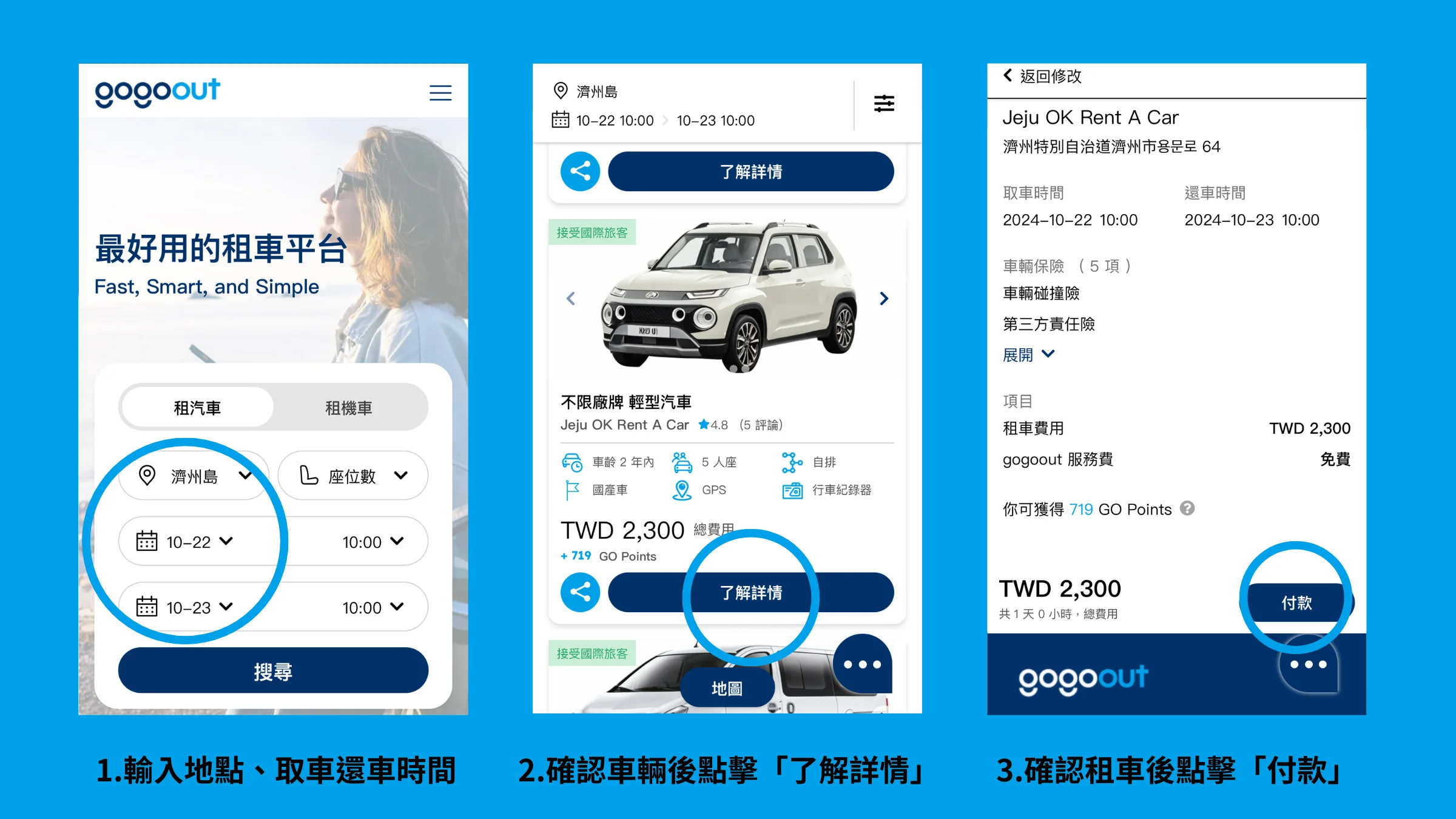
Step 1: Book a car in Korea online
When booking on gogoout, choose the Korean city where you want to pick up the car as your pickup location, then browse the range of models available on the platform.
The platform shows detailed vehicle information, including real photos, model specs and user reviews, to help you make the best choice.
Remember to book as early as possible so you don’t miss out during peak season!
Step 2: Pick up the car when you arrive in Korea
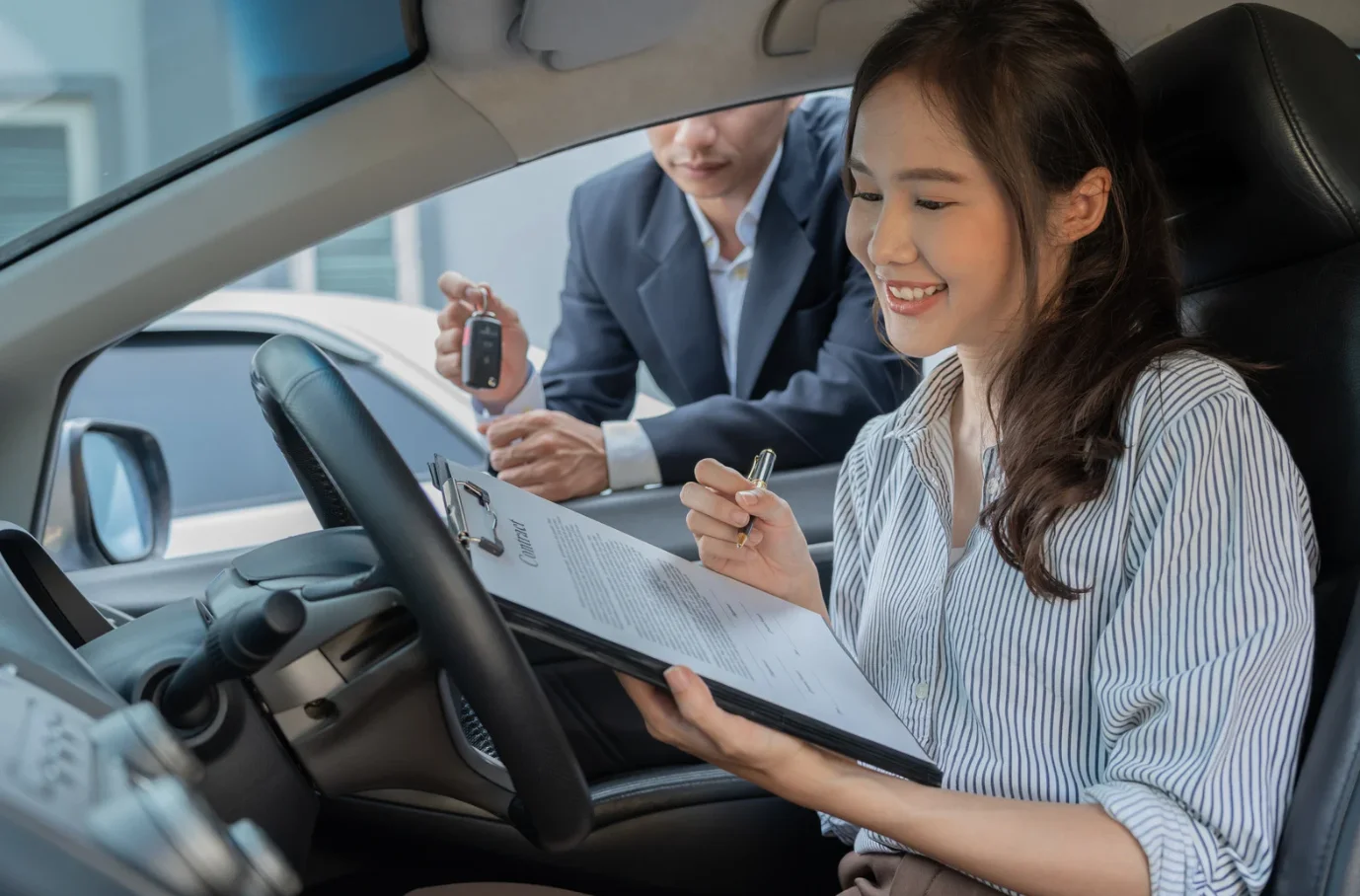
Once you arrive at the rental company in Korea, have your booking confirmation, International Driving Permit (IDP), passport and other key documents ready, then review and sign the rental agreement.
Inspect the car carefully at pickup to make sure there is no damage, and take photos for your records. Also confirm the return time and the fuel policy, so a misunderstanding doesn’t lead to vehicle damage and extra charges.
Step 3: Wrap up your self-drive trip in Korea
After your trip, return the car to the rental company in Korea at the agreed time.
Confirm the mileage with the rental company’s staff and settle the final charges, including highway ETC (electronic toll collection) tolls.
Finally, hand back the keys and your Korea car rental trip is complete.
Renting with gogoout really is that fast!
From compact cars to people carriers and vans, sort out everything about renting a car in Korea in one place.
gogoout shows real photos of the cars, detailed specs and user reviews to help you pick the one that suits you best — renting a car overseas is no longer difficult!
Pickup process
- Arrive at the rental company counter: Present your online booking confirmation, passport, International Driving Permit (IDP) and Taiwanese driver’s license
- Choose extra services and insurance: Depending on what’s available on site, decide whether to add equipment such as GPS or a child seat, and whether to add or adjust your vehicle insurance
- Sign the rental agreement: Read the terms carefully, paying special attention to insurance coverage and the fee breakdown; if anything is unclear, check with the staff right away
- Pay the charges and deposit: When you pay by credit card and the deposit is pre-authorized, staff will check that the cardholder and the driver are the same person. Once that’s confirmed, keep all your rental documents safe
- Inspect the car: Always check thoroughly to avoid disputes at return that could cost you!
- Walk around the car with a staff member and take photos and video of any existing scratches or damage
- Check the fuel level and the mileage
- Get familiar with the car’s basic controls, such as the lights, wipers and air conditioning
- Get ready to drive: Make sure you have all the necessary documents back, along with your passport and credit card, and you’re ready to set off on your Korea road trip
Return process
- Arrive at the designated return location on time: Be sure to return the car within the scheduled time to avoid extra late fees!
- Check the fuel tank: Follow the agreement — fill the tank up, or return it with the same level you received, etc. If you don’t follow the terms, an extra refueling service fee may apply
- Take your belongings: Check the interior carefully to make sure nothing is left behind, especially your passport and driver’s license. If the car is left very dirty, a cleaning fee may apply
- Inspect the car: Compare the car against the video you recorded at pickup to see whether there are any new marks, and whether you caused them
- Hand back the keys and documents and settle the bill: Before you leave, any extra charges are settled; if there are none, your deposit hold is released and you receive the final receipt
- Onward travel: if you return the car at the airport, check how to get back to the terminal; if you return it downtown, plan how you’ll get around afterwards
Korea car rental: things to know
1. Driving habits and traffic rules
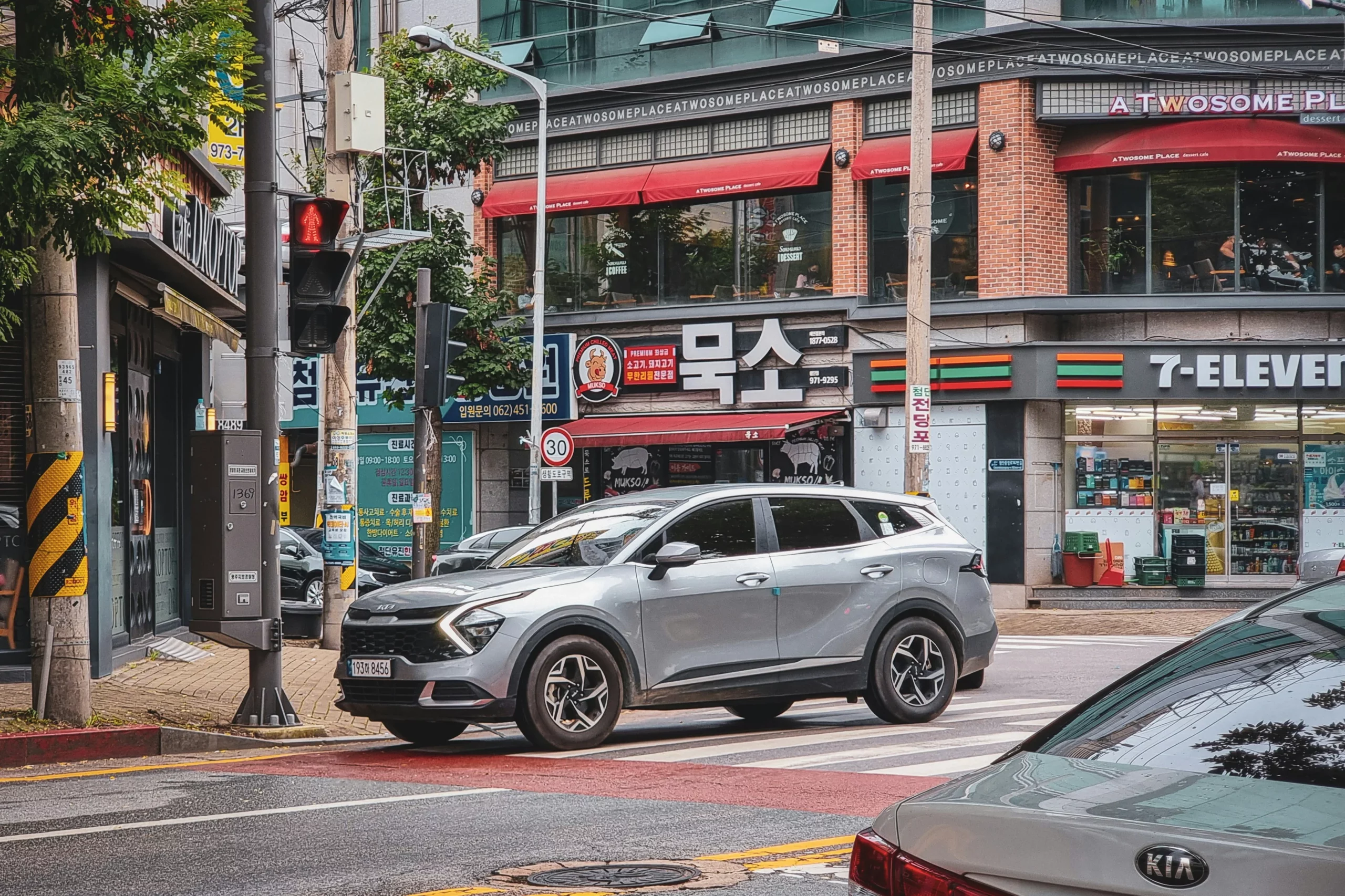
Korea drives on the right, with the steering wheel on the left
Like Taiwan, Korea has left-hand-drive cars that drive on the right, which is good news for Taiwanese drivers: the driving side and turning techniques are the same, so there’s no need to worry about a steering wheel on the other side and you can get comfortable on your self-drive trip faster.
Drive safely
Traffic in Korea can be more aggressive than you might expect — busier and faster than in Taiwan. It’s especially noticeable in the city, and honking is fairly common.
At the same time, keeping your seatbelt on the whole way, not speeding and never drinking and driving is the best route home!
Lots of speed bumps
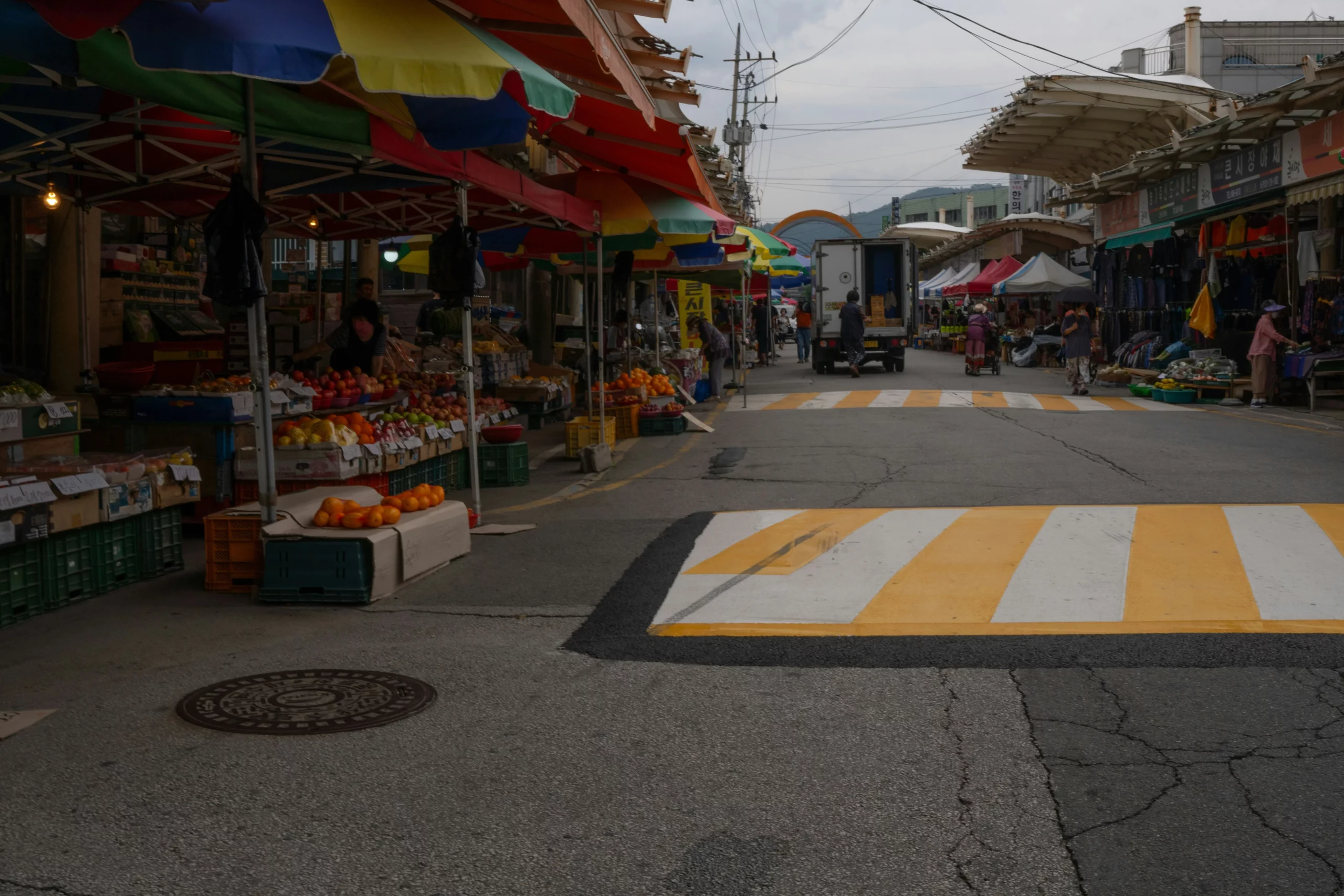
Speed humps and speed bumps aren’t only found on Jeju Island — there are plenty on the Korean mainland too, and some are even fake. You can’t tell from a distance; you only find out whether it’s real or not when you actually drive over it! They show up most often in residential areas and near schools, as well as around large bends.
To keep your car from taking flight, the rule of thumb is simple: when you see a speed bump sign or warning, slow down — even if it turns out to be fake!
(When you’re driving with Korean navigation apps, you’ll also get an on-screen and audio alert: “there is a speed bump ahead“!)
Speed limits for driving in Korea
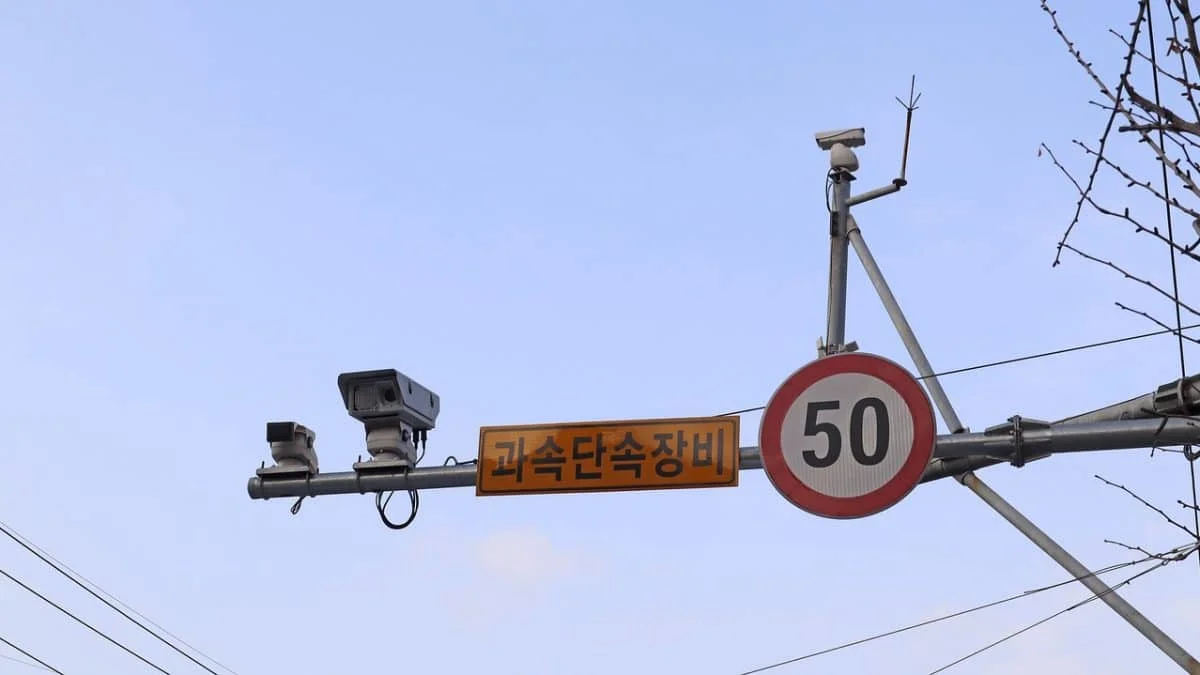
Korea is very strict about speeding — unlike Taiwan, there’s no leeway above the limit. Speed cameras are about as densely placed as in Taiwan, and the average-speed enforcement zones we know and love to hate exist here too, so keep an eye on the speed limit signs and don’t speed, or your wallet will pay for it!
City roads: 50-60km/h; suburban roads: 60-80km/h; highways: 80–100km/h
School zones: 30km/h. On some stretches the 30km/h limit applies only between 8:00-20:00, with 50km/h at other times, so watch the roadside signs
Speeding fines in Korea
| Speed over the limit | Speeding fine on regular roads | Speeding fine in school zones |
|---|---|---|
| Less than 20 km/h over the limit | 30,000-40,000 won | 60,000 won |
| 20–40 km/h over the limit | 60,000-70,000 won | 90,000 won |
| 40–60 km/h over the limit | 90,000-100,000 won | 120,000 won |
| 61 km/h or more over the limit | 120,000-130,000 won | 150,000 won |
Other traffic fines in Korea
| Violation | Speeding fine on regular roads |
|---|---|
| Failing to keep a safe distance on regular roads | 20,000 won |
| Failing to keep a safe distance on expressways | 40,000 won |
| Changing lanes improperly | 30,000 won |
Yielding to pedestrians
Pedestrians always have to be given the right of way, no matter which country you’re in, and Korea is no exception. In recent years its pedestrian protection laws have been tightened step by step, so leave any bad driving habits from Taiwan behind when you hit the road!
If you fail to yield to pedestrians and get caught, you’ll be fined 60,000 won. And if you collide with a pedestrian, you could face up to 5 years in prison or a fine of up to 20 million won.
Designated lane system
Korea has strict rules about lane use: the left and right lanes are limited to certain types of vehicles.
Left and right lanes
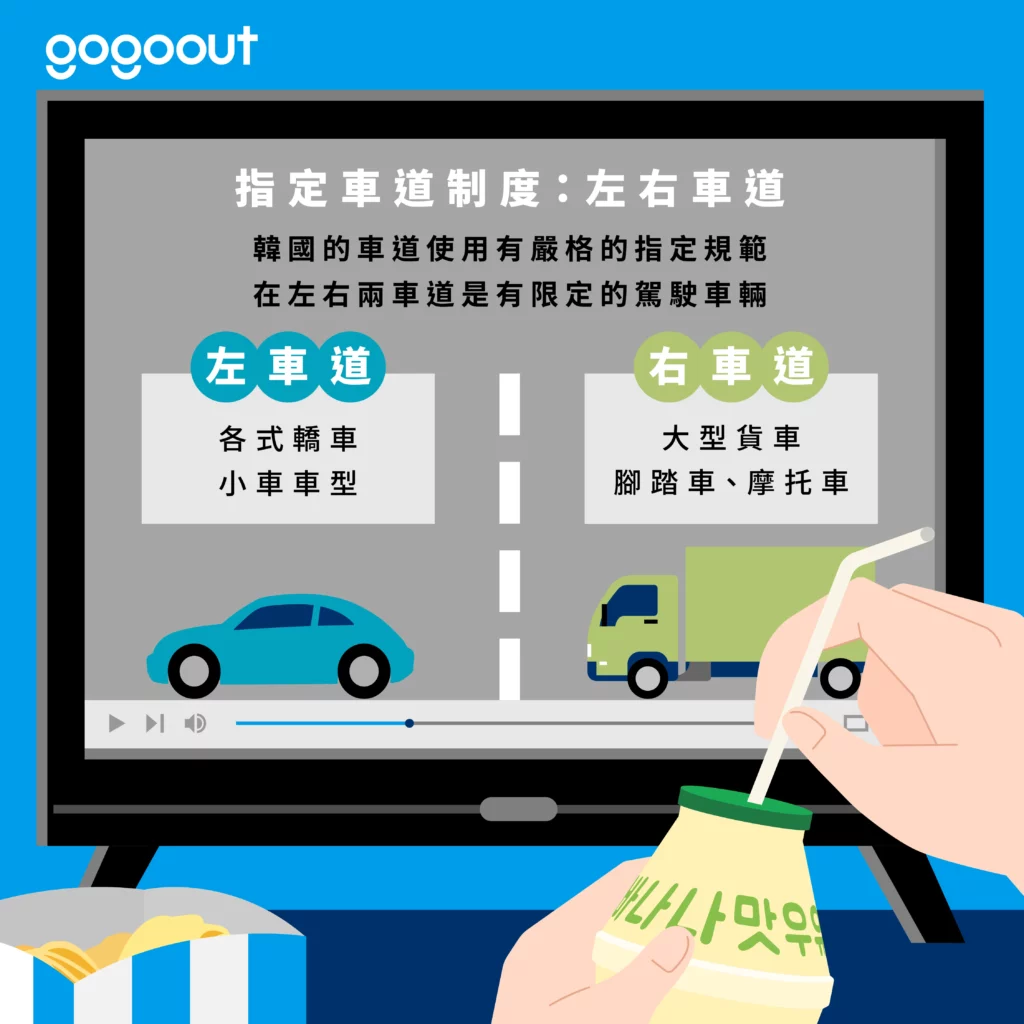
| Vehicles allowed in the left lane | Vehicles allowed in the right lane |
|---|---|
| All types of sedans, SUVs and similar vehicles | Large trucks and tractor-trailers |
| Light and compact vehicles | Bicycles and motorcycles (scooters) |
Regular roads
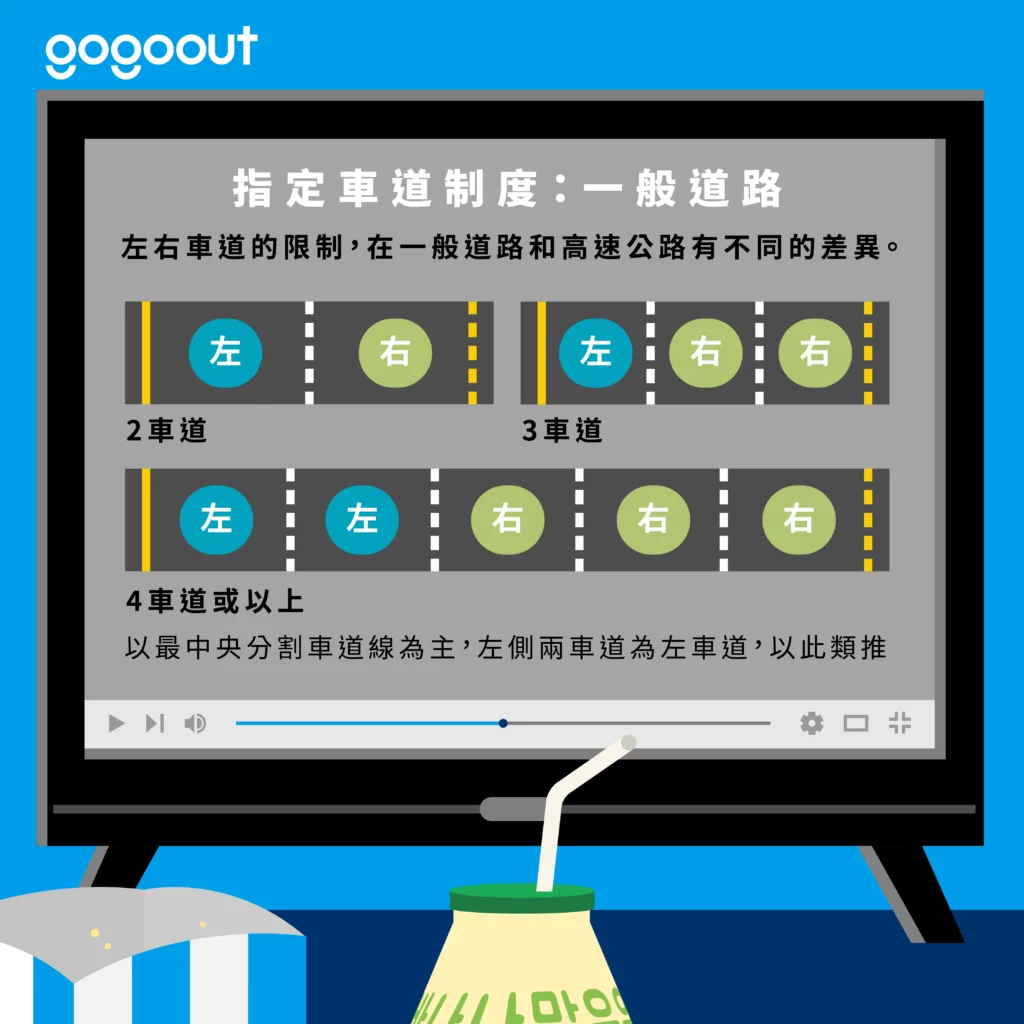
How the left and right lane restrictions work differs between regular roads and expressways:
| Number of lanes | How lanes are classified |
|---|---|
| 2 lanes | Simply divided into a left lane and a right lane |
| 3 lanes | The leftmost lane is the left lane; the two lanes on the right are right lanes |
| 4 lanes or more | Use the center dividing line as the reference: the two lanes to its left are left lanes, and so on |
Expressways
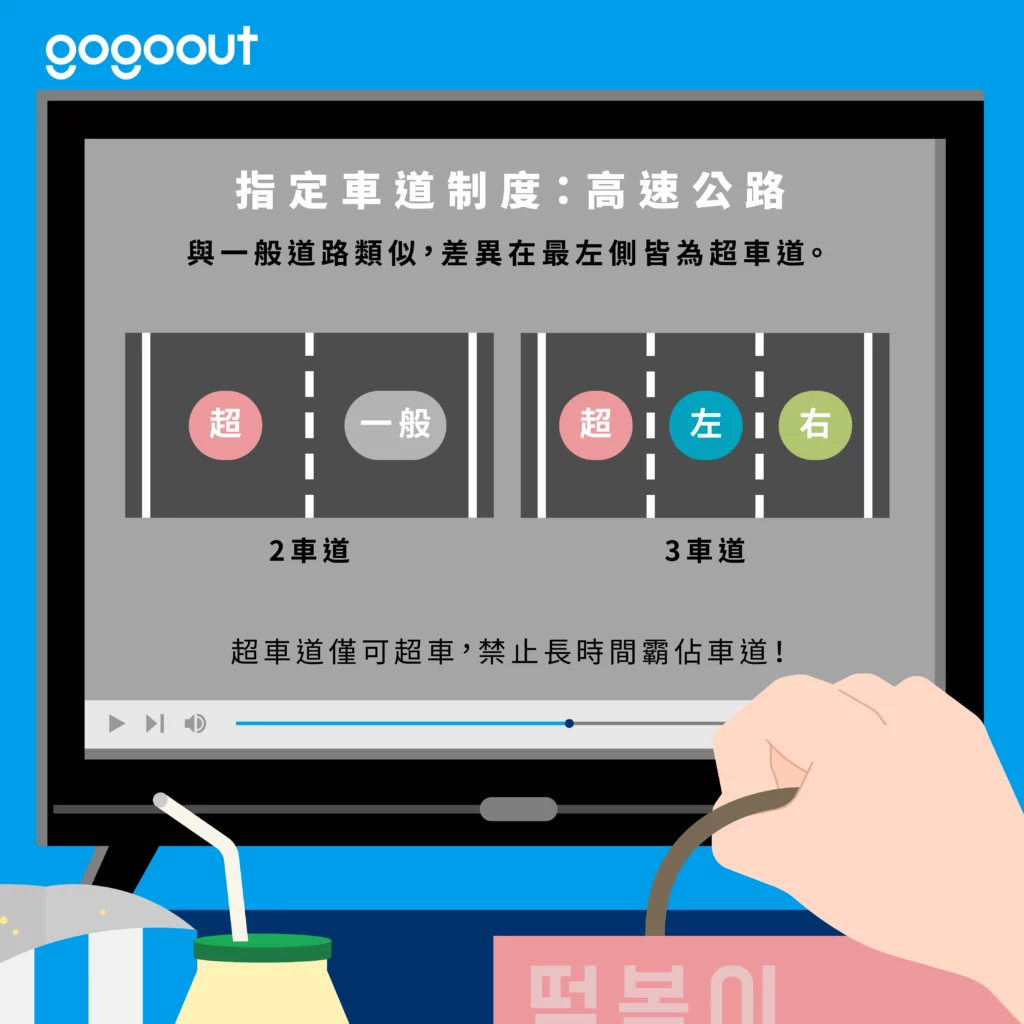
Similar to regular roads, except that the leftmost lane is always the passing lane. Remember that the passing lane is for overtaking only—don’t hog it for long stretches!
| Number of lanes | How lanes are classified |
|---|---|
| 2 lanes | The left lane is the passing lane and the right lane is the regular lane |
| 3 lanes | The leftmost lane is the passing lane, the middle lane is the left lane, and the right one is the right lane |
Lane marking types
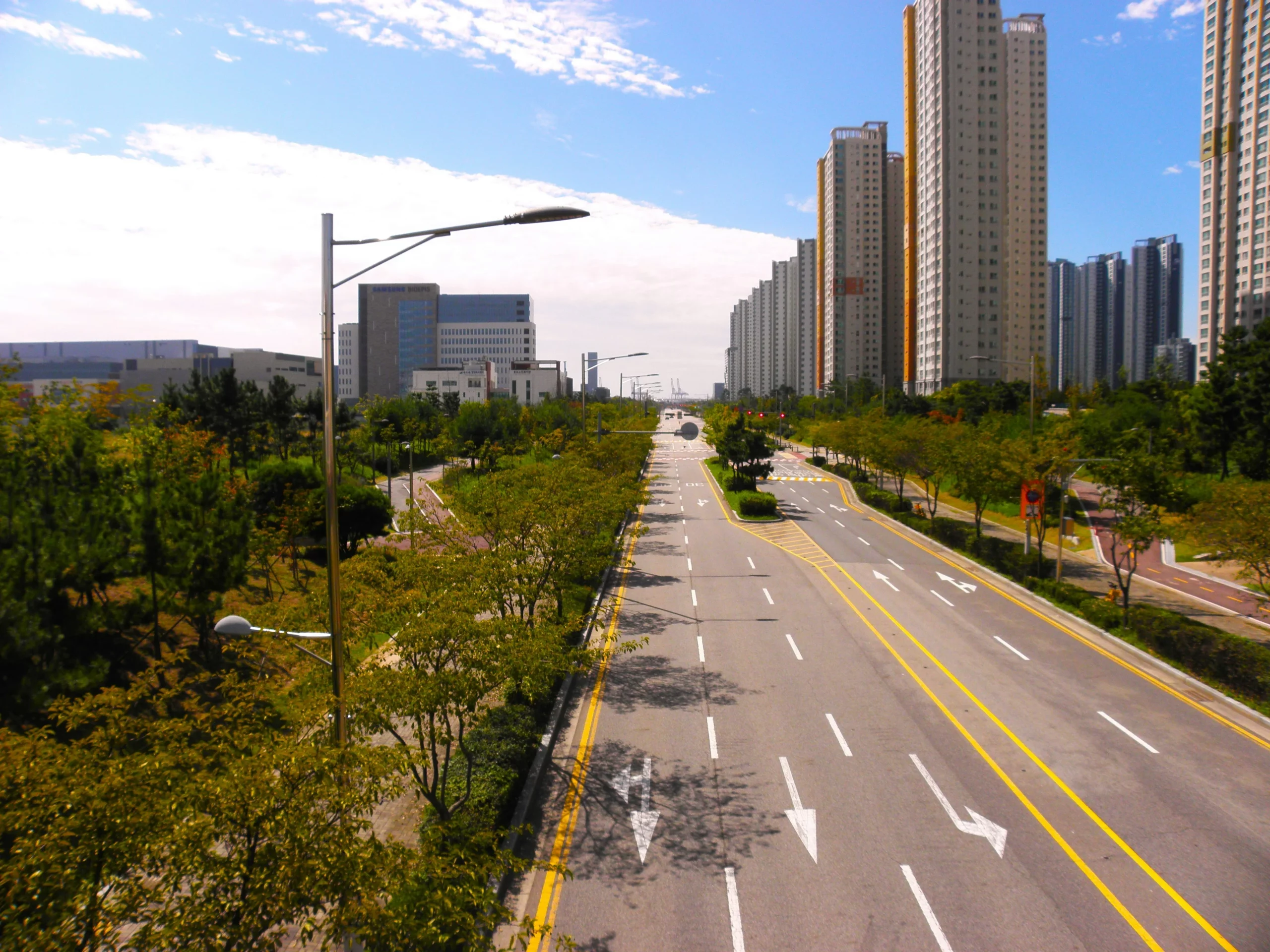
| Line type | Driving rule |
|---|---|
| Broken yellow line | Single or double, you may overtake or make a U-turn as long as it is safe |
| Solid yellow line | Single or double, crossing, straddling the line and overtaking are strictly prohibited |
| Mixed broken and solid yellow line | You may briefly overtake from the broken-line side; crossing to the other side from the solid-line side is prohibited |
| Solid white line | You may change lanes, but mind the lane use rules |
| Broken white line | Wherever you are, a solid white line means you may not change lanes at will |
| Mixed broken and solid white line | From the broken-line side you may change lanes toward the solid-line side; from the solid-line side crossing to the other side is prohibited |
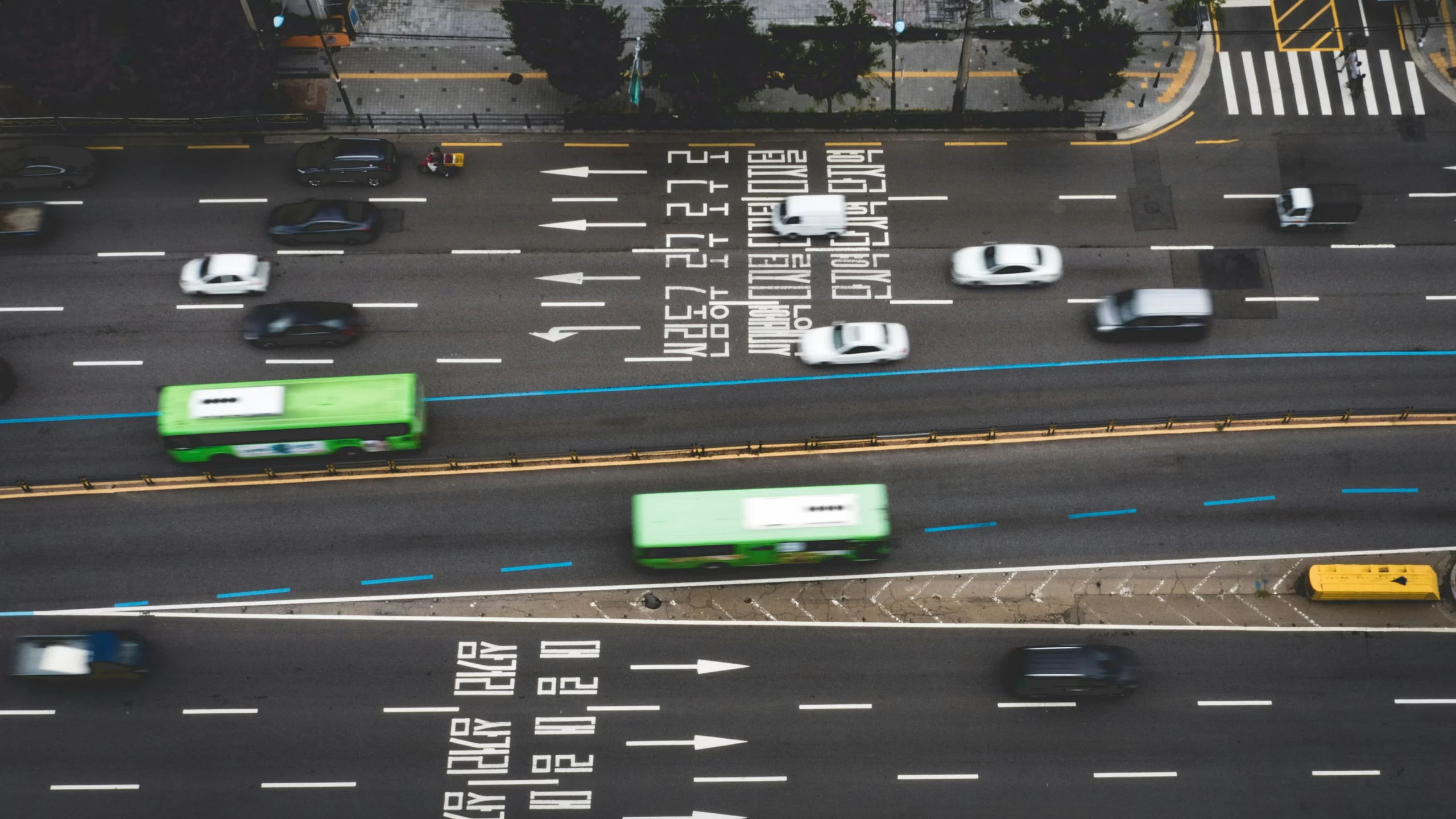
| Blue line | Blue lines mark bus-only lanes, which regular vehicles may not enter |
2. Parking tips
In South Korea it’s customary to back into parking spaces so the front of the car faces the driveway — just do as the locals do and you’ll be fine. Spaces in the city are also generally on the small side, so keep a close eye on the clearance on both sides when you park!
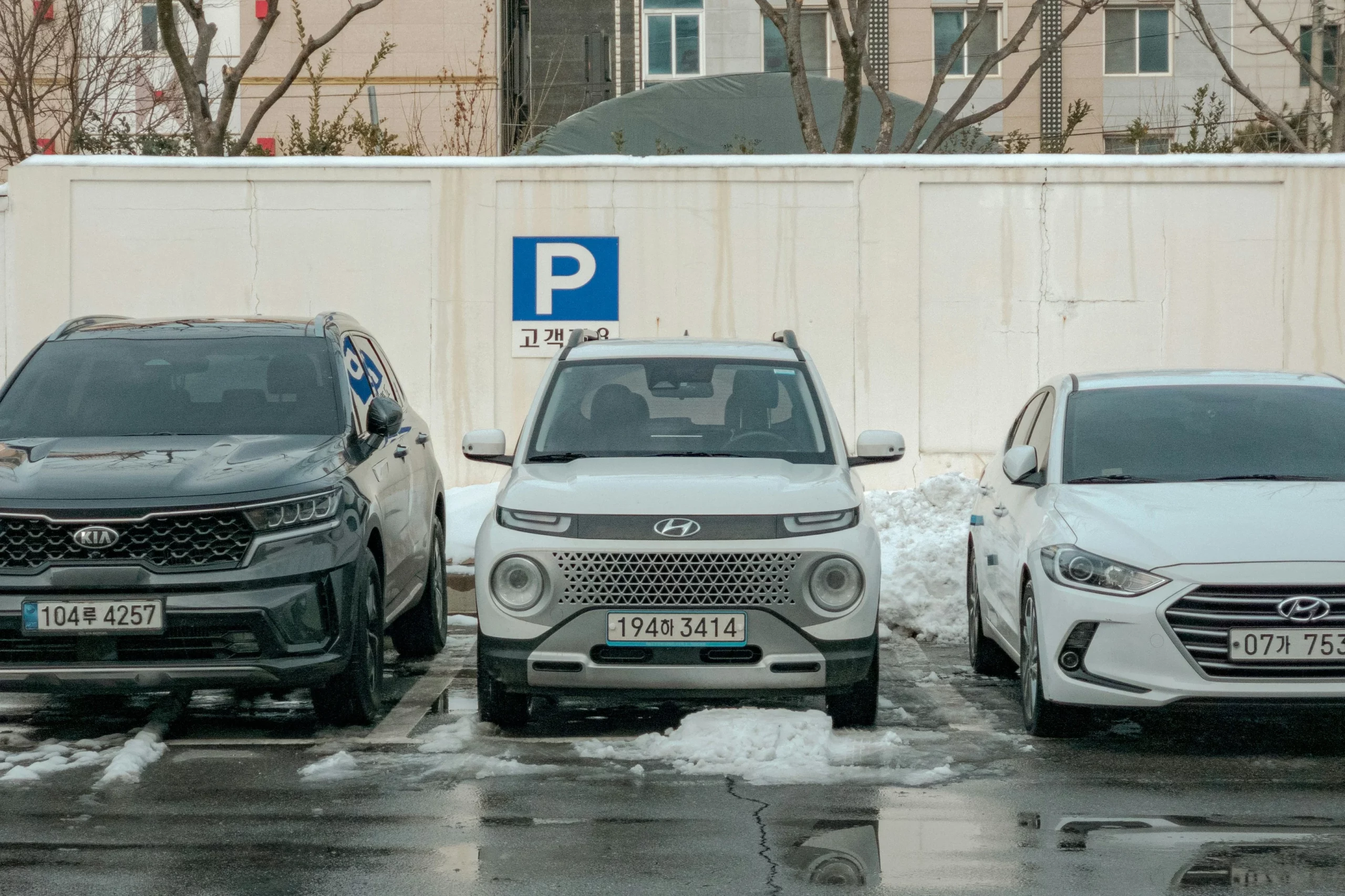
Payment methods at parking lots
Some parking lots may only accept Korean credit cards or T-Money cards, or WOWPASS cards. Since you usually drive straight in after the license-plate scan, check the payment options carefully in advance — otherwise you may find you can’t pay and can’t get out when you leave!
About WOWPASS
If you run into a parking lot that won’t accept overseas credit cards and you don’t have a T-Money card, we highly recommend picking up a card at a WOWPASS kiosk when you arrive in Korea!
WOWPASS is a multi-purpose payment card with T-Money built in. Besides paying highway tolls and parking fees, it also lets you exchange foreign currency and withdraw cash!
That makes it a great backup payment method — if you’re short on cash or a merchant won’t take your overseas credit card, WOWPASS will get you out of trouble.
Parking lots on the Korean mainland
Compared with private parking lots, public ones are usually cheaper, and some parking areas offer deals such as “free for a set amount of time” so drivers can shop or stop nearby quickly and conveniently.
Parking lots on Jeju Island
Many attractions and restaurants on Jeju Island offer free parking, or free parking for a set amount of time. So when you rent a car and drive on Jeju Island, parking is one of the easier problems to solve!
(If you want to find a suitable parking lot nearby fast, many Korean navigation apps can search for one and show you the rates!)
Street parking in Korea
Street parking spaces in Korea tend to be fairly small, so judge the space in front of and behind you carefully to avoid scrapes and bumps! You may also have to pay at a machine on the street — another good moment to use that WOWPASS card.
When parking on the street, always park inside a marked space; parking just anywhere can earn you a very hefty fine!
Watch out for parking spaces in residential areas
Some parking spaces in and around residential areas have numbers painted next to them. These are usually spaces that local residents pay for, and they aren’t open to other drivers — don’t park in one by mistake!

Sometimes several cars share a single space, and residents leave their phone numbers on the windshield so they can move cars around without blocking one another. It’s best to avoid parking lots like this so you don’t make it hard for yourself or others to get in and out!
Rules for temporary stopping
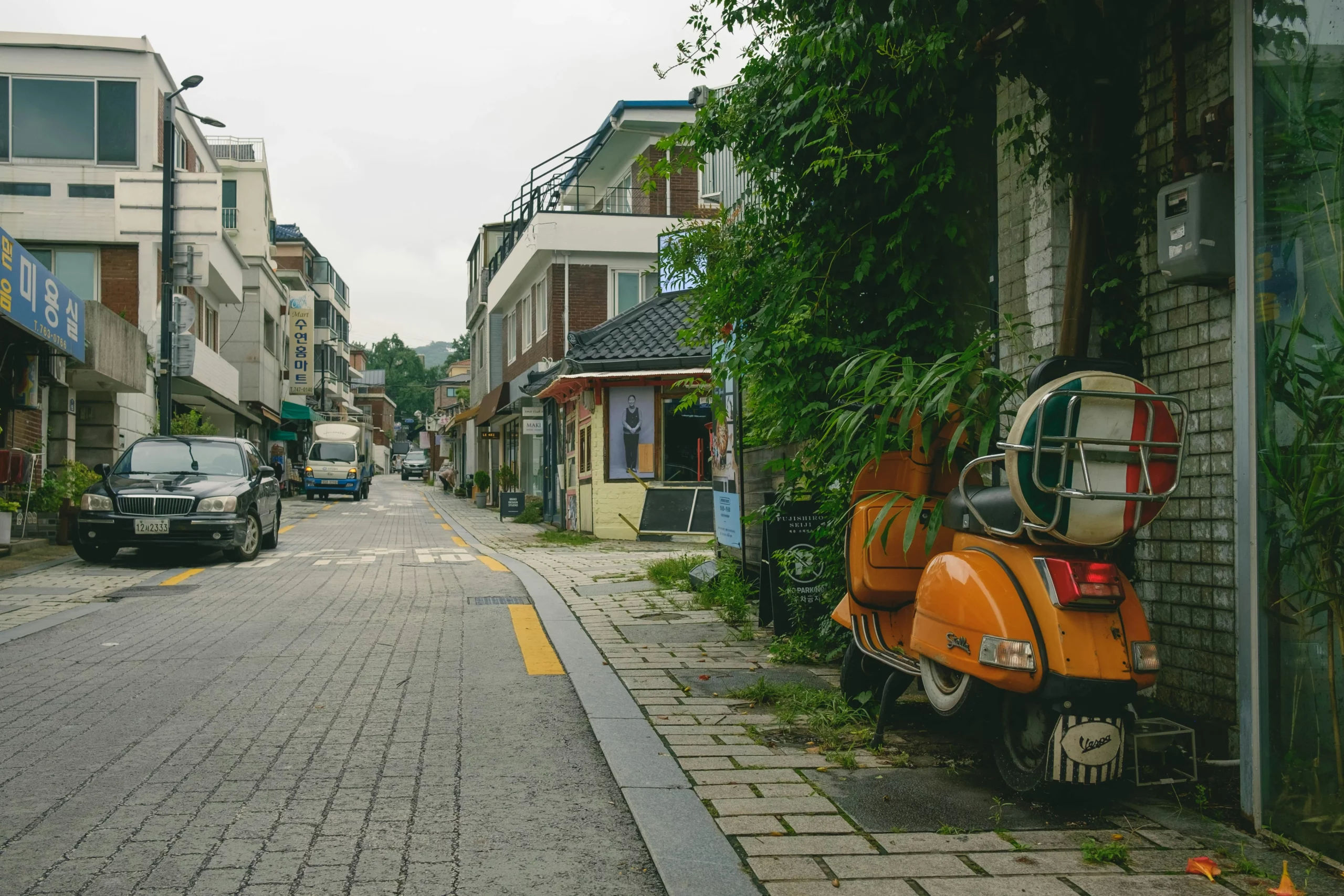
Korea’s parking rules are similar to Japan’s: you absolutely cannot park wherever you like, and fines vary from area to area, so pay close attention!
| Curb color | Parking rule |
|---|---|
| Broken yellow curb line | You may stop for up to 5 minutes, but you may not leave the vehicle or park for a long time |
| Solid yellow curb line | Parking is allowed only during the hours posted, so check the nearby signs |
| Double solid yellow curb line | Parking is strictly prohibited; violators will be fined |
| Solid white curb line | Parking is allowed, but don’t park facing the wrong way or at an angle that intrudes into the traffic lane and inconveniences other vehicles — that will also get you a ticket |
Fines for illegal parking
| Violation | Fine | Violation lasting more than 2 hours in the same spot | 20% discount for payment within the deadline |
|---|---|---|---|
| Regular road sections | 40,000 won | 50,000 won | 32,000 won |
| Sections with fire-fighting facilities | 80,000 won | 90,000 won | 64,000 won |
| School zones | 120,000 won | 130,000 won | 96,000 won |
3. Traffic signals and signs
Traffic light indications
Traffic lights in Korea are usually horizontal and much the same as in Taiwan, but you do need to pay attention to the arrow signals:
| Signal | What to do |
|---|---|
| Red light + left-turn arrow | Cars in the left-turn lane may turn left; all other lanes wait for the green light |
| Red light (no special indication) | The rightmost lane may turn right; all other lanes wait for the green light |
| Green light + left-turn arrow | You may go in any direction, so drive on with confidence |
| Green light (no special indication) | You may go straight or turn right, but left turns are prohibited |
| Green light (with a 비보호 sign) | You may go in any direction, so drive on with confidence |
Left turns on green have their own dedicated signal
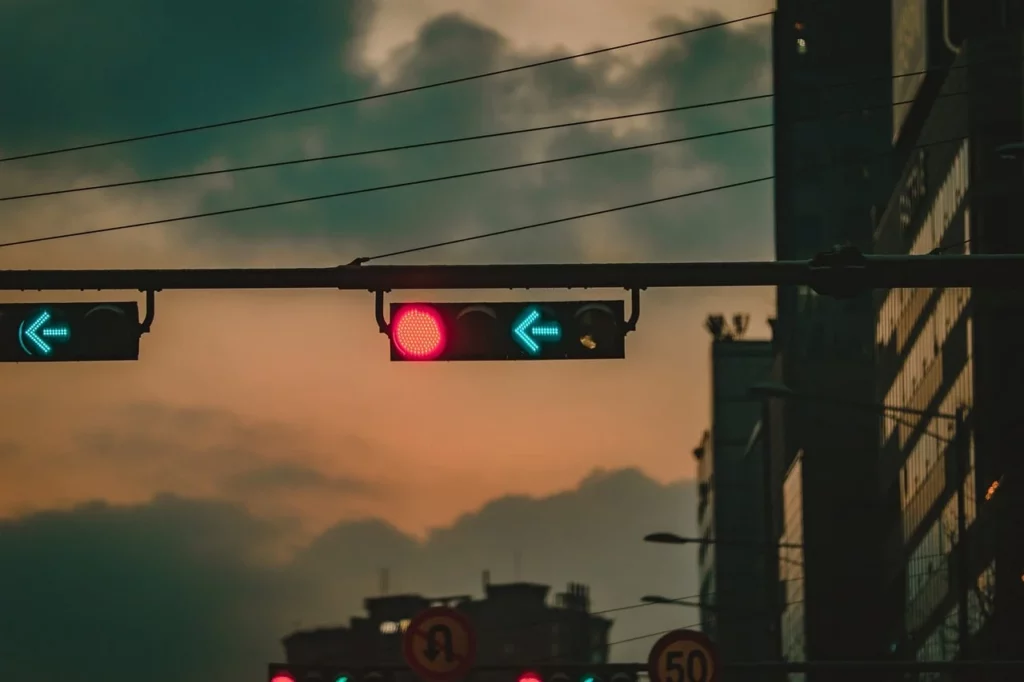
This is something you won’t see in Taiwan: unless there is a special indication, you may not simply turn left on a green light, as there is usually a dedicated left-turn signal!
The exception is when you see a blue sign on the traffic light that reads “비보호” together with a left arrow. This means left turns are unrestricted, so you can turn left with confidence even without a green arrow signal — just make sure no oncoming traffic is approaching!
In Korea you can turn right on red
Unless a sign specifically prohibits it, Korea is like the USA: once there are no pedestrians in the crosswalk ahead or to your right and oncoming left-turning cars have passed, you may turn right on a red light. So if you’re not planning to turn right, try to stay out of the rightmost lane — otherwise there’s a good chance someone will honk at you!
Common traffic signs
Below are common signs you need to obey. Most of the pictograms are easy to read at a glance or similar to Taiwan’s, while a few are ones you absolutely must watch out for!
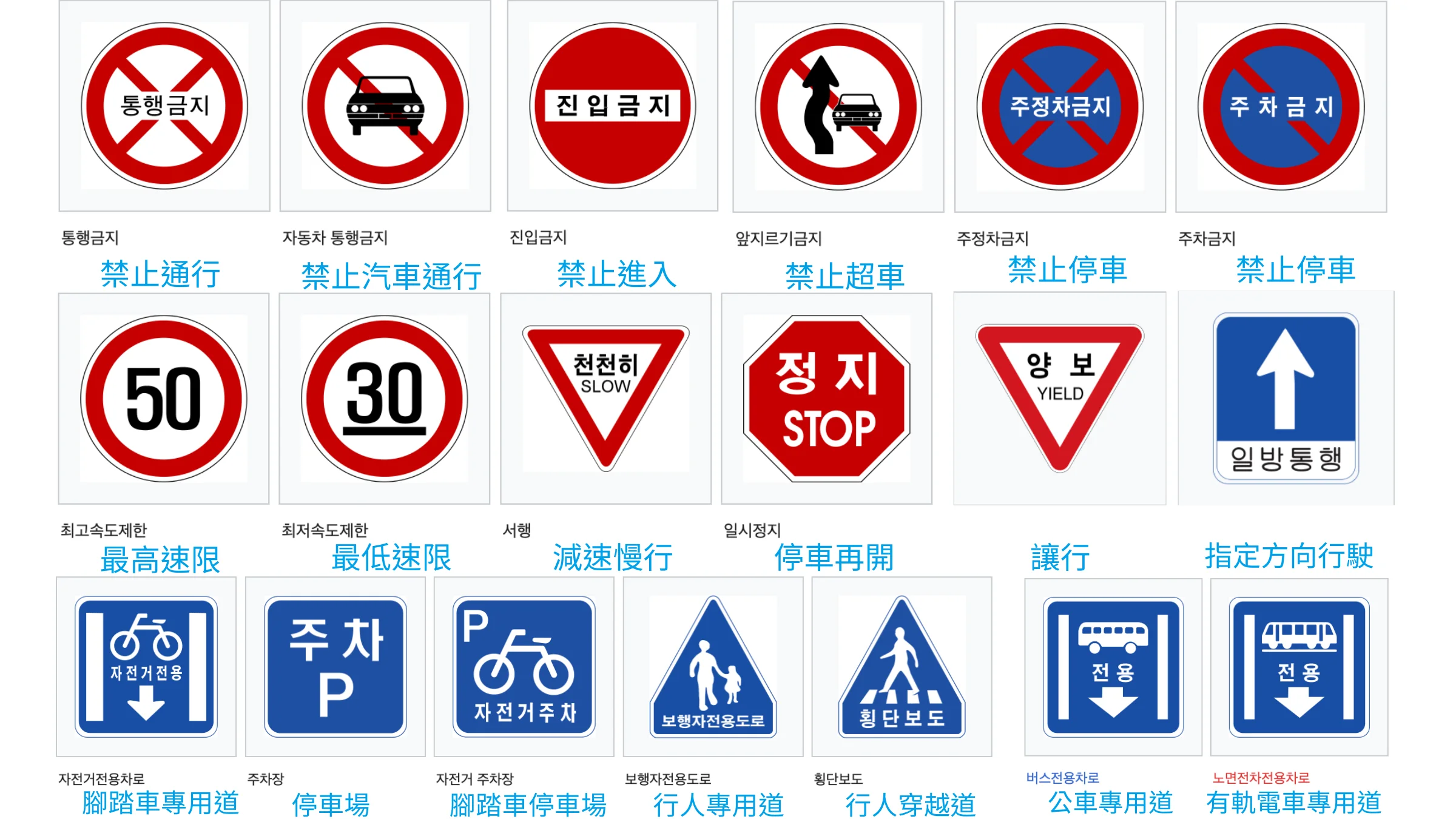
Stop sign
Just like in the USA or Japan, a stop sign must be fully obeyed. You have to come to a complete stop before the stop line and may only proceed once you’ve confirmed there are no cars or pedestrians coming — never just slow down and roll through!
YIELD
This sign means you’re on the minor road and must give way to vehicles on the main road. Don’t try to cut in and cause a collision.
No parking
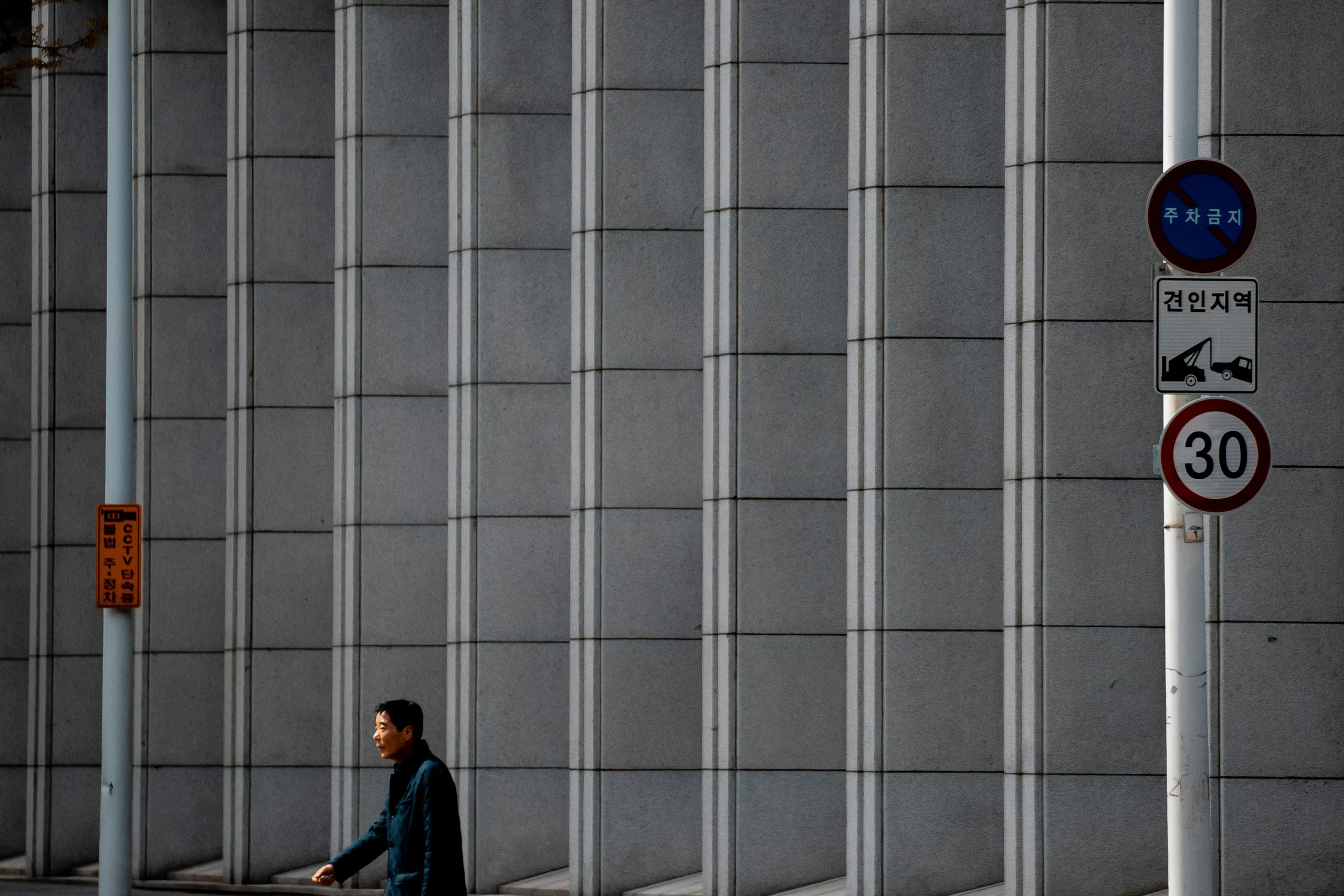
Whether the no-parking sign has one slash or two, parking is prohibited — including stopping briefly or quickly dropping off and picking up passengers.
Note | Like Taiwan, South Korea uses a lot of automated enforcement, and CCTV cameras capture your behavior accurately as evidence for a fine. When the ticket comes through later, the rental company will charge it straight to your credit card!
Road markings
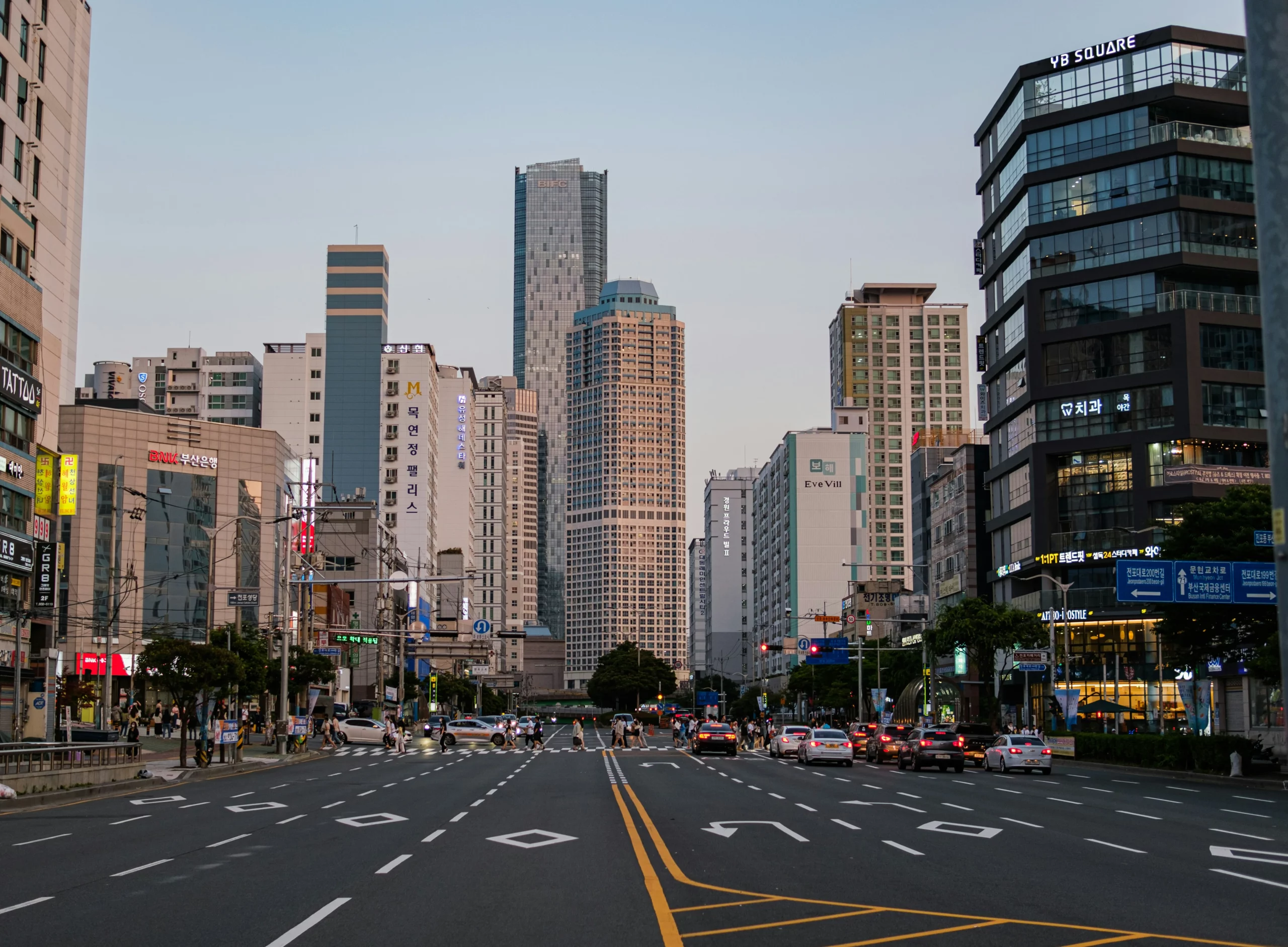
As for markings painted on the road, besides the common speed limit markings, these also deserve extra attention:
| Road marking | What it requires |
|---|---|
| Diamond | There’s a crosswalk ahead — slow down, stop, and proceed only when it’s safe |
| Triangle | Whether solid or hollow, slow down and make sure the road ahead is clear |
| Hollow square with diagonal lines | Found at large intersections, like Taiwan’s box junction markings; do not stop on the marking |
| Zigzag lane lines | Caution needed in the area ahead; they make the road look narrower to force you to slow down |
Car rental in Korea: expressways
Expressway tolls in Korea are calculated based on the distance driven, the road sections used, the type of vehicle and more.
You can pay tolls with cash, a credit card (usually only Korean-issued ones), a T-Money card, a Hi-pass card (Korea’s ETC) or a WOWPASS card.
Korea’s Hi-Pass (ETC)
A few rental companies in Korea also install Hi-Pass devices in their cars, so you can ask the shop in advance whether one is provided.
That way the device charges tolls automatically as you pass through toll gates, and you simply settle the total with the rental company when you return the car — no need to dig out cash on the spot!
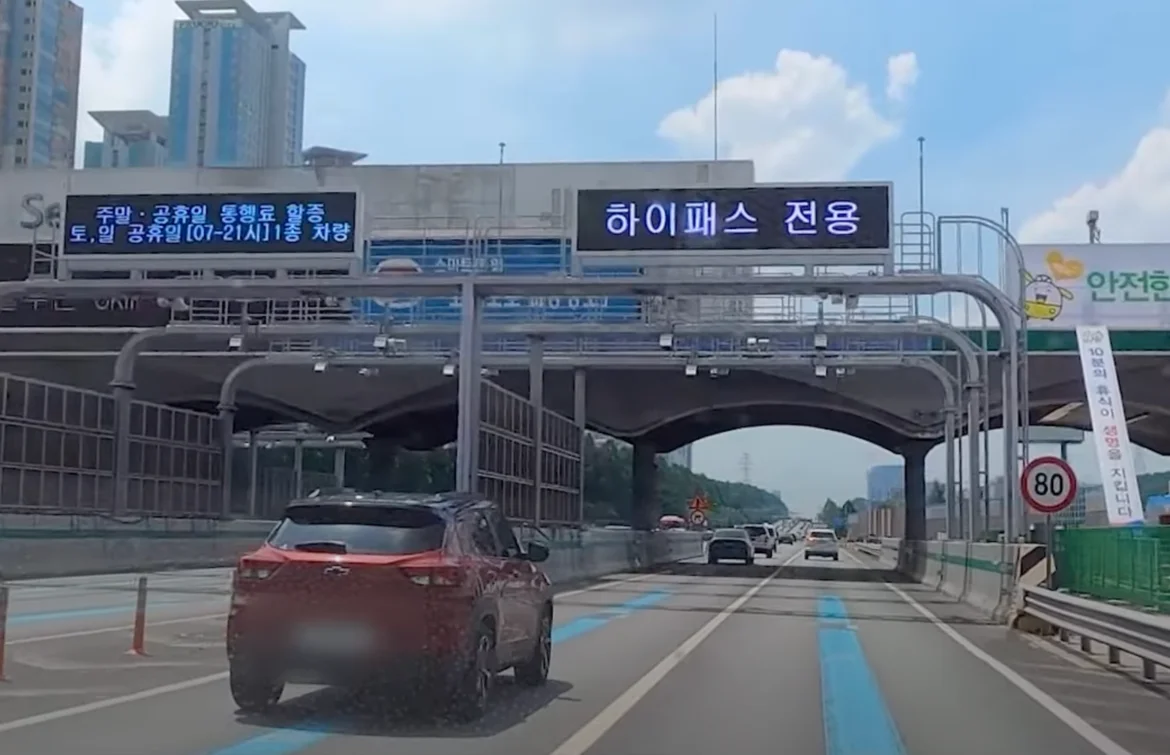
Korean expressways also mark lanes with blue lane lines, which means the lane is a Hi-Pass lane. If your car doesn’t have the device, just avoid that lane and head for the cash lane instead.
Note | Even if your rental car has a Hi-Pass card, slow down as you pass through the toll gate. Otherwise the automatic charge may not register properly and you could end up recorded as skipping the toll!
Paying expressway tolls in cash in Korea
Cash lanes usually offer two options: a self-service ticket machine or a staffed booth.
When you enter the expressway, take a ticket from the machine or an attendant at the first toll gate — this records your starting point.
Before you exit the expressway, hand that ticket to the attendant and pay the fee, and you’re done!
Note | Cash lanes also accept T-Money and WOWPASS cards, but credit cards aren’t recommended — they generally only take cards issued in Korea, and you don’t want to get stuck at the toll gate unable to pay!
Korea car rental: setting up navigation
Because of the situation between North and South Korea, Google Maps is essentially useless in Korea — its map data is very inaccurate. We strongly recommend using a navigation app developed in Korea instead; route guidance, restaurant information and more are all very complete. Before you set off, install one of the following navigation apps.
Naver Map
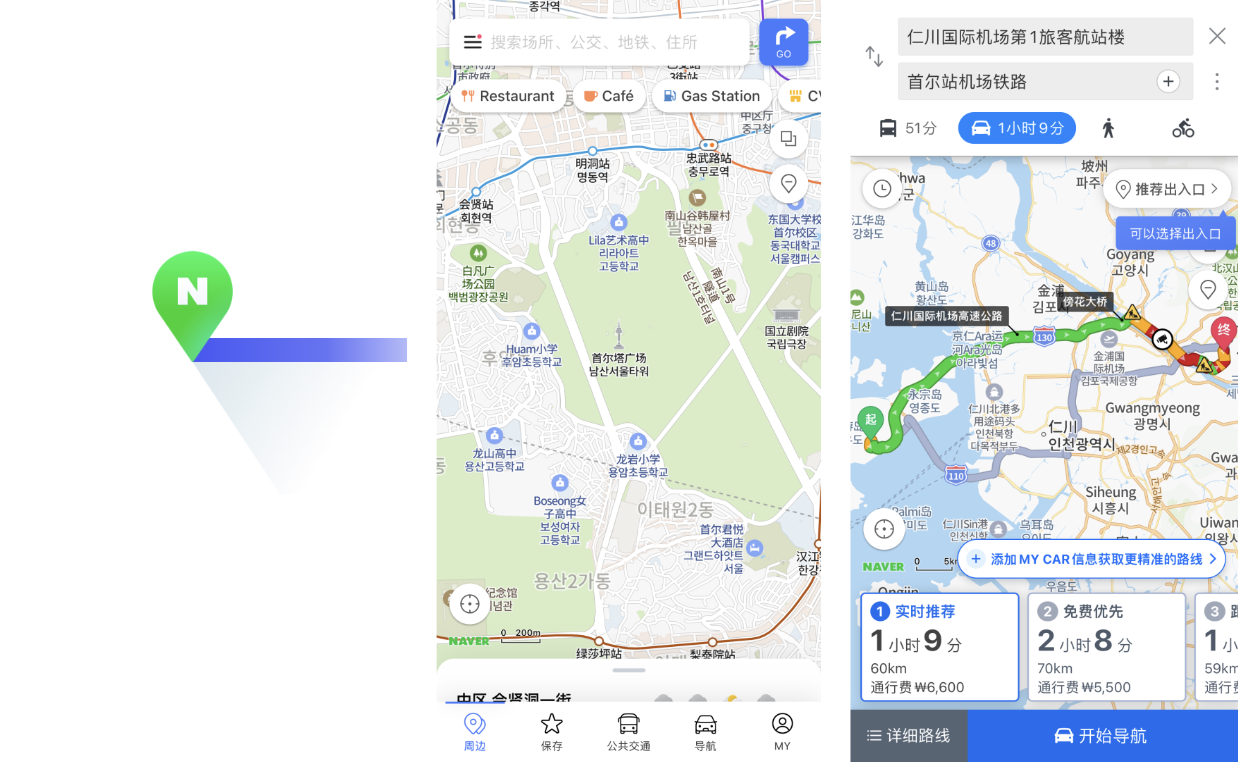
Korea’s largest map service, available as both a website and an app. It currently supports English, Simplified Chinese, Japanese and Korean, so travelers from just about anywhere can pick it up easily. The Simplified Chinese version still mixes in plenty of Korean, but the information is thousands of times better than Google Maps!
KakaoMap
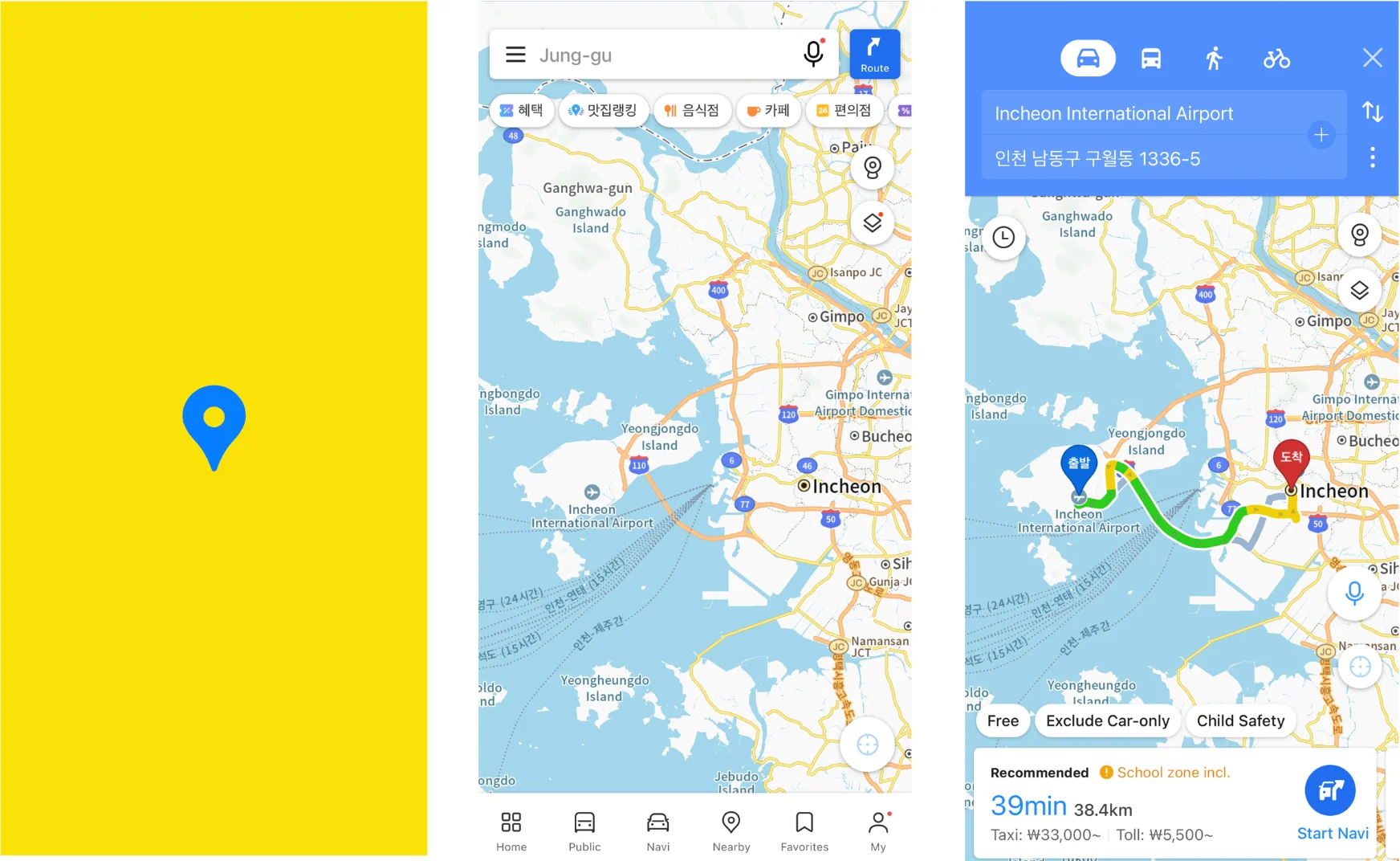
Second only to Naver Map, this is the country’s second-largest navigation service and is known for its accuracy. Thanks to the developer’s ecosystem, it integrates with KakaoTalk and KakaoTaxi, and it offers directions for every mode of transport plus voice alerts for speed cameras!
Hanchao Map
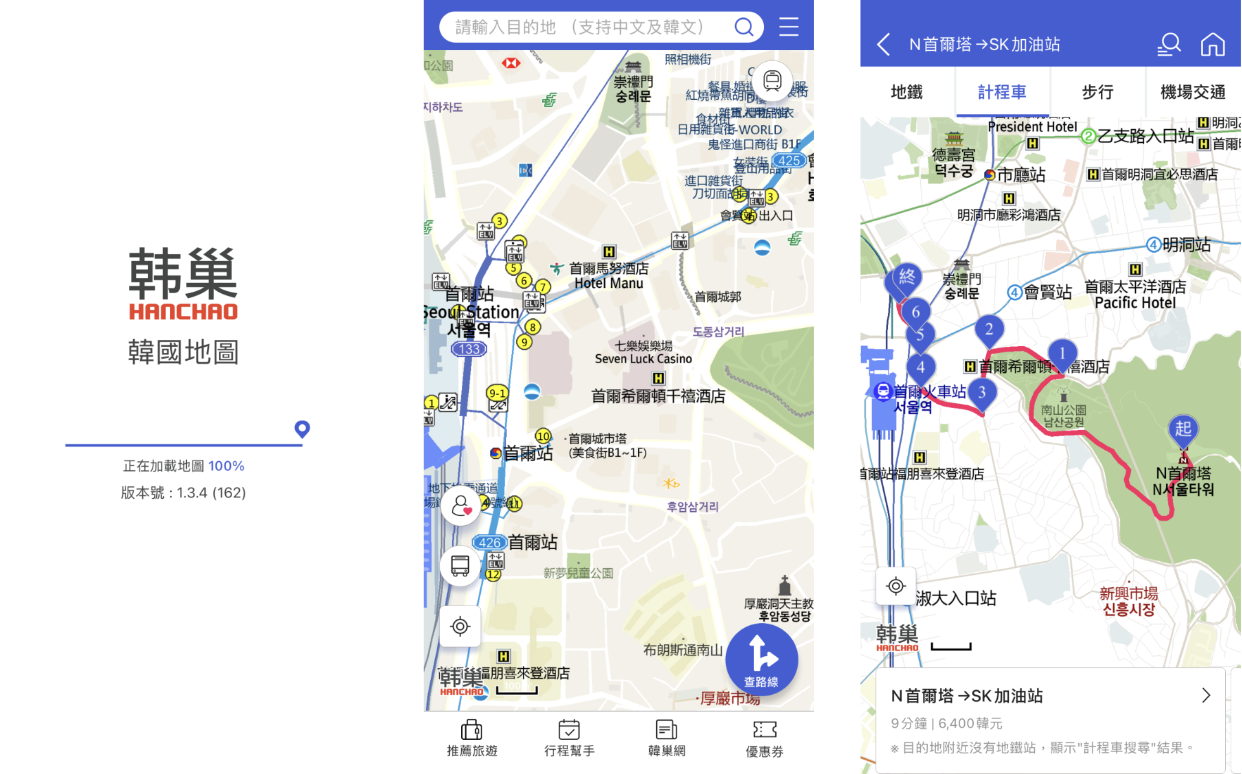
This one combines maps with web content — food and travel articles of all kinds — so when you save an article it saves the map information too. Seriously handy integration!
The app currently only supports Traditional and Simplified Chinese, so it isn’t a great fit for Western or Japanese travelers.
Korea car rental: gas stations (주유소)
Common gas station brands in South Korea are SK, GS, S-Oil and Hyundai Oilbank.
Fuel prices aren’t fixed all day, and city prices are usually a bit higher than in the suburbs!
With Naver Map or Kakao Map you can also quickly find the nearest gas station and see today’s fuel prices!
| Fuel type | Nozzle color | Korean | English |
|---|---|---|---|
| Regular gasoline | Yellow | 휘발유 | Regular / Premium |
| Diesel | Black / blue / green | 경유 | Diesel |
How to use self-service pumps:
1. Choose your payment method, fuel type and amount:
Select your payment method —「신용카드 (credit card)」 or 「현금 (cash)」 — then follow the on-screen prompts to choose your fuel: gasoline (휘발유) or diesel (경유).

Enter the amount you want to pay to set how much fuel you get, or simply choose 「가득 (fill up)」 to fill the tank.
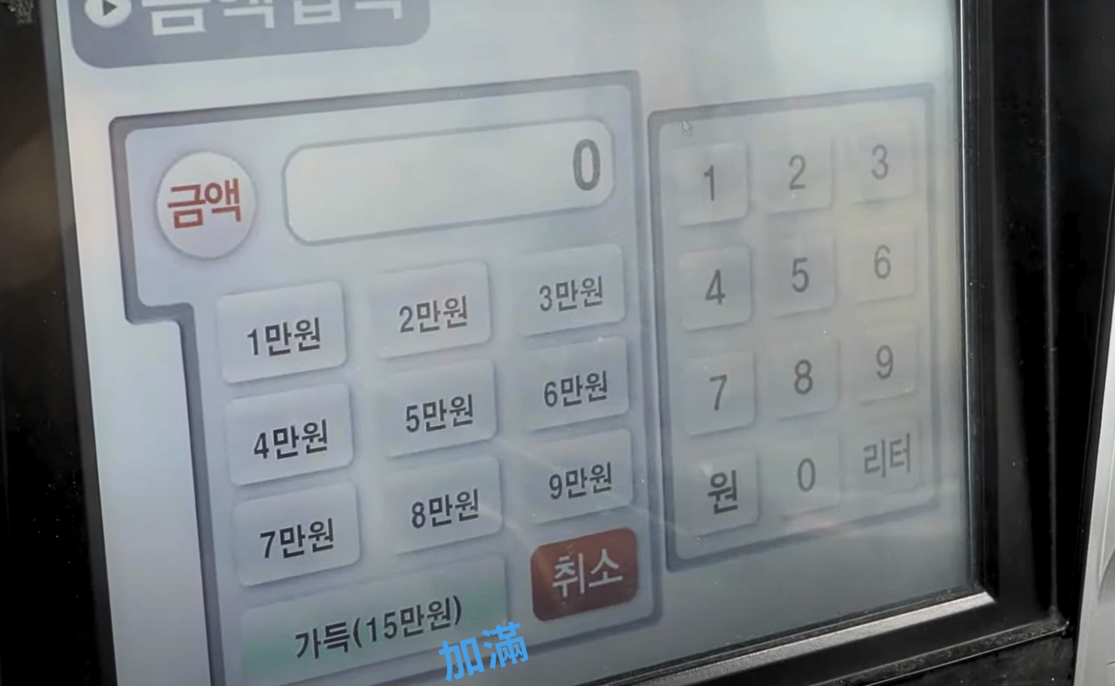
If you’re paying by credit card, the screen will ask whether you want to pay in full. Choose 「일시불」 to pay in one installment; the options with numbers are the number of installments.

2. Start fueling and take your receipt:
Open the fuel door, insert the nozzle and squeeze the handle to start fueling. When the pump clicks off, the screen will ask whether you want to round up to 천원 단위 끊김 (정액) “a round amount” or 리터 단위 끊김 (정량) “a whole number of liters.” When you’re done, put the nozzle back, close the fuel cap tightly, and collect your receipt or change — all set!
Korea car rental FAQ
Q: How old do you have to be to rent a car in Korea?
A: In Korea you can usually rent a car from age 21, but drivers under 26–30 are charged a “young driver surcharge.” The fee varies by age bracket, so it’s a good idea to confirm the terms with the rental company before you book.
Q: Can someone who isn’t on the booking drive the car?
A: Yes. Korean rental companies usually allow one additional driver per rental agreement, but that driver must be at least 21 years old. If the additional driver is under 30, an extra fee applies as well!
Do note, though, that only the person who made the booking can pick up the car — an additional driver isn’t authorized to collect it at the rental office.
Q: What should you do if you have a car accident in Korea?
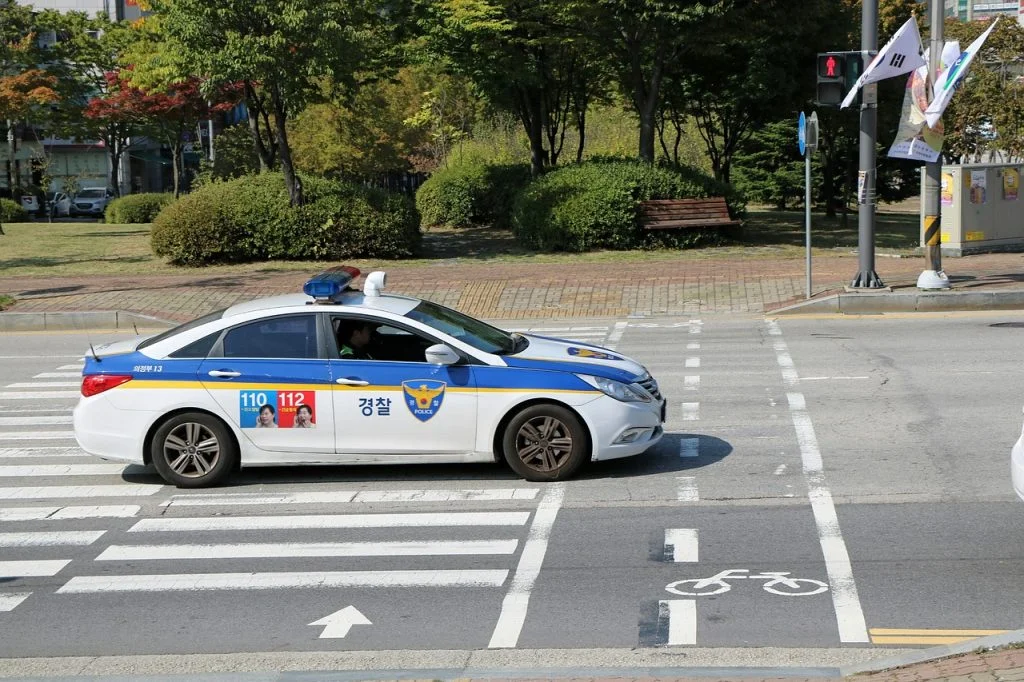
A: If anyone is injured, call 119 and have a Korean-speaking friend help or communicate in English. Call 112 to report the accident to the police and get an accident report, which you’ll need to file an insurance claim. Finally, contact the rental company, explain what happened and wait for further instructions!
If you’re worried about the language barrier, just explain in English that you’re from Taiwan and need interpretation help, and an interpreter service will be arranged!
Q: Can I return the car early? Will I get a refund for the unused rental time?
A: Most companies let you return the car early, but generally there’s no refund for the unused rental time. Just don’t return it late — late fees always apply!
Q: What extra fees usually come up with a car rental in Korea?
A: Besides the basics — rental, insurance, fuel, tolls and parking — you may be charged extra in certain situations: accident repair costs, a one-way rental surcharge, traffic violation fees and certain breach-of-contract fees.
Korea car rental: final thoughts
With a rental car, you can explore Korea’s cityscapes, countryside and cultural heritage at your own pace. From the modern buzz of Seoul to the natural beauty of Jeju Island and the historic sites of Gyeongju, a self-drive trip makes your time in Korea far richer.
Remember to stay patient and courteous behind the wheel in Korea, and enjoy every moment of the journey. Whether you’re soaking up the scenery along the way or diving into local culture, a self-drive trip in Korea will add unforgettable memories to your travels!
More articles on car rental and travel in Korea:
👉[Seoul Car Rental Guide] Recommended rentals and the secrets to exploring Seoul by car!
👉[Seoul Independent Travel] 2025 attractions, must-eat food and must-buy souvenirs, all in one guide!
👉[Jeju Island Car Rental Picks] The best way to explore Jeju’s food, sights and independent travel!
👉[Jeju Island Independent Travel] Attractions, food picks, transport guide and a 4-day, 3-night itinerary!
How should you rent a car in Korea?Head to gogoout
Worried about spending hours trying to pick a rental company overseas, with unclear vehicle details, vague insurance terms or customer service you can’t communicate with — so you can never decide where to book?
This article was translated by AI from the original Chinese version.

