

Renting a car is the go-to way to travel the United States, and booking about 4 weeks ahead usually gets you a better price. The most popular pickup points are airports, and common insurance options include the collision/loss damage waiver (CDW/LDW) and third-party liability coverage (LIS/ALI). Most rental plans come with unlimited mileage, but returning the car at a different location (one-way rental) costs noticeably more.
gogoout walks you through every part of renting a car in the US — from the documents to prepare in advance and choosing insurance, to the pickup and return process, local traffic rules and how to pump your own gas — so your US self-drive trip goes smoothly and stress-free.
Here’s a quick summary before you rent a car in the US:
Q: What do I need to rent a car in the US?
A: Your passport, your original valid driver’s license, a valid International Driving Permit, the credit card used for the booking, and your rental voucher.
Q: What insurance is essential when renting a car in the US?
A: When you rent a car in the US, we strongly recommend having at least these two coverages:
1. Collision Damage Waiver (CDW) or Loss Damage Waiver (LDW) / 2. Third-Party Liability (TPL)
Q: How much does it usually cost to rent a car in the US?
A: Prices vary with rental length, city and season — book through gogoout from USD 36!
US car rental requirements and must-have documents
When you pick up your car at the rental counter, be sure to present the following documents (keeping a digital or printed copy of your booking voucher is a good idea, just in case):
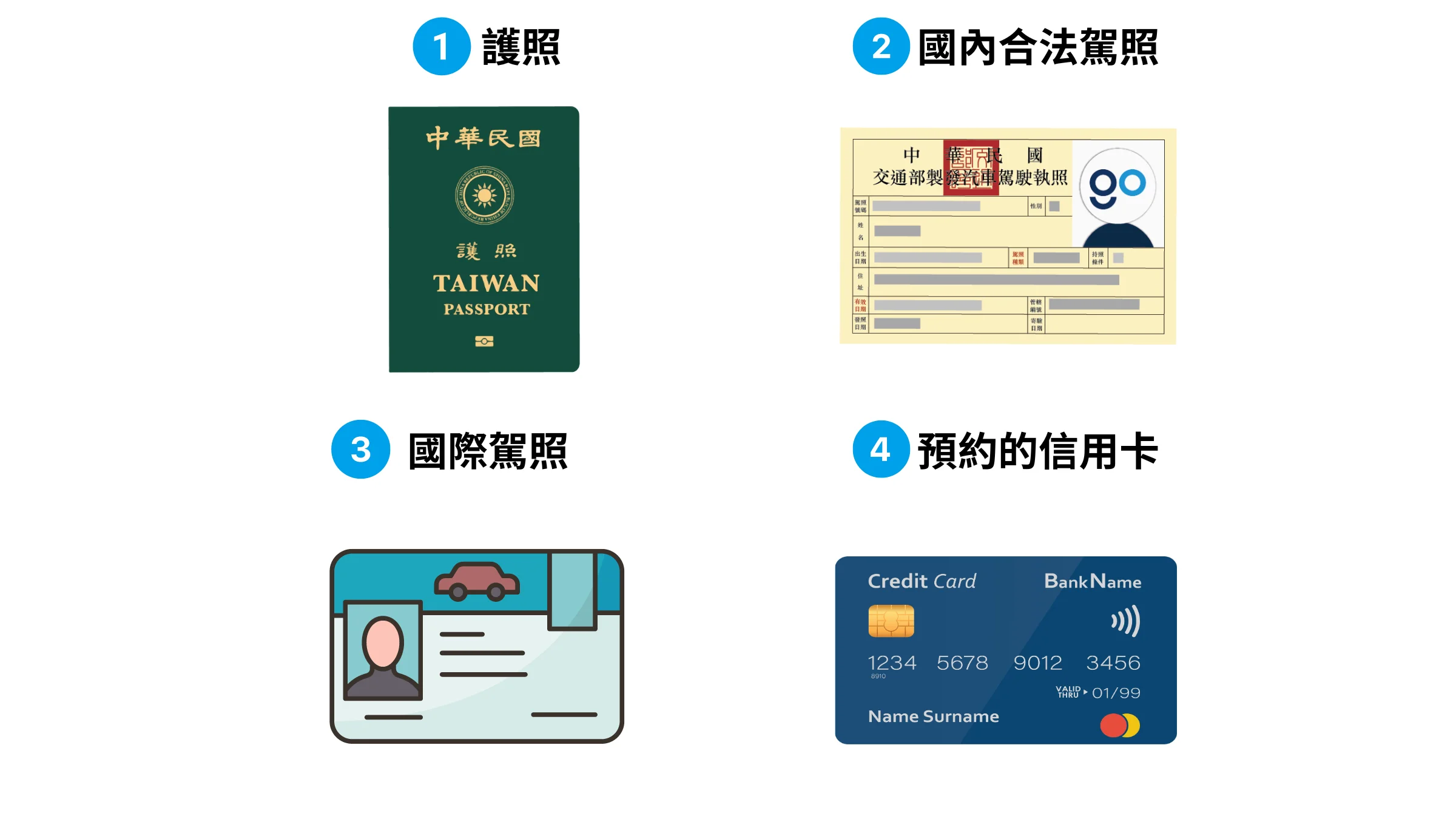
| Document – International Driving Permit (IDP) | The US recognizes the International Driving Permit issued by the Taiwanese government. Make sure it stays valid for the whole rental period. |
| Document – Original driver’s license | Always bring your original home-country driver’s license for the rental staff to check, and make sure it remains valid throughout your rental period in the US. |
| Document – Passport | This is your main form of ID overseas; make sure it is valid for at least another 6 months. |
| Credit card (avoid using a debit card) | It must be the same credit card you used for the online booking, and the cardholder must be the main driver. (In the US, having a different person drive may lead to extra charges.) |
(If anything comes up along the way, gogoout’s online customer support is always there to help with your booking!)
About the International Driving Permit (IDP): rules differ from state to state, so you can check the driver’s license reciprocity overview provided by Taiwan’s Directorate General of Highways.
How to apply:
Visit any local Motor Vehicles Office with your original driver’s license, original ID card, two 2-inch photos, a photocopy of your passport, and the NT$250 processing fee.
US car rental price comparison and fee breakdown
When renting a car in the US, we strongly recommend booking online “in advance” — walking into a branch and renting on the spot is usually the most expensive option, with no discounts!
Here’s a cost comparison between gogoout and several major US rental car companies:
| gogoout | KAYAK | AVIS | Budget | |
|---|---|---|---|---|
| Average rental price (per day) | US$47 | US$45 | US$90 | US$51 |
| Airport shuttle service | ✅ | ✅ | ✅ | ✅ |
| Chinese-language support | ✅ | ✅ | ❌ | ❌ |
| GPS (per day) | Optional add-on, paid at the counter | Optional add-on, paid at the counter | US$17 | US$17 |
| Child seat (per day) | Optional add-on, paid at the counter | Optional add-on, paid at the counter | US$13 | US$15 |
| Basic insurance included | LDW | LDW | LDW / TPL | LDW |
2. Airport shuttle service depends on the specific location, and some airports may charge an extra fee.
3. Basic insurance usually only includes third-party liability (TPL), so buying additional full coverage is recommended.
Common hidden fees at a glance
Understanding the fee names on your rental contract helps you avoid unnecessary costs :
| Fee name in English | What it means | Things to note |
| Additional Driver Fee | Additional driver fee | If several people will take turns driving, you must register them with the rental company and pay the fee. If an unregistered driver has an accident, the insurance will not cover it! |
| One Way Fee | One-way rental fee | This fee usually applies when you return the car in another state or city, so confirm the amount when you book. |
| Early/Late Return Fee | Early / late return fee | Returning early generally doesn’t get you a refund, while returning late can mean hefty penalties — if something unexpected comes up, call the rental company first. |
| Airport Access Fee | Airport pickup fee | This surcharge is usually added when you pick up the car inside an airport terminal. |
| Underage Fee | Young driver fee | This fee generally applies to drivers under 25, and some rental companies charge it on top of the base rate. |
Car categories on rental websites explained
When searching for a rental car in the US, you often won’t see a specific model name but a car category instead. Here’s a simple guide:
| Car category | Description |
| Economy Car | A small, popular car that suits two people with light luggage (e.g., CHEVROLET SPARK) |
| Compact Car | Fits 4–5 people plus mid-size luggage (e.g., FORD FOCUS) |
| Full Size Car | Roomy interior, good for 5 people plus several pieces of luggage (e.g., FORD FUSION) |
| Luxury Car | Higher-end brands and features (e.g., RANGE ROVER EVOQUE) |
| SUV | Split into Standard, Full Size and Premium; great for long road trips. |
| Minivan | Good for families or groups of 7-8 people (e.g., TOYOTA Sienna) |
Which insurance should you buy for a car rental in the USA?
When renting a car in the USA, we strongly recommend at least taking out collision damage waiver (CDW/LDW) and third-party liability insurance (ALI/SLI), so you can pass on the cost of expensive repairs and medical bills.
Every U.S. state requires vehicles on the road to carry basic mandatory coverage, but the limits usually won’t cover repair or medical bills that easily run into thousands of dollars. Here’s a breakdown of the common coverage options:
Collision damage waiver (CDW) / loss damage waiver (LDW)
Essential — covers damage to the rental car from a collision or accident, so you don’t have to pay large repair bills.
Third-party liability insurance (ALI / SLI)
Essential — if you’re at fault, it covers the other party’s injuries, death and property damage.
(ALI / SLI goes by different names from state to state, but the coverage is the same.)
Roadside assistance (RSN / PERS)
Recommended. The USA is huge, and if you get a flat tire, run out of gas or lose your keys out in the countryside, calling for help is extremely expensive — this coverage reimburses you.
Personal accident insurance (PAI)
Covers accidental death or injury for the driver and passengers. If you already have a high-coverage travel insurance policy before your trip, decide whether you need this based on your own situation.
Theft protection (PEC / TP)
Add it if you feel you need it. Smashed car windows and stolen belongings are not uncommon in the USA, and this pays out a set amount if you’re a victim of theft.
In short, we strongly recommend getting full collision damage waiver CDW/LDW + 第三責任險ALI coverage, while roadside assistance RSN and theft protection TP can be added or skipped depending on your own needs.
Further reading on car rental insurance in the USA: [U.S. car rental insurance] A must-read for self-drive trips: all the details explained
Renting a car in the USA with gogoout in three steps
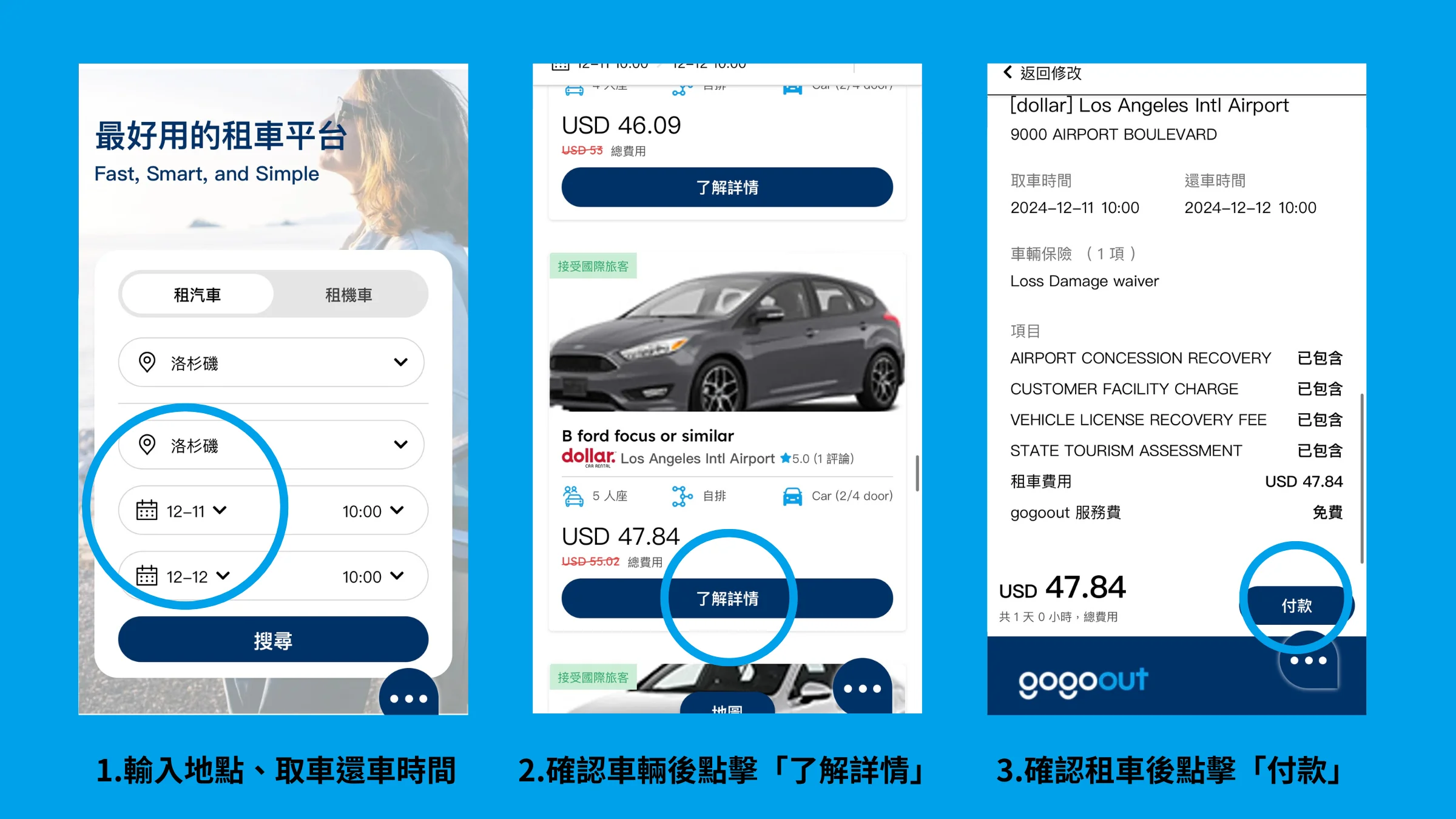
Pick-up and drop-off process for car rentals in the USA

Pick-up process
- Booking confirmation: go to the rental counter and show your booking confirmation and required documents.
- Document check: staff will check that your documents are complete and valid.
- Optional insurance: U.S. rental companies earn commission on insurance, so if you’re sure you don’t need any extra coverage, just say no!
- Confirm the fuel option: U.S. rental companies usually offer three fuel policies.
(1) You Refuel: just fill up the tank yourself before returning the car.
(2) Prepay The Fuel: no need to refuel before returning, but the prepayment isn’t refunded and the fuel price is higher than at a gas station.
(3) We Refuel: no need to refuel before returning, but the company charges 2-3 times the gas station price, including a service fee.
Unless you have other reasons, we recommend choosing You Refuel. - Sign the rental agreement: read the vehicle usage rules, fee terms and other details carefully so there are no misunderstandings that end up costing you money later.
- Vehicle handover: inspect the car thoroughly and record a video as proof. At the same time, learn the basic controls so you’re not stuck with questions once you’re on the road.
- Hit the road: before you set off, double-check that you have all your rental documents and personal ID!
Drop-off process
- Confirm the return time and location: never return the car late, or you’ll be charged a penalty!
- Check the fuel tank: remember to fill up before returning the car, and keep the gas receipt in case of a dispute
- Clean out the car: don’t leave personal belongings behind, and don’t leave trash either, or you may be charged an extra cleaning fee
- Inspect the car: compare it with the video you took at pick-up to check for any new damage
- Final settlement: confirm whether there’s any outstanding balance to settle, or any unreasonable or incorrect extra charges.
- Get the receipt: we recommend keeping the final rental receipt for at least a month in case any dispute comes up later.
Self-drive tips and traffic rules in the USA
Like Taiwan, the USA drives on the right with the steering wheel on the left, so it’s not hard to get used to. Still, there are a few strict traffic rules you must follow:
1. The 5 traffic rules you need to know
- STOP signs: when you see a red STOP sign, you must come to a complete stop, look for 2-3 seconds to make sure no cars are coming, and only then move forward. At a “4-way STOP,” first come, first go applies.
- Legal right turn on red: most intersections allow a right turn on red. But you must first come to a complete stop and yield to pedestrians and oncoming left-turning traffic. If the intersection is marked “NO TURN ON RED,” you absolutely cannot turn right.

- Pedestrian First: U.S. law protects pedestrians very strongly. Even if someone waves you through, you still have to let pedestrians go first.
- Pull over when you hear a siren: if you hear an ambulance, police car or fire truck siren, no matter which lane you’re in (even the opposite direction), you must pull over to the right immediately until the emergency vehicle has passed.
- Always yield to school buses: when a yellow school bus stops and extends its “STOP” sign to let children on or off, vehicles behind it and in both directions must come to a complete stop about 20 meters away, until the bus folds in the sign and drives on.



2. Speed units and lane markings
Miles: speed and distance in the USA are measured in miles (1 mile ≒ 1.61 km). The dashboard and speed limit signs (e.g., 35 in town, 65 on the freeway) are all in miles, so just drive according to the number on the sign.
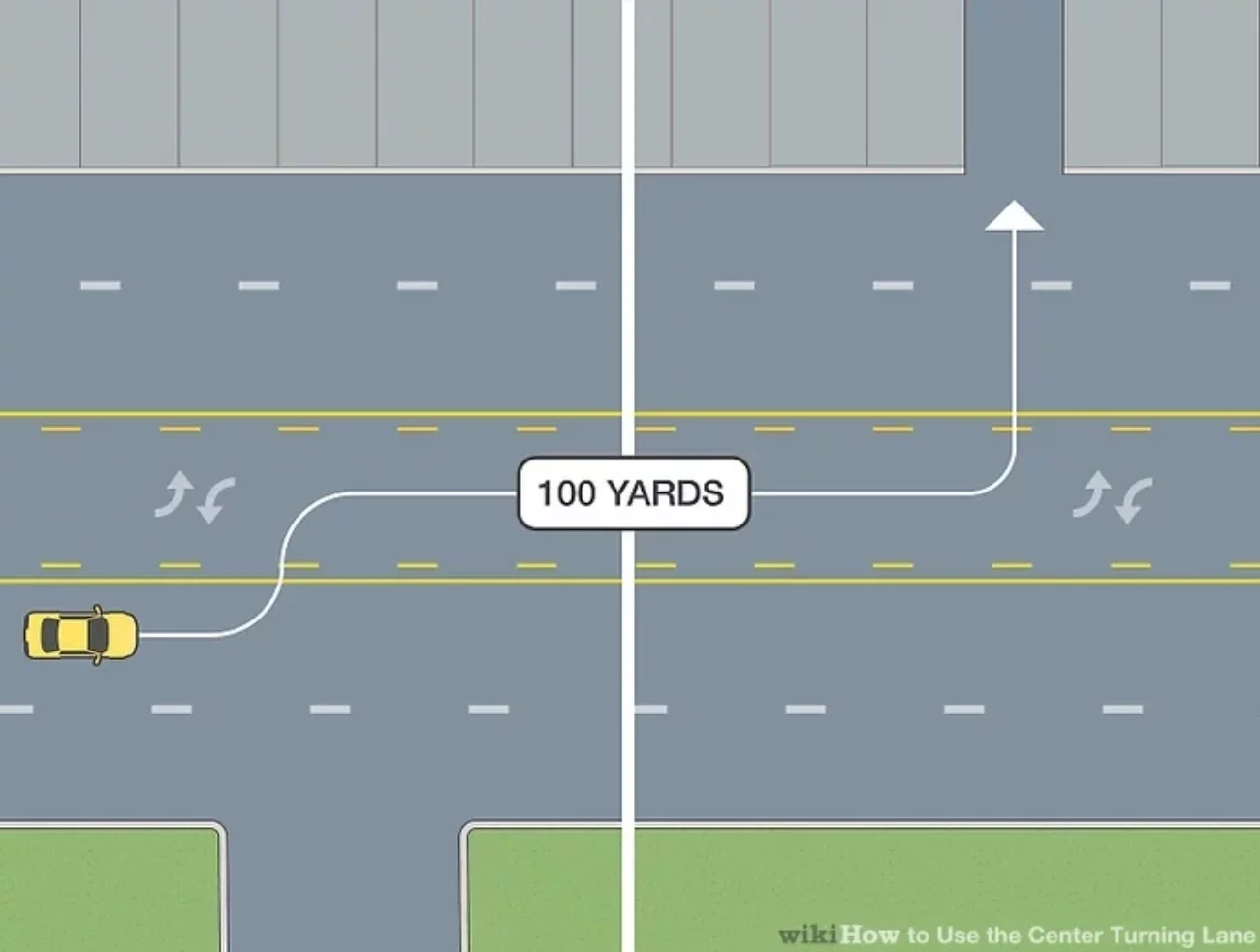
Center left-turn lane (yellow lines, dashed inside and solid outside): major roads often have a shared two-way left-turn lane down the middle. Only enter it when you’re about to turn left, and turn once you’ve confirmed no oncoming traffic — never drive straight or linger in this lane.
High-occupancy vehicle (HOV) lane: if the far-left freeway lane has a diamond symbol, it means you need at least 2 people in the car (including the driver) to use it.
6. Traffic rules and handling unexpected situations when self-driving in the USA
1. What to do if you’re pulled over by police in the USA

If you see flashing lights or hear a siren from a police car in your rearview mirror, turn on your right turn signal immediately and pull over safely onto the shoulder. Police stops in the USA follow a very strict procedure, so be sure to observe the following rules:
- Never get out of the car: After you’ve parked, turned off the engine and rolled down the window, the driver and all passengers must stay seated inside the vehicle.
- Keep both hands on the steering wheel: Place both hands where they’re clearly visible on the wheel (turn on the interior light at night) and wait for the officer to approach.
- Wait for instructions before moving: Until the officer asks to see your passport, International Driving Permit (IDP), original Taiwanese driver’s license and rental agreement, do not reach into the glove box or your bag, so you aren’t mistaken for reaching for a weapon.
2. Common traffic rules in the USA
Child safety seat requirements
If you’re renting a car in the USA with children, the law strictly requires a child safety seat appropriate for the child’s age and weight, and children must sit in the back seat.
Standards vary slightly from state to state, but as a rule children under 8 years old or shorter than 145 cm need a seat. We strongly recommend booking a child seat with the rental company at the same time you book your car online, so you don’t find them out of stock at the counter and end up unable to drive legally.
Watch your speed limit

The USA uses miles, so the numbers on speed limit signs are in miles per hour. As long as you drive at the posted limit you’ll be fine.
Common speed limits are:
- Freeways and expressways: 55–75 mph
- Urban roads: 35–50 mph
- Business districts, school zones and residential areas: 25 mph
No drinking and driving
The blood alcohol limit in the USA is 0.08, compared with 0.05 in Taiwan, and some states set even stricter standards. In addition, most US states have “open container” laws: no opened alcoholic beverage may be kept anywhere in the passenger compartment (including the front passenger seat and back seat). Any bottle that has been opened must be stored in the trunk.
There are three types of drunk driving offenses:
- DUI (Driving Under the Influence): driving after drinking, which also covers driving after taking drugs. Penalties include, but are not limited to, fines, license suspension and mandatory DUI education classes.
- DWI (Driving While Intoxicated): used in some states; the difference from a DUI lies in the blood alcohol level involved. A DWI usually means a level well above the limit, and penalties include higher fines, a longer license suspension and a greater chance of jail time.
- OWI (Operating While Intoxicated): this one focuses on “operating.” If you’ve been drinking and you get in the car and start the engine but “never actually drive,” you can still be penalized under this law!
3. Street parking rules in the USA and how to pay
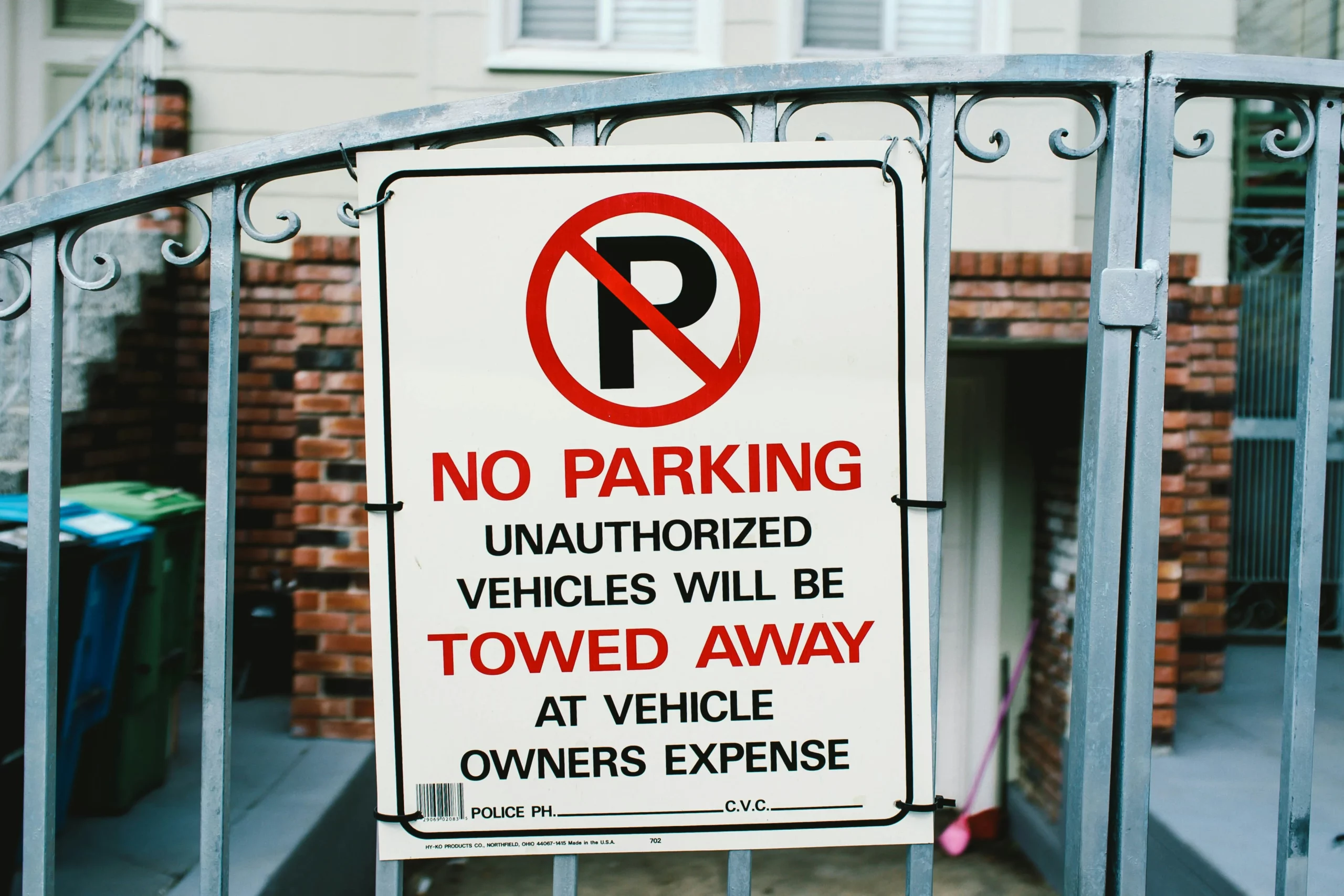
Street parking: street parking in the USA is usually governed by the color of the curb line together with the posted sign, so check both before you park.
- White: brief stops only, for picking up and dropping off passengers.
- Green: short-term parking for a limited time; pay close attention to the time stated on the sign.
- Yellow: loading zone for passenger pick-up/drop-off and freight unloading only.
- Red: no stopping or parking at any time.
- Blue: usually reserved for vehicles with a disabled permit.
How do you pay at a street parking meter?
When parking on the street in the USA you’ll often come across very old meters, and most of them require you to “pay in advance”. Prepaid amounts are generally non-refundable, so if you underpay remember to come back and add more time — tickets start at US$50!
(Payment is usually in cash, so get into the habit of carrying some coins.)
Parking lots: usually more expensive than street parking, and the fee rules vary from place to place.
4. US traffic signals and signs

Traffic lights
US traffic lights are usually vertical, and you’ll often see 2–3 of them in a row, each one for a different lane — so make sure you’re looking at the right one!
- Red light: come to a complete stop. / Red arrow: no left or right turn.
- Yellow light: slow down and prepare to stop.
- Green light: go. / Green arrow: left or right turn permitted.
- Flashing red light: treat it as a “STOP sign” — come to a complete stop, make sure no other vehicles are coming, then proceed.
- Flashing yellow light: slow down and proceed once you’ve confirmed no other vehicles are coming.
Road signs
A great deal of road information in the USA is communicated through signs, and unlike in Taiwan the text isn’t tiny and crammed together — it’s designed to be easy to read from the car. Here are some of the more important signs to watch for:
Besides these common signs that you must obey, there are many more road signs worth reading up on!
Further reading on US road signs: a detailed guide to US traffic signs
US highways and how tolls work
The USA has a vast road network, made up mainly of toll-free Interstate Highways and toll roads (Toll Road / Express Way) that charge a fee.
How are US highway tolls charged?
US toll roads have gone almost entirely electronic in recent years, with hardly any staffed toll booths left. Most use electronic transponders (such as FasTrak, SunPass or EZ-Pass) or license plate recognition (Pay-by-Plate). When you rent a car in the USA, you have two ways to handle tolls:
Pay online yourself: if you haven’t rented a transponder and accidentally drive onto a toll road, you must go to that state’s transportation authority website and pay using your license plate number within the required window (usually 48 hours). If you forget, the rental company will receive the violation notice and pay it for you, but will charge you a hefty “admin fee” on top. When navigating with Google Maps, you can set “Avoid Tolls” to keep costs down.
Rent an electronic toll pass from the rental company: this is the most convenient and recommended option for visitors. Most companies rent out transponders by the day; the device is read automatically as you pass through a toll point, and the tolls are later charged directly to the credit card you have on file.
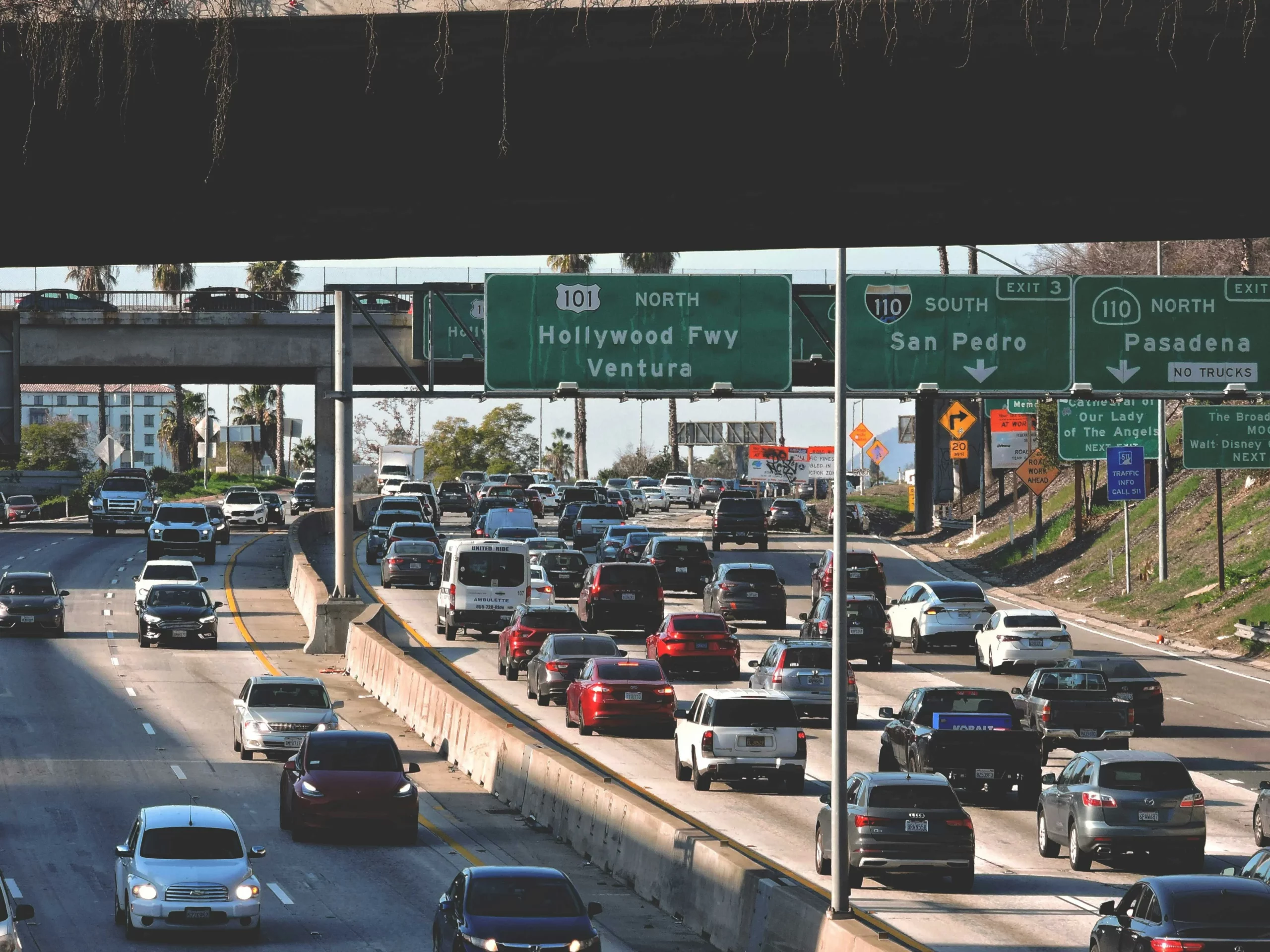
How to pump your own gas in the USA
Most US gas stations are self-service. The most common fuel for rental cars is Regular (87 octane unleaded).
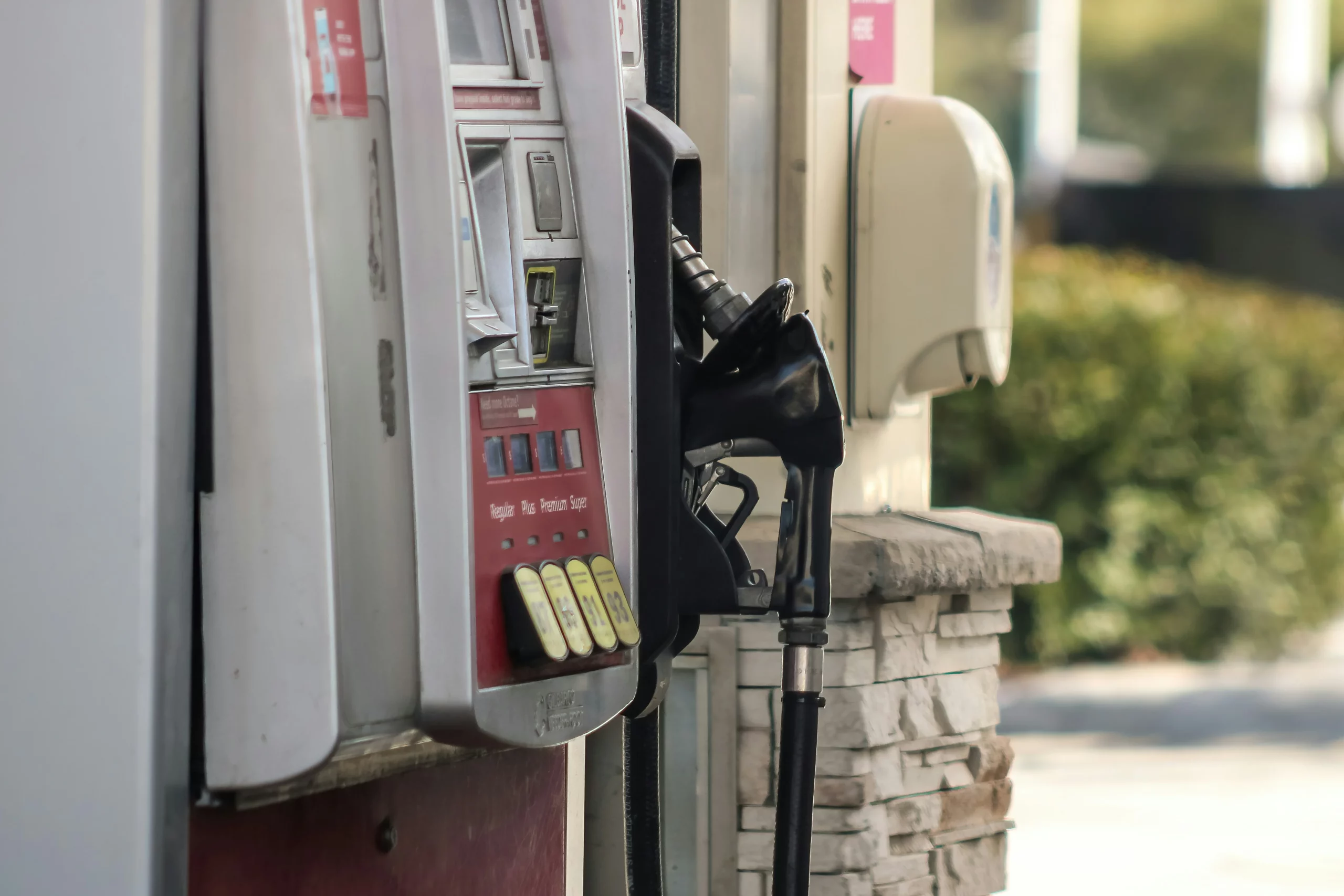
| Nozzle label (octane rating) | Common nozzle color | Equivalent fuel grade in Taiwan |
|---|---|---|
| Regular (87) | Red / black / yellow | 92 unleaded |
| Plus / Midgrade (89) | Red / black / yellow | 95 unleaded |
| Supreme / Premium (91-93) | Red / black / yellow | 98 unleaded |
| Diesel | Green | Diesel |
Note: In the US, the same nozzle usually dispenses all gasoline grades, and you choose the octane rating with a button, so be sure to press the right one.
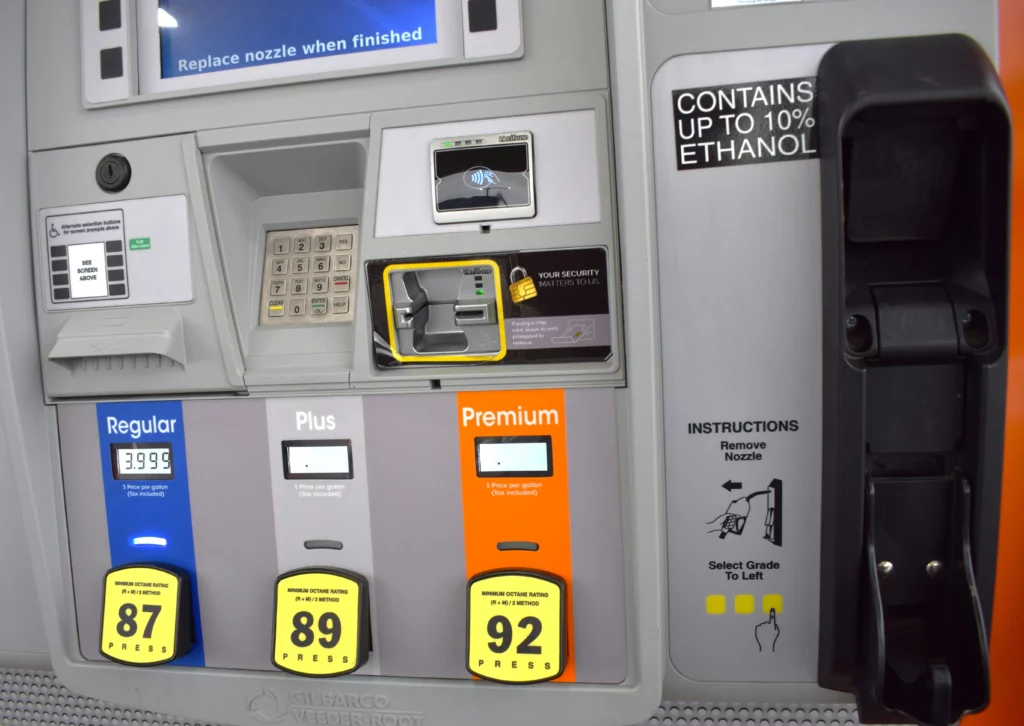
Pumping your own gas in 5 steps (paying with cash)
In the US you can pay for gas with cash or with a credit or debit card, and most visitors pay cash. Here’s how the cash method works.
- Park the car, turn off the engine, lock up, and note the pump number.
- Go into the attached convenience store, tell the clerk your pump number and prepay in cash (for example, “Pump 5, twenty dollars”). Any amount you overpay will be refunded after you finish fueling.
- Go back to the pump, pick up the nozzle, and press the button for the fuel grade you need.
- Insert the nozzle into the fuel filler and start fueling; it stops automatically when you reach the prepaid amount or the tank is full.
- Put the nozzle back, and if you have change coming, go back inside to collect your receipt and the balance from the clerk.
Things to keep in mind
- Make sure you use the correct fuel type and don’t accidentally pump diesel. If you do put diesel in by mistake, do not start the car — call the rental company!
- Some gas stations only accept credit cards at night, so it’s a good idea to carry a credit card with you, preferably a VISA card.
- Gas stations can be few and far between in remote areas, so fill up early to avoid running out of gas along the way.
- Keep your fuel receipts so you can show them to the rental company if there’s any dispute when you return the car.
Frequently asked questions about renting a car in the US
Q1: How old do you have to be to rent a car in the US?
A: The minimum age to rent a car in the US is usually 21, and you must have held your license for at least one year. If the main driver is between 21 and 24, most rental companies charge an extra “Young Driver Fee.”
Q2: What documents do I need to rent a car in the US?
A: You need all four of these: your passport, your original home-country driver’s license, an International Driving Permit (IDP), and the main driver’s credit card.
You can’t skip any of them! One special reminder: you must carry the “original” driver’s license with you, and the cardholder must be the same person as the main driver. It’s best to avoid using a debit card.
Q3: What’s the safest way to buy car rental insurance in the US?
A: We strongly recommend taking out both a collision damage waiver (CDW/LDW) and third-party liability coverage (ALI/SLI). These two cover you for expensive repair bills and for injury or property damage to the other party. If you’re worried about unexpected trouble, you can also add roadside assistance (RSN).
Q4: What should I do if I’m pulled over by the police in the US?
A: Signal right, pull over immediately, and keep both hands on the steering wheel — never get out of the car on your own. Stay inside and wait for the officer to come to you, then follow their instructions. Never reach into the glove box or your bag for your documents before the officer asks you to.
Q5: How do I pay highway tolls in the US?
A: We recommend renting a toll pass from the rental company so tolls are charged straight to your credit card. Most US toll roads no longer have staffed toll booths, so if you don’t rent the device you’ll have to go online and pay by entering your license plate number within 48 hours of using the toll road, or you may face hefty administrative fines.
Q6: How do I pump my own gas at a US gas station?
A: Most rental cars take Regular (87) unleaded gasoline, and you can pay by credit card or with cash inside the store. Park the car and note your pump number; if the pump won’t take your card, just go into the convenience store and prepay the clerk in cash, then come back for your change after fueling.
Q7: Can I park on the street when driving in the US?
A: Yes, but you need to read the curb colors and the parking signs carefully. Red curbs mean absolutely no stopping, white is for picking up and dropping off passengers only, and green means limited-time parking. If you park in a paid space, be sure to pay with coins or a card and leave the receipt inside the windshield where it can be checked.
Q8: What should I do if I have an accident or a breakdown on the road?
A: Call the emergency number provided by the rental company right away, and if anyone is injured, call 911 first.
Step 1: Both drivers stop and turn on their hazard lights.
Step 2: If it’s a serious crash, get away from the vehicles as quickly as possible; if it’s a minor scrape, call the police first!
Step 3: Call the rental company so they can handle the insurance side of things.
After that, wait for the police to arrive and cooperate with them by providing your information and describing what happened. Follow these three steps and you can generally be sure the insurance and any follow-up issues are covered — but always judge the situation on the ground, and if anyone is hurt, get medical help as soon as possible. People’s lives come first.
And that wraps up this complete guide to renting a car in the US!
Remember, renting a car isn’t just a way to get around — it’s a great way to experience American culture and scenery. Whether you’re taking a grand American road trip or shopping downtown in the middle of busy traffic, a rental car lets you explore the country’s many sides at your own pace.
We hope this guide takes some of the stress out of renting a car and driving in the US, and that your trip goes smoothly!
More articles about traveling in the US:
👉[US car rental] A must-read for self-drive trips: types of insurance and coverage details explained
👉 Must-see attractions in Seattle: the Space Needle, the Gum Wall, self-drive travel and transportation tips
👉 A one-day tour of Washington, DC: top sights, must-try food, Ladurée macaron afternoon tea, and renting a car in the US
👉 Minnesota on your own: attractions, shooting ranges, skiing, and renting a car in the US
Think renting a car in the US is a hassle? Then head to gogoout!
Worried about spending hours trying to pick a rental company, dealing with a language barrier, sorting out complicated insurance options, or driving in an unfamiliar place — and still can’t decide where to book?
With gogoout you can rent a car anywhere in the US. If you don’t see your area below, our website’s customer service team can help you find the right car. Let us help with your US self-drive trip!
This article was translated by AI from the original Chinese version.