
Why we recommend renting a car in Seoul
The benefits of renting a car and self-driving in Seoul are endless. First, a rental car lets you explore Seoul and the surrounding area freely, without being tied to public transit timetables.
Second, you can reach attractions and scenic areas outside the city much more easily, such as Incheon Airport and Nami Island. Best of all, a rental car gives you more convenience and flexibility, so you can tour Seoul at your own pace and on your own schedule.
This article takes a deep dive into what you need to know about renting a car in Seoul. Follow the steps and your trip will be smooth and worry-free.
The most common questions before renting a car in Seoul:
Q: What age do you have to be to rent a car in Seoul?
A: Most rental companies require drivers to be 21 or older, and some require 25 or older. Some also charge drivers under 30 an extra “young driver” fee.
Q: What documents do I need to rent a car in Seoul?
A: To rent a car in Korea you normally need an International Driving Permit (IDP), your home-country driver’s license, your passport, a credit card and your rental booking details.
Q: Is renting a car in Seoul convenient?
A: Car rental insurance in Korea comes in two types, basic insurance and full vehicle coverage, and the difference lies in the coverage amount. In Seoul there is no “full coverage” option, so there will still be a “deductible” to pay.
Q: How much does renting a car in Seoul usually cost?
A: Prices vary by car class, rental length and season. Book a car in Seoul through gogoout and the best deals start at just NT$2,000 a day!
Documents to prepare for renting a car in Seoul
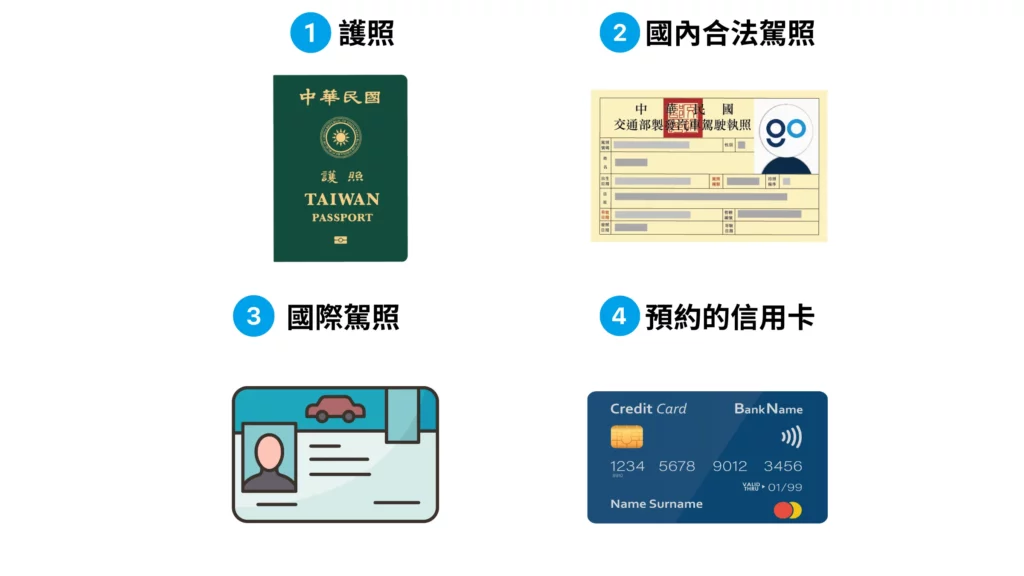
| Document – International Driving Permit (IDP) | This is required to drive legally in Korea. Drivers in Taiwan can apply at a Motor Vehicles Office, and it is valid for one year from the date you enter Korea. |
| Document – home-country driver’s license | Bring the original, valid and unexpired license; it is checked together with the International Driving Permit issued by your country. |
| Document – passport | This is the ID document you must show when renting. Make sure your passport stays valid throughout your independent trip to Seoul. (Before you travel, check that it is valid for at least six more months.) |
| Credit card | Most Korean rental companies require a credit card for the deposit and rental fees. (Some branches require the card to be in the renter’s name, so check the company’s rules when you book.) |
| Document – rental booking confirmation | After completing your online booking, print or save the confirmation voucher and show it to the counter staff when you pick up the car. |

Image source: Taiwan Hot News
(In February 2022, Korea and Taiwan officially signed a memorandum of understanding on the mutual recognition of international driving permits, so short-term visitors can finally take an International Driving Permit issued by the Republic of China straight to Seoul and rent a car!)
To apply for an International Driving Permit for a Seoul car rental trip, Taiwanese travelers should apply at any Motor Vehicles Office with their national ID card, two 2-inch ID photos taken within the past two years, driver’s license, a copy of their passport and the NT$250 fee.
Seoul car rental companies and price comparison
Among the car rental companies in Seoul, the best known are LOTTE RENT-A-CAR, SK Rent-a-Car and AJ Rent-a-Car (now merged into SK Rent-a-Car). Below is a side-by-side comparison so you can quickly see how they differ.
| Seoul car rental company | gogoout | LOTTE RENT-A-CAR | SK Rent-a-Car |
|---|---|---|---|
| Minimum driver age | 25 and over License held for at least two years | 21 and over (extra fee for drivers under 30) | 21 and over (26 and over for multi-seat vehicles) |
| Price | From NT$2,000 | From NT$2,800 (before any promotional discount) | From NT$3,000 (before any promotional discount) |
| Airport shuttle service | ✅ | Paid luxury car transfer to your hotel only | – |
| Incheon Airport pickup location | Airport shuttle to the branch for pickup | ✅ | ✅ |
| Gimpo Airport pickup location | ✅ | ✅ | ✅ |
| Chinese-language support | ✅ (Chinese-language online customer service) | ❌ | ❌ |
| GPS | ✅ | ✅ | ✅ |
| Opening hours | 9:00~19:00 | (varies by branch) 6:00~23:00 | (varies by branch) 6:00~21:00 |
| Basic insurance included | ✅ | ✅ | ✅ |
| Insurance upgrade available | CDW | CDW | CDW |
Car rental insurance in Seoul explained

1. Compulsory liability insurance
Cars from Seoul rental companies always carry at least compulsory liability insurance, which is required by law and covers third-party liability, personal injury and property damage.
If you have an accident with your rental car in Seoul, you will still have to pay a “deductible” even with compulsory insurance in place.
The deductible is usually between ₩300,000 and ₩500,000 (about NT$7,500–12,500), depending on the rental company’s insurance contract.
2. Collision damage waiver (CDW)
Compulsory insurance + collision damage waiver (CDW)
Travelers who add the collision damage waiver (CDW) do not have to pay the deductible for an accident. Note, however, that CDW does not cover repair or compensation costs for damage to wheel rims, tires, glass or the chassis!
Repair cost lower than the deductible: you only pay that repair cost
Repair cost higher than the deductible: you only pay the deductible, and the insurance covers the rest
If you only take the basic insurance, you will definitely have a deductible to pay, so drive carefully no matter what!
3. Non-operation charge coverage (NOC)
If you have an accident on the Korean mainland (Jeju Island not included) and the accident leaves the car completely undrivable, the rental company will also charge you for the business it loses while the car is being repaired!
The amount is set by law: a flat 50% of the car’s daily rental rate. Whether or not you bought the collision damage waiver (CDW), this loss-of-business fee always has to be paid.
So when you rent a car and drive in Seoul, keep a close eye on the traffic around you and avoid serious accidents — they hurt both you and your wallet!
A guide to Seoul’s expressways

Korean expressway tolls are calculated by distance traveled, the section of road you use, and the type of vehicle.
Tolls around Seoul can be paid in several ways: cash, credit card (usually only Korean-issued cards), a T-money card, or electronic payment (Hi-Pass).
If you don’t have a T-money card, WOWPASS might be just right for you!
Hi-Pass in Seoul (ETC)

Some rental companies in Seoul install Hi-Pass devices in their cars and rent them out for a fee, so check before you book whether the branch offers it as an add-on! Without a device, taking the wrong lane counts as toll evasion.
Korean expressways have special lane markings — for example, Hi-Pass lanes are marked with blue guide lines on the road surface, so you know which lane to take before you reach the toll gate.
About WOWPASS
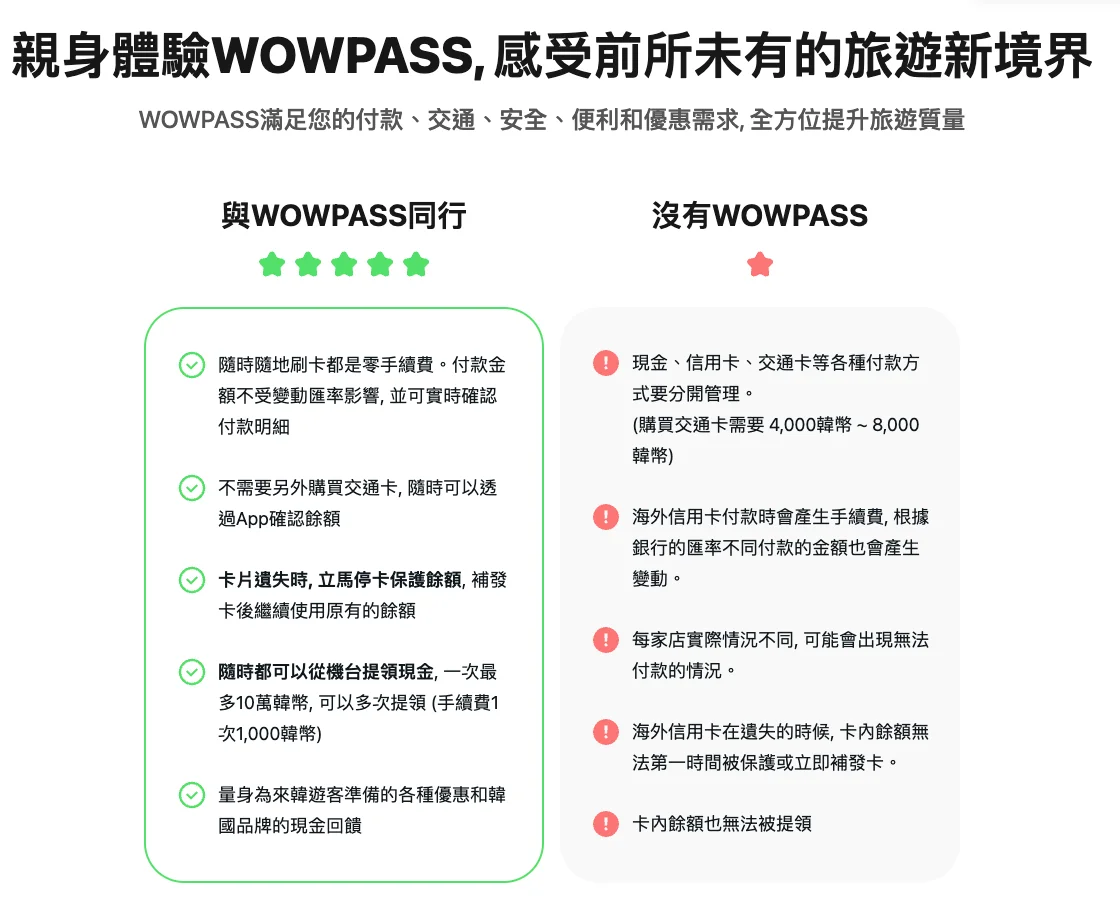
WOWPASS is a multifunction payment card designed for foreign travelers. It combines a prepaid debit card, a T-money transit card, currency exchange, and cash withdrawal — so expressway tolls and parking fees can all be handled with one card.
Think of it as Taiwan’s EasyCard or Japan’s Suica, plus currency exchange and cash withdrawal.
That means you can pay directly at many restaurants and parking lots, which solves the problem of overseas credit cards being rejected and saves you from carrying a pile of Korean won in cash.
Currency exchange is handy, but not every machine lets you exchange money or withdraw cash, and it’s still worth comparing rates to see whether they’re a good deal.
Beyond that, it’s a very good idea to look for a WOWPASS machine right after you arrive at Seoul Incheon Airport and sign up there.
A guide to gas stations in Seoul
Common gas station brands in Seoul are SK, GS, S-Oil, and Hyundai Oilbank.
Note that fuel prices in Korea aren’t fixed — city prices are always a bit higher than out-of-town ones, so if you want to save a little, fill up outside the city!
| Fuel type | Nozzle color | Korean | English |
|---|---|---|---|
| Regular gasoline | Yellow | 휘발유 | Gasoline |
| Diesel | Black / blue / green | 경유 | Diesel |
전기 (Electricity) – Korea also has charging stations for electric vehicles, usually located in major cities and at expressway service areas.
How to use self-service pumps:
1. Choose your payment method, fuel type, and amount:
After choosing «신용카드 (credit card)» or «현금 (cash)», follow the on-screen instructions and enter an amount to set how much fuel you want, or simply pick «가득 (full tank)» to fill it up.


If you pay by credit card, the screen will ask whether you want to pay in full. Choose «일시불» for a single payment; the options with numbers are installment plans.

2. Fill up:
Open the fuel door, insert the nozzle, and squeeze the handle to start pumping. When the pump clicks off, the screen asks whether you want to round the amount up:
천원 단위 끊김 (정액) “round to a whole amount” or 리터 단위 끊김 (정량) “round to whole liters.” When you’re done, put the nozzle back, close the fuel cap tightly, and collect your receipt or change.
Navigation apps for driving in Seoul
Because of the situation between North and South Korea, Google Maps is practically useless everywhere in Korea — the map data is very inaccurate!
For self-drive navigation in Seoul, it’s best to download a Korean-developed map app. Routes and restaurant information are both very thorough, so install one of the navigation apps below before you set out!
Naver Map
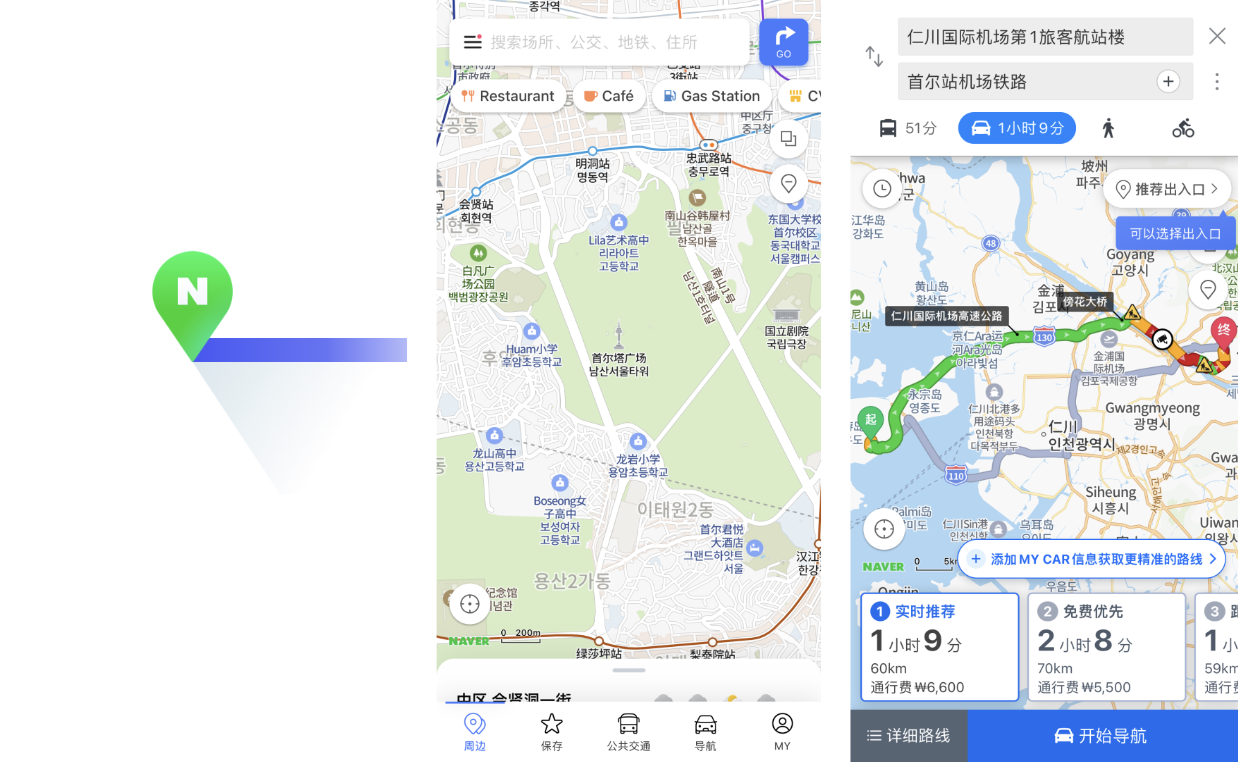
Naver Map is Korea’s biggest mapping service, available as both a website and an app. It currently supports English, Simplified Chinese, Japanese, and Korean, so travelers from anywhere can pick it up easily. The Simplified Chinese version still mixes in a lot of Korean, but the information is tens of thousands of times better than Google Maps!
When you navigate to a restaurant in Seoul, Naver also shows that restaurant’s menu, so you can decide what to order on the way. Pass a gas station and the map shows live fuel prices, too — super handy!
KakaoMap
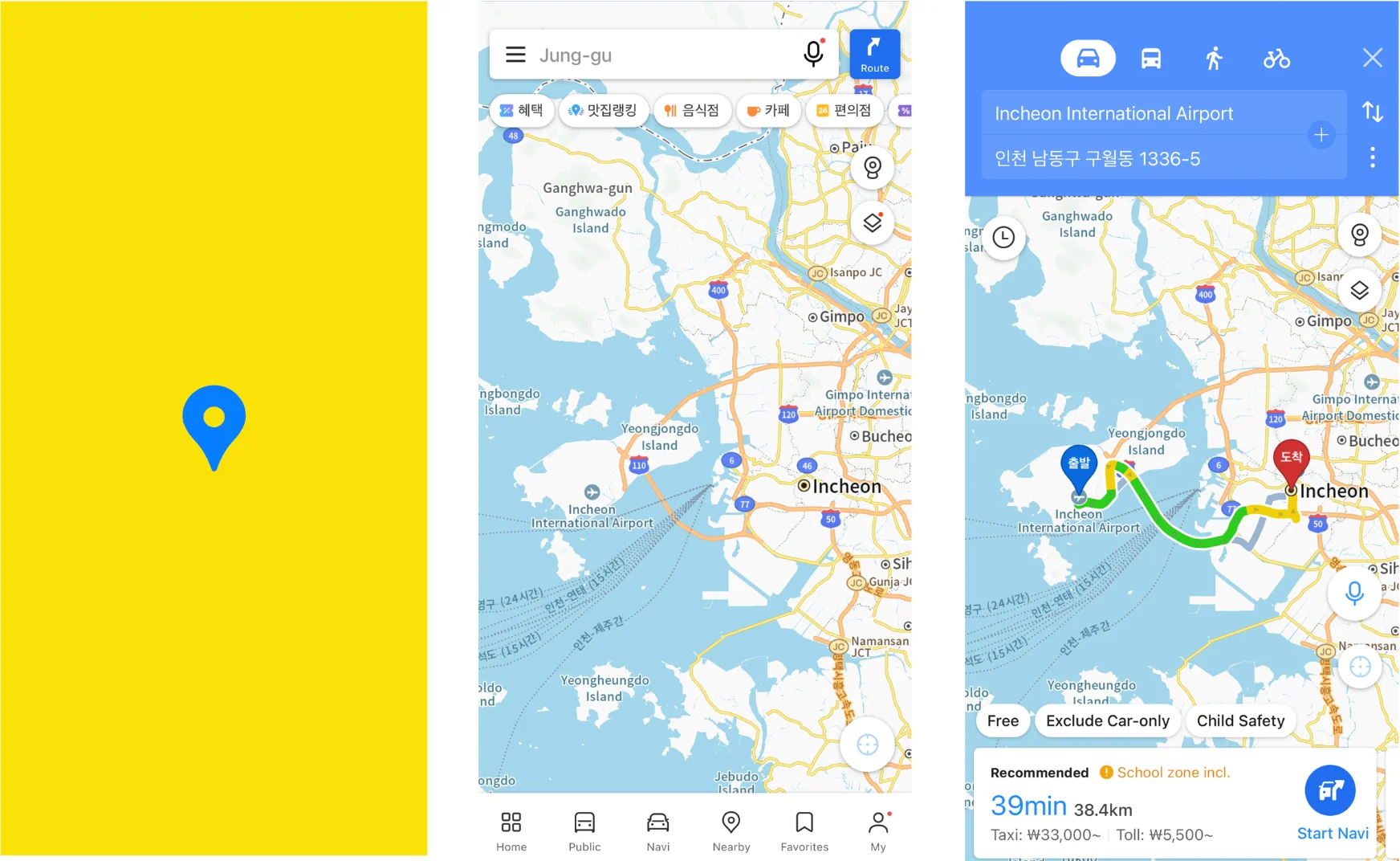
Second only to Naver Map, KakaoMap is the country’s number two navigation service and is known for its accuracy. Thanks to the developer’s ecosystem, it links up with KakaoTalk and KakaoTaxi, and it gives directions for every mode of transportation plus voice alerts for speed cameras!
Hanchao Map
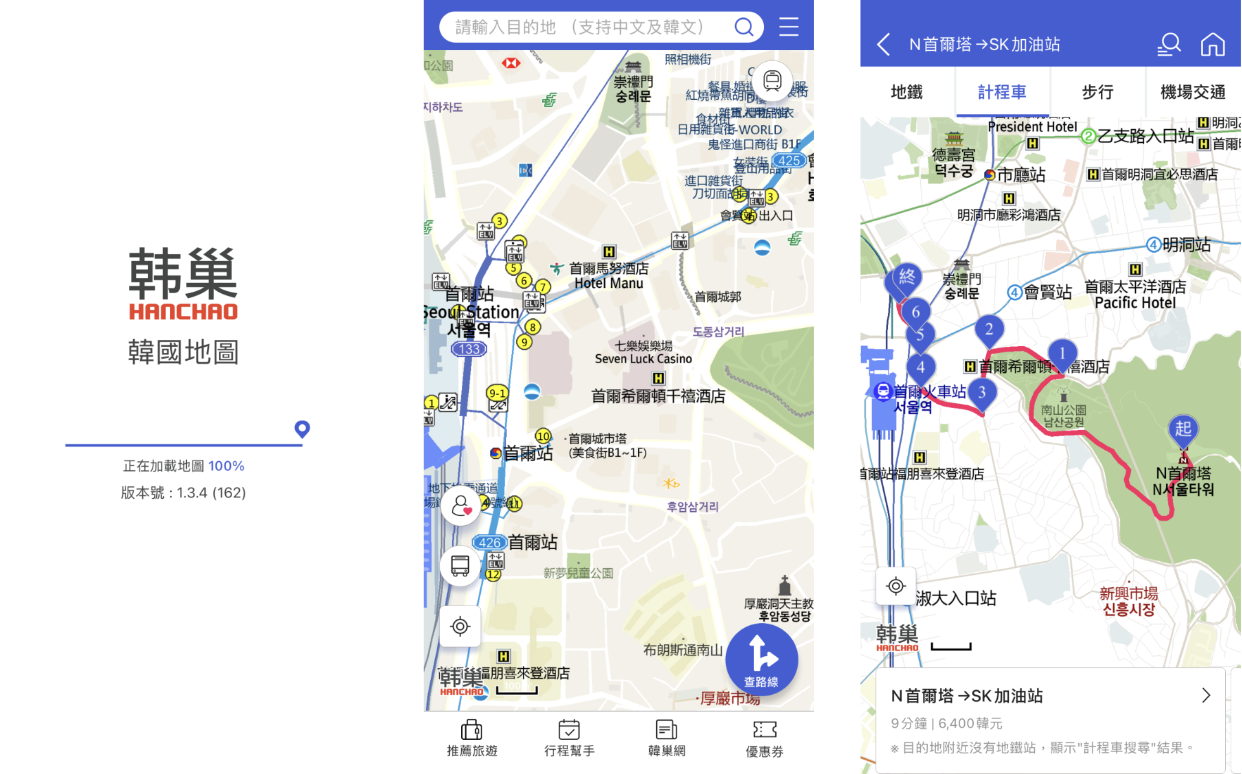
It combines maps with web content — food and travel articles — so when you save an article it saves the map location for you as well. Powerful integration!
The app currently supports only Traditional and Simplified Chinese, so it’s less useful for Western or Japanese travelers.
Things to know about renting a car in Seoul
1. Traffic rules
Which side of the road

Korea drives on the right with the steering wheel on the left, the same as Taiwan and North America, so the direction of travel and the steering wheel position are all familiar. That makes it quicker to settle in and enjoy your self-drive trip around Seoul!
Speed limits in Seoul

In urban Seoul the general speed limit is 60 km/h, 80 km/h out of town, and 100 km/h on expressways.
School zones are limited to 30 km/h and there’s a lot of automated enforcement, so stay alert on the road!
Korea cracks down hard on speeding, so when you rent a car and drive in Seoul, stick to the local limits and watch for speed limit signs!
(Korea has as many speed cameras as Taiwan, including average-speed enforcement over a stretch of road, so keep a steady pace.)
Yielding to pedestrians
Seoul is a big city, and busy areas are full of pedestrians. When you’re turning and a pedestrian is crossing, you must come to a complete stop and let them pass — Korea now enforces failure to yield very strictly, even more strictly than Taiwan!
Lane markings

| Lane marking | Driving rules |
|---|---|
| Dashed yellow line | Single or double, you may pass or make a U-turn as long as it’s safe to do so |
| Solid yellow line | Single or double, crossing, straddling the line and passing are all strictly prohibited |
| Mixed dashed and solid yellow lines | You may briefly pass from the dashed side; crossing to the other side from the solid side is prohibited |
| Solid white line | You may change lanes, but pay attention to the lane usage rules |
| Dashed white line | Wherever you are, you may not change lanes freely across a solid white line |
| Mixed dashed and solid white lines | From the dashed side you may change lanes to the solid side; from the solid side crossing to the other side is prohibited |
| Blue line | Blue lines mark bus-only lanes, which regular vehicles may not enter |
Do you need snow tires for a car rental in Seoul?
Seoul sees occasional snowfall in winter, and roads at higher latitudes or elevations can be covered with snow and ice. We recommend renting snow tires or adding snow chains for extra grip.
If you’re driving in Seoul in winter, ask the rental company in advance whether snow tires and snow chains are available, so you don’t end up skidding on unfamiliar snowy roads and having an avoidable accident.
2. Parking tips
Parking spaces in urban Korea can sometimes feel smaller than the car itself! Compact cars have room to spare, but mid-size and large vehicles are genuinely a squeeze. Whether you’re parking on the street or in a mechanical parking tower, double-check the size of the space so you don’t scrape or damage the car.
Some parking spaces in residential areas have numbers painted beside them. These are usually spaces that local residents pay for, and they aren’t open to other drivers, so don’t park there by mistake!

You may also see several cars sharing one space; residents usually leave a phone number on the windshield so they can move cars around without blocking anyone in. It’s best to avoid this kind of parking lot so you don’t make things difficult for yourself or for others.
Parking lots
In South Korea it’s customary to back into a parking space so the front of the car faces the driving lane. Just do as the locals do and you’ll be fine.
Compared with private lots, public parking lots are usually cheaper, and they often give discounts on parking fees for “compact vehicles,” or offer deals such as “first two hours free” in certain areas, making it easier for drivers to shop or park nearby.
Some parking lots may only accept Korean credit cards or T-Money cards. The barrier usually opens as soon as your license plate is scanned, so check carefully before entering, or you may find you can’t get out when you leave!
Short-term parking rules

| Curb color | Parking rules |
|---|---|
| Dashed yellow curb line | You may stop for up to 5 minutes, but you can’t leave the vehicle or park for an extended time |
| Solid yellow curb line | Parking is allowed only during the designated hours, so check the nearby signs |
| Double solid yellow curb lines | Parking is strictly prohibited; violators will be ticketed |
| Solid white curb line | Parking is allowed, but don’t park facing the wrong way or at an angle that juts into the lane and inconveniences other vehicles, or you’ll be ticketed all the same |
3. Traffic signals and signs
Traffic lights
| Signal | What to do |
|---|---|
| Red light + left-turn arrow | Cars in the left-turn lane may turn left; all other lanes wait for the green light |
| Red light (no special indication) | The rightmost lane may turn right; all other lanes wait for the green light |
| Green light + left-turn arrow | You may proceed in any direction, so drive on with confidence |
| Green light (no special indication) | You may go straight or turn right, but left turns are prohibited |
| Green light (with 비보호) | You may proceed in any direction, so drive on with confidence |
Turning left on green
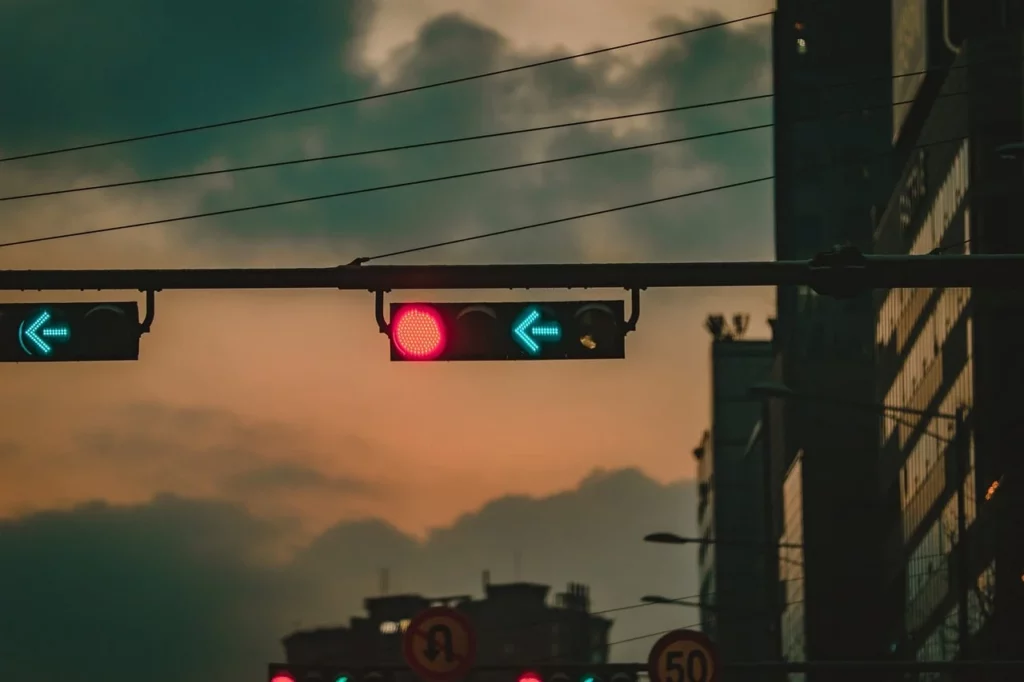
This is something you won’t see in Taiwan: unless there is a specific indication, you may not simply turn left on a green light. You have to wait until the dedicated left-turn signal lights up.
The exception is when you see a blue sign on the traffic light reading “비보호” with a left arrow: this means left turns on this road are unrestricted, so you can turn left without a green arrow. Just make sure no oncoming traffic is approaching!
Turning right on red
Unless a sign specifically prohibits it, in Korea you may turn right on a red light once there are no pedestrians in the crosswalk ahead or to your right and oncoming left-turning vehicles have passed.
Korean drivers can be just as impatient as drivers in Taiwan, sometimes even more so. We strongly suggest not lingering in the rightmost lane, or you’ll very likely get honked at!
Traffic signs
Below are the traffic signs you’ll most often see around Seoul. Most of them can be understood from the symbols alone, but if you come across one with Korean text you’re not familiar with, it’s worth learning what the main signs mean before you set off.

Image source: Wikipedia
Seoul car rental FAQ
Q: What’s the minimum age to rent a car in Seoul?
A: To rent a compact or mid-size car in Seoul, you must be at least 21 years old and have held your driver’s license for more than 1 year. Some rental companies require you to be 26 or older and to have held your license for more than 2 years before you can rent in Seoul.
Age limits vary from company to company, so check that you meet the rental requirements before you book!

Q: Can someone who isn’t on the booking drive the car?
A: Yes. Rental companies in Seoul usually allow one additional driver per rental contract, but that driver must be at least 21 years old, and if they are under 30 a young driver surcharge will also apply!
Please note that only the person who made the booking can pick up the car; an additional driver traveling with you is not authorized to collect the vehicle from the rental company.
Q: What should I do if I have a traffic accident in Seoul?
A: If you are unlucky enough to have an accident and someone is injured, call “119” and communicate in Korean or English. Call “112” to report it to the police and get an accident report, which you need in order to file an insurance claim. Finally, contact the rental company to explain the situation and wait for further instructions!
(If you have an accident somewhere unfamiliar, never settle privately — you could lose out on your own rights.)
Seoul car rental: final thoughts
By renting a car in Seoul, you can explore Korea’s cityscapes, countryside and cultural heritage at your own pace. Just remember to stay patient and courteous behind the wheel, and enjoy every moment of the trip!
Whether you want to soak up the beautiful scenery along the way or dive deeper into local culture, a self-drive trip in Seoul will add unforgettable memories to your travels!
More articles on traveling in Korea:
👉[Seoul Travel Guide] Top attractions, must-eat food and must-buy souvenirs!
👉[Korea Car Rental Guide] Unlock the best way to explore with 100% freedom
👉[Jeju Island Car Rental Guide] The best way to explore Jeju’s food, sights and independent travel!
👉[Jeju Island Independent Travel] Attractions, food recommendations, transportation guide and a 4-day, 3-night itinerary!
How should you rent a car in Seoul? Head to gogoout
Worried about spending hours trying to decide which car model to pick or which rental company to book with, with unclear vehicle details, vague insurance terms or a language barrier with customer service holding you back from booking?
This article was translated by AI from the original Chinese version.